


Homeowners across the UK are discovering an ingenious method to reduce their energy costs whilst simultaneously creating a haven for local wildlife. This dual-benefit approach combines strategic planting with natural insulation techniques, offering a practical response to rising utility bills and declining bird populations. The concept revolves around using specific garden arrangements that provide thermal protection for homes while offering food and shelter for feathered visitors. Despite its remarkable effectiveness, this simple gardening strategy remains surprisingly underutilised, even as households search desperately for ways to cut expenses.
Practical solution: ecological gardening
Ecological gardening represents a fundamental shift in how we approach outdoor spaces. Rather than viewing gardens purely as aesthetic features, this method recognises them as functional ecosystems that deliver tangible benefits to homeowners and the environment alike.
Understanding the ecological approach
The ecological gardening philosophy centres on working with natural processes rather than against them. By selecting native species and creating layered planting schemes, gardeners establish self-sustaining environments that require minimal intervention. This approach reduces maintenance costs whilst maximising environmental benefits, creating a win-win scenario for both budget-conscious homeowners and local wildlife.
Key principles for implementation
Several core principles guide ecological gardening practices:
- Prioritising native plant species that support local insect and bird populations
- Creating diverse planting layers from ground cover to canopy
- Eliminating chemical pesticides and fertilisers
- Establishing natural water features for wildlife
- Composting organic matter to enrich soil naturally
These principles work together to create gardens that function as miniature nature reserves, providing essential habitats whilst delivering practical advantages to property owners. The strategic placement of plants near building exteriors forms the foundation for thermal benefits that directly impact heating costs.
Lowering heating bills with plants
Plants offer remarkable insulation properties when positioned correctly around residential buildings. This natural thermal barrier reduces heat loss during winter months and keeps homes cooler in summer, resulting in measurable energy savings throughout the year.
How vegetation creates thermal barriers
Dense planting against external walls creates an insulating air pocket that prevents heat from escaping through brickwork and masonry. Evergreen shrubs and climbing plants provide year-round protection, whilst deciduous species offer shade in summer but allow warming sunlight through in winter. This passive temperature regulation reduces reliance on heating systems without requiring any technological investment.
Measurable energy savings
| Planting Strategy | Potential Heat Loss Reduction | Annual Savings Estimate |
|---|---|---|
| Wall climbers on north-facing walls | 15-20% | £120-£180 |
| Dense shrub borders around perimeter | 10-15% | £80-£130 |
| Windbreak hedging | 20-25% | £150-£220 |
| Combined comprehensive strategy | 30-35% | £250-£350 |
Windbreak effects and draught reduction
Strategic hedging and tree placement creates effective windbreaks that dramatically reduce heat loss caused by cold air currents. Wind chill can increase heating demands by up to 30%, making windbreak planting one of the most cost-effective insulation investments available. Positioning evergreen hedges on prevailing wind sides of properties creates sheltered microclimates that maintain warmer temperatures with less energy input. Beyond the financial advantages, these green barriers also provide perfect conditions for attracting diverse bird species.
Attracting birds for enriched biodiversity
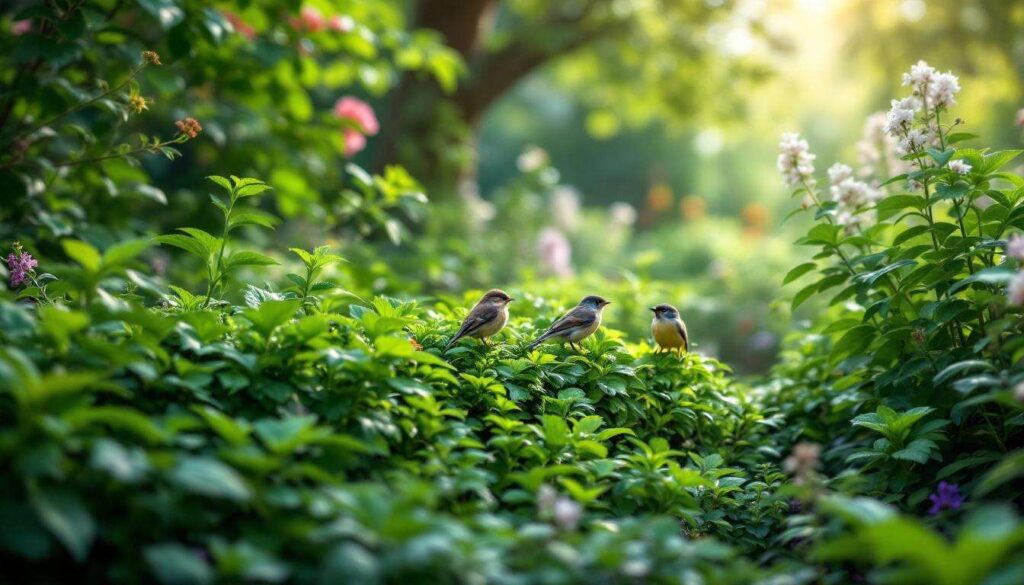
The same planting strategies that reduce heating costs also create ideal habitats for birds, transforming gardens into thriving ecosystems that support local wildlife populations.
Benefits of bird-friendly gardens
Birds provide numerous advantages beyond their aesthetic and auditory appeal. They control pest populations naturally, reducing the need for chemical interventions. Many species consume thousands of insects weekly, including aphids, caterpillars and other garden pests. Additionally, birds aid in seed dispersal and pollination, contributing to garden health and plant diversity.
Creating suitable habitats
Successful bird attraction requires providing three essential elements:
- Food sources: berry-producing shrubs, seed-bearing plants, and insect-attracting flowers
- Water availability: birdbaths, shallow dishes, or small pond features
- Shelter and nesting sites: dense hedging, mature trees, and purpose-built nest boxes
Layered planting schemes naturally incorporate these elements. Ground cover provides foraging areas, shrubs offer nesting locations, and taller trees deliver observation perches and protection from predators. This vertical diversity accommodates different bird species with varying habitat preferences.
Year-round wildlife support
Maintaining bird populations throughout the year requires careful plant selection. Winter-berrying species such as holly and cotoneaster provide crucial food when natural resources become scarce. Evergreen hedging offers essential shelter during harsh weather, whilst early-flowering plants support birds emerging from winter dormancy. This continuous support system ensures gardens remain populated with active bird communities that contribute to pest control and ecological balance.
The best plant species for an economical garden
Selecting appropriate species maximises both thermal benefits and wildlife value whilst ensuring plants thrive with minimal maintenance.
Evergreen climbers for wall insulation
These species provide year-round thermal protection:
- Ivy (Hedera helix): excellent insulation, supports over 50 wildlife species, produces winter berries
- Pyracantha: dense growth habit, spring flowers, autumn berries, provides nesting sites
- Cotoneaster horizontalis: architectural form, excellent coverage, abundant berries for birds
Native hedging for windbreaks
| Species | Growth Rate | Wildlife Value | Insulation Rating |
|---|---|---|---|
| Hawthorn | 30-40cm/year | Excellent | High |
| Blackthorn | 20-30cm/year | Outstanding | High |
| Holly | 15-25cm/year | Excellent | Very high |
| Beech | 30-50cm/year | Good | Moderate |
Berry-producing shrubs
These species combine thermal benefits with food provision for birds. Rowan produces abundant berries attractive to thrushes and waxwings. Elder offers early-season flowers and late-summer fruits. Guelder rose provides stunning autumn colour alongside bird-friendly berries. These multi-functional plants deliver maximum value from limited garden space.
How to start: tips for setting up your garden
Implementing this strategy requires careful planning but delivers long-term benefits that far exceed initial investment.
Assessing your property
Begin by identifying areas where heat loss occurs most significantly. North-facing walls, exposed corners, and wind-facing aspects represent priority planting zones. Measure available space and note existing features that might influence plant selection. Consider sun exposure, soil type, and drainage characteristics.
Creating a planting plan
Develop a phased approach that spreads costs and workload:
- Year one: establish windbreak hedging and wall climbers on coldest exposures
- Year two: add berry-producing shrubs and ground cover layers
- Year three: introduce specimen trees and complete habitat features
Practical implementation steps
Prepare soil thoroughly before planting, incorporating organic matter to improve structure and fertility. Plant during dormant seasons (November to March) when specimens establish most successfully. Space plants according to mature sizes rather than current dimensions. Install support structures for climbers before planting. Water regularly during the first growing season until roots establish. Apply mulch around plants to suppress weeds and retain moisture.
Return on investment: guaranteed savings and enjoyment
The financial and experiential benefits of this approach become increasingly apparent as plantings mature and ecosystems develop.
Financial calculations
Initial investment typically ranges from £200-£500 for a modest garden, covering plants, soil amendments, and basic materials. With annual heating savings of £150-£350, most homeowners achieve payback within two to three years. Beyond this point, savings accumulate indefinitely whilst plants continue growing and improving their effectiveness.
Non-financial rewards
The benefits extend far beyond monetary considerations. Gardens become living classrooms where families observe seasonal changes and wildlife behaviours. Mental health improvements associated with nature connection are well documented. Property values typically increase with well-planned, mature landscaping. The satisfaction of contributing positively to local biodiversity provides ongoing fulfilment.
Long-term value
As climate concerns intensify and energy costs rise, properties with established ecological gardens gain competitive advantages in housing markets. These features represent future-proofed investments that address environmental challenges whilst delivering immediate practical benefits.
This remarkably effective strategy combines financial prudence with environmental responsibility, offering homeowners a practical pathway to reduced energy costs and enhanced biodiversity. The simplicity of implementation and reliability of results make it puzzling that more households have not embraced this approach. By selecting appropriate plant species and positioning them strategically, any property can benefit from natural insulation whilst supporting vital bird populations. The modest initial investment delivers returns that compound annually, creating gardens that work actively to reduce expenses whilst enriching daily life with natural beauty and wildlife activity.