

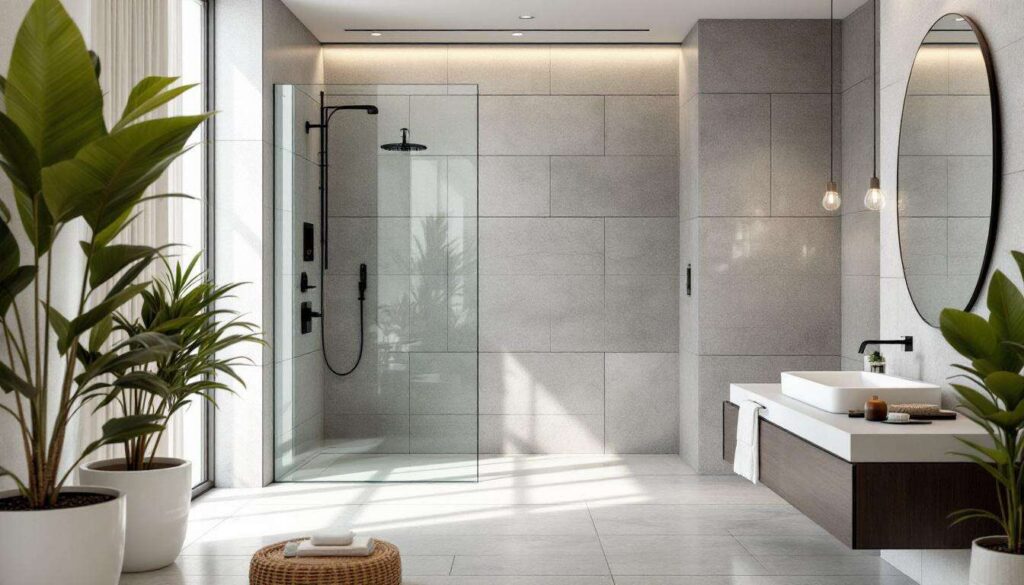
Maintaining a bathroom traditionally involves regular regrouting and resealing, tasks that many homeowners find tedious and time-consuming. After years of dealing with mouldy grout lines and deteriorating sealant, I decided to explore alternative solutions that would eliminate these maintenance headaches whilst creating a sleek, modern aesthetic. Through careful planning and strategic material choices, I successfully transformed my bathroom into a low-maintenance space that requires no grout or sealant whatsoever. The key lies in selecting the right products and understanding how different materials can work together to create watertight barriers without traditional jointing compounds.
Using bathroom wall panels
The practical advantages of panel systems
Bathroom wall panels have revolutionised the way I approach bathroom design. These large-format panels, typically measuring 2.4 metres in height, cover entire walls with minimal joints, eliminating the need for grout lines between tiles. I opted for high-pressure laminate panels that feature a waterproof core and decorative surface layer, providing both functionality and visual appeal.
The installation process proved remarkably straightforward compared to tiling:
- Panels fix directly to existing walls or battens using adhesive
- Edges interlock with a tongue-and-groove system
- Corner trims and edge profiles create watertight seals without sealant
- Installation typically takes a fraction of the time required for tiling
Material options and aesthetic flexibility
The variety of panel finishes available surprised me considerably. I chose a marble-effect panel that convincingly replicates natural stone without the maintenance issues. Other popular options include wood grain effects, metallic finishes, and solid colours. The panels remain completely waterproof whilst offering design flexibility that rivals traditional materials.
Beyond wall panels, the flooring choices I made complemented this grout-free approach perfectly.
Choosing water-resistant finishes
Protective coatings that eliminate sealing needs
Selecting materials with inherent water resistance proved essential to my grout-free strategy. I focused on surfaces with factory-applied protective coatings that require no additional sealing. These finishes create impermeable barriers that repel water naturally, eliminating the need for periodic resealing that traditional materials demand.
Key characteristics of these finishes include:
- Non-porous surfaces that prevent water penetration
- UV-stable coatings that resist discolouration
- Antibacterial properties that inhibit mould growth
- Easy-clean surfaces that require only basic maintenance
Comparing performance across different materials
| Material | Water resistance | Maintenance level | Lifespan |
|---|---|---|---|
| Acrylic panels | Excellent | Very low | 15-20 years |
| PVC wall panels | Excellent | Very low | 20-25 years |
| Laminate panels | Excellent | Low | 10-15 years |
| Glass panels | Outstanding | Low | 25+ years |
The performance data convinced me that investing in quality water-resistant finishes would save considerable time and money over the bathroom’s lifetime. Creating continuous surfaces without joints further enhanced this approach.
Favouring continuous, joint-free surfaces
Seamless shower enclosures and wet rooms
I designed my shower area as a wet room with continuous surfaces from floor to ceiling. This approach eliminates the multiple joints typically found in traditional shower cubicles. The shower tray consists of a single piece of formed acrylic with integral upstands that create watertight corners without any sealant application.
The benefits of this continuous surface approach include:
- No grout lines where mould can develop
- Easier cleaning with fewer crevices and joints
- More spacious visual appearance
- Reduced maintenance requirements
Integrated basin and vanity solutions
Rather than installing a separate basin with sealant around the edges, I chose an integrated basin and worktop unit moulded from a single piece of solid surface material. This eliminated the joint between basin and counter where water typically accumulates and sealant eventually fails. The seamless design looks contemporary whilst providing practical advantages that traditional installations cannot match.
Complementing these continuous surfaces, my flooring choice provided another grout-free solution.
Opting for vinyl or resin flooring
Sheet vinyl as a practical alternative
I selected sheet vinyl flooring that covers the entire bathroom floor in one continuous piece. Unlike vinyl tiles that require grouting, sheet vinyl creates a completely seamless surface with joints only at the room perimeter. Modern vinyl products offer remarkable durability and aesthetic appeal, with designs that convincingly replicate ceramic tiles, natural stone, and wood.
The installation involved heat-welding the seams where sheets meet, creating invisible joints that are completely waterproof. This technique eliminates the need for grout or sealant whilst ensuring water cannot penetrate beneath the flooring surface.
Poured resin floors for ultimate continuity
For those seeking the ultimate in joint-free flooring, poured resin systems offer exceptional performance. Whilst I chose vinyl for cost considerations, resin floors provide several advantages:
- Absolutely seamless surface with zero joints
- Customisable colours and effects
- Extremely durable and chemical-resistant
- Suitable for underfloor heating systems
These flooring solutions work harmoniously with decorative elements that also avoid traditional grouting methods.
Integrating decorative glass elements
Glass splashbacks and feature walls
I incorporated toughened glass panels as splashbacks behind the basin and as a feature wall in the shower area. These panels install using discrete fixings with silicone-free mounting systems, creating stunning visual effects without grout lines. The glass surface remains completely impervious to water whilst reflecting light beautifully throughout the space.
Frameless shower screens
My frameless glass shower screen attaches directly to the wall and floor using minimal hardware. The glass-to-glass joints employ a specialist bonding technique that requires no sealant, whilst the floor-mounted channel system provides drainage without traditional sealing methods. This approach maintains the clean, minimalist aesthetic whilst ensuring complete water containment.
Maintaining these various grout-free surfaces requires a different approach to traditional bathroom cleaning.
Adopting minimalist and effective maintenance
Simplified cleaning routines
Without grout lines to scrub or sealant to monitor, my bathroom maintenance routine has become remarkably simple. I use only pH-neutral cleaning products and a microfibre cloth for daily wiping. The smooth, continuous surfaces require no specialist treatments or harsh chemicals that traditional bathrooms demand.
My weekly maintenance involves:
- Wiping down all surfaces with a damp cloth
- Cleaning glass elements with a squeegee
- Mopping the vinyl floor with standard floor cleaner
- Checking drainage points remain clear
Long-term durability benefits
The absence of grout and sealant means I avoid the deterioration cycles that plague traditional bathrooms. There is no need for periodic regrouting, sealant replacement, or mould treatment. The materials I selected maintain their appearance and performance with minimal intervention, providing significant time and cost savings over the bathroom’s lifespan.
Eliminating grout and sealant from my bathroom has transformed both its appearance and maintenance requirements. Through strategic use of wall panels, water-resistant finishes, continuous surfaces, seamless flooring, and glass elements, I created a space that looks contemporary whilst requiring minimal upkeep. These solutions prove that modern materials and thoughtful design can deliver practical benefits without compromising on style, offering a viable alternative to traditional bathroom construction methods that many homeowners will find appealing.