



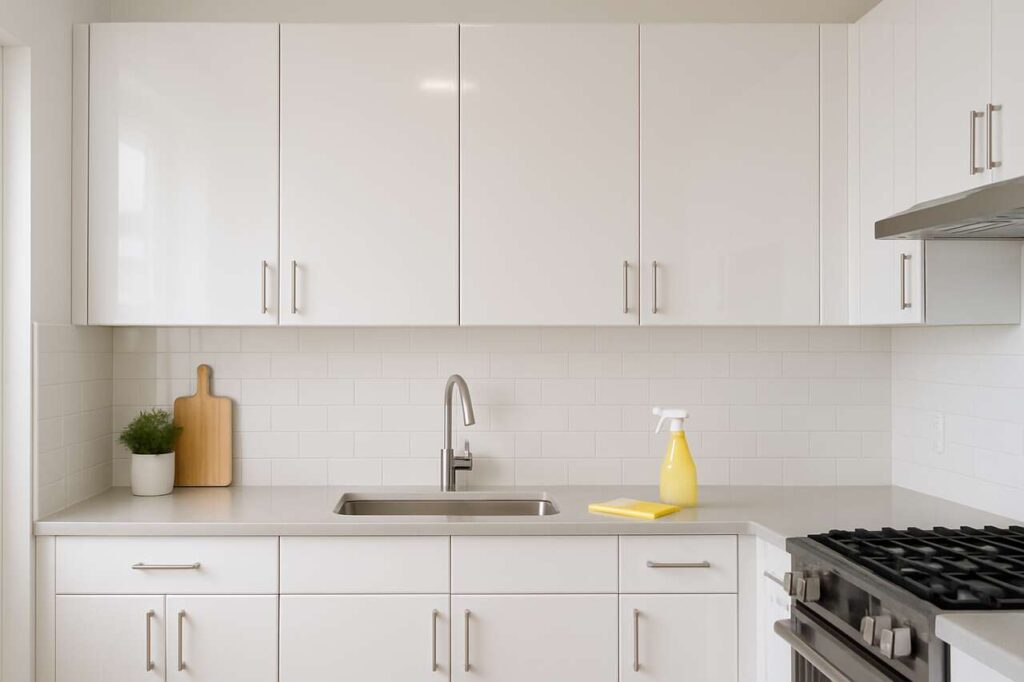
Kitchen cabinets endure daily exposure to cooking grease, steam, and food splatters, gradually accumulating layers of grime that dull their appearance. Professional cleaners have refined their techniques over time to tackle these stubborn deposits efficiently, combining the right products with proven methods that protect cabinet surfaces whilst delivering sparkling results. Understanding these professional approaches can transform a daunting cleaning task into a manageable routine that keeps your kitchen looking fresh and hygienic.
How to choose the right cleaning products for your kitchen cabinets
Identifying your cabinet material first
Before selecting any cleaning product, determining the exact material of your cabinets is absolutely essential. Different surfaces react differently to cleaning agents, and using the wrong product can cause irreversible damage. Professional cleaners always begin by assessing whether they are dealing with solid wood, painted surfaces, laminate, or high-gloss finishes.
- Solid wood and veneered surfaces: these are particularly sensitive to moisture and harsh chemicals that can strip protective finishes
- Painted cabinets: whilst generally durable, they can be damaged by abrasive cleaners or rough scrubbing pads
- Laminate: relatively easy to clean but vulnerable to scratches from abrasive materials
- High-gloss plastic or acrylic: shows fingerprints and smudges readily, requiring gentle cleaning solutions
The dish soap and hot water solution
The most universally safe and effective cleaning solution recommended by professionals consists of a few drops of quality dish soap mixed with hot water in a bowl. This simple combination cuts through grease remarkably well without posing risks to most cabinet materials. The surfactants in dish soap are specifically designed to break down oils and fats, making them ideal for kitchen applications.
When to consider specialised products
For particularly stubborn grease build-up or specific materials, professionals may turn to specialised cabinet cleaners. However, these should always be tested on an inconspicuous area first. Natural alternatives such as vinegar solutions can be effective, though they should never be used on natural wood as the acidity can damage the finish over time.
| Cabinet Material | Recommended Cleaner | Products to Avoid |
|---|---|---|
| Solid wood | Mild dish soap solution | Vinegar, ammonia, bleach |
| Painted surfaces | Gentle all-purpose cleaner | Abrasive powders, scouring pads |
| Laminate | Dish soap or mild detergent | Harsh chemicals, steel wool |
| High-gloss finishes | Microfibre cloth with water | Abrasive cleaners, rough cloths |
Once you have selected the appropriate cleaning product for your cabinet material, the application method becomes equally important for achieving professional results.
Tips for properly wiping kitchen cabinets
Using the correct tools and techniques
Professional cleaners rely heavily on microfibre cloths and soft sponges rather than abrasive scrubbing pads. These materials effectively lift grease and grime without scratching delicate surfaces. When applying your chosen cleaning solution, dampen the cloth or sponge rather than saturating it, as excess moisture poses risks to cabinet materials.
The systematic wiping approach
Working methodically from top to bottom prevents drips from re-soiling already cleaned areas. Apply the cleaning solution in circular motions, paying particular attention to handles, edges, and areas around the cooker where grease accumulates most heavily. After the initial cleaning pass, rinse your cloth or sponge thoroughly in clean water and wipe again to remove any soap residue.
- Start with upper cabinets to prevent drips onto cleaned lower sections
- Use gentle circular motions rather than aggressive scrubbing
- Wring out cloths thoroughly to minimise moisture
- Change cleaning water frequently to avoid spreading grease
- Work in small sections for thorough coverage
The crucial drying step
One of the most important professional secrets is immediate drying after cleaning. Using a clean, dry microfibre cloth, professionals wipe down all cleaned surfaces straight away. This prevents water spots, protects against moisture damage, and ensures surfaces do not become dull or swollen. Never allow water to pool in joints or seams, as this can cause warping or finish deterioration over time.
Beyond these fundamental wiping techniques, establishing a consistent cleaning schedule prevents grease from becoming deeply embedded in the first place.
How to clean cabinets regularly
Daily maintenance habits
Professional cleaners emphasise that prevention is far easier than remediation. A quick daily wipe-down of cabinet fronts near the cooker takes mere minutes but prevents grease from building up into stubborn layers. Keep a designated microfibre cloth handy and simply wipe visible splatters and fingerprints as they occur.
Weekly cleaning routines
A more thorough weekly clean should address all cabinet fronts, not just those in the immediate cooking zone. This regular attention prevents the accumulation of airborne grease particles that settle throughout the kitchen. Use your dish soap solution and follow the proper wiping technique, ensuring you address handles and hardware where oils from hands accumulate.
| Frequency | Areas to Clean | Time Required |
|---|---|---|
| Daily | Cabinets near cooker, visible splatters | 2-3 minutes |
| Weekly | All cabinet fronts and handles | 10-15 minutes |
| Monthly | Cabinet tops, interior shelves | 30-45 minutes |
| Bi-annually | Deep clean including hinges, tracks | 2-3 hours |
Monthly deep attention
Once monthly, extend your cleaning to cabinet tops where dust and grease combine into sticky residue. Pull out small appliances and clean the cabinet surfaces behind them. This monthly routine also provides an opportunity to inspect for any damage or wear that might require attention before it worsens.
Despite regular maintenance, certain areas will inevitably develop more stubborn deposits that require specialised treatment approaches.
Techniques for removing stubborn stains from kitchen cabinets
Assessing the severity of stains
Not all stains respond to standard cleaning methods. Professional cleaners categorise stains by their composition and age before selecting the appropriate removal technique. Fresh grease splatters respond well to dish soap, whilst older, baked-on deposits may require more intensive approaches.
The paste method for persistent grease
For stubborn grease that resists standard wiping, professionals create a gentle paste using bicarbonate of soda and water. Apply this paste to the affected area, allow it to sit for several minutes to break down the grease, then gently work it with a soft cloth in circular motions. The mild abrasive action of bicarbonate of soda lifts grease without damaging most cabinet finishes.
- Mix bicarbonate of soda with just enough water to form a spreadable paste
- Apply to stubborn grease spots and leave for 5-10 minutes
- Gently work the paste with a damp microfibre cloth
- Rinse thoroughly with clean water
- Dry immediately to prevent moisture damage
Addressing specific stain types
Different stains require tailored approaches. Water marks often respond to gentle buffing with a dry cloth, whilst sticky residue from labels or tape may need a small amount of cooking oil applied briefly before wiping clean. For painted cabinets with scuff marks, a magic eraser sponge used very gently can be effective, though always test in an inconspicuous spot first.
When to call professionals
Some stains indicate deeper problems or require expert intervention. If you notice discolouration that penetrates the finish, bubbling or peeling paint, or stains that reappear despite thorough cleaning, these may signal moisture damage or finish failure requiring professional restoration.
Whilst spot-treating stubborn stains addresses immediate concerns, a comprehensive approach to kitchen hygiene extends beyond cabinet surfaces alone.
The importance of regular deep cleaning in the kitchen
Beyond surface-level cleaning
Professional cleaners recommend bi-annual deep cleaning sessions that address areas typically overlooked in routine maintenance. These sessions tackle the accumulation of grease, bacteria, and allergens in hard-to-reach spaces such as cabinet hinges, the tops of wall units, and the gaps between cabinets and appliances.
Health and hygiene considerations
Kitchens harbour more bacteria than most other rooms in the home, with grease providing an ideal medium for microbial growth. Regular deep cleaning disrupts these colonies, reducing the risk of food contamination and improving overall kitchen hygiene. Particular attention should be paid to areas around bins, sinks, and food preparation zones.
- Remove all items from cabinet tops and clean thoroughly
- Clean inside cabinets, especially those storing food
- Address appliance exteriors and the spaces behind them
- Clean ventilation grilles and extractor fan filters
- Sanitise frequently touched surfaces including handles and switches
Protecting your investment
Kitchen cabinets represent a significant financial investment in your home. Regular deep cleaning extends their lifespan by preventing the gradual deterioration that occurs when grease and grime are allowed to accumulate. This protective maintenance preserves both the aesthetic appeal and functional integrity of your cabinetry.
Creating a healthier environment
Beyond protecting surfaces, thorough kitchen cleaning reduces airborne particles and allergens that affect indoor air quality. Grease particles become airborne during cooking and settle throughout the kitchen, potentially triggering respiratory sensitivities in susceptible individuals. Comprehensive cleaning removes these accumulated particles, contributing to a healthier home environment overall.
Kitchen cabinet maintenance need not be an overwhelming chore when approached with professional techniques and consistent routines. By selecting appropriate cleaning products for your specific cabinet materials, employing proper wiping methods, maintaining regular cleaning schedules, and addressing stubborn stains promptly, you can achieve the same sparkling results that professional cleaners deliver. The investment of time in bi-annual deep cleaning sessions pays dividends in hygiene, cabinet longevity, and the overall appeal of your kitchen space. These straightforward methods, refined through professional experience, transform cabinet care from a daunting task into a manageable aspect of home maintenance that protects both your investment and your family’s health.