

Window treatments serve as the finishing touch to any room, yet certain styles that once dominated interior design are now losing their appeal. As tastes evolve and functionality takes precedence, homeowners are seeking fresh alternatives that blend aesthetics with practicality. Understanding which trends are fading and what options can replace them ensures your spaces remain contemporary whilst meeting modern living requirements.
Horizontal blinds: a fashion that’s faded ?
The limitations of traditional horizontal blinds
Horizontal blinds, particularly those crafted from basic aluminium or plastic, have long been a staple in rental properties and budget-conscious homes. However, their clinical appearance and tendency to accumulate dust have rendered them less desirable in contemporary interiors. The dated aesthetic they project often contradicts the warm, inviting atmosphere most homeowners now seek to create.
These window coverings present several practical challenges:
- Slats bend easily, creating an unkempt appearance
- Dust collection requires frequent, tedious cleaning
- Limited insulation properties fail to regulate temperature effectively
- Cords pose safety hazards, particularly in homes with young children
Modern alternatives to consider
Rather than persisting with outdated horizontal blinds, homeowners are embracing plantation shutters or cellular shades. Plantation shutters offer timeless elegance with superior light control, whilst cellular shades provide excellent insulation and come in cordless options. Both alternatives deliver enhanced functionality without sacrificing visual appeal, making them worthwhile investments for any room.
The shift away from horizontal blinds reflects a broader movement towards window treatments that combine form and function, setting the stage for examining other outdated choices.
Heavy curtains: why should they be replaced ?
The burden of excessive fabric
Thick, heavy curtains with elaborate swags and tassels once symbolised luxury and sophistication. Today, these cumbersome window dressings feel oppressive rather than opulent. They block natural light unnecessarily, making rooms appear smaller and darker than they actually are. The maintenance demands of such treatments—professional cleaning, special care, and difficult removal for washing—add to their impracticality in modern households.
| Aspect | Heavy Curtains | Modern Alternatives |
|---|---|---|
| Light transmission | Minimal | Adjustable |
| Maintenance frequency | Professional cleaning required | Machine washable or wipeable |
| Visual weight | Overwhelming | Streamlined |
Lighter, more versatile options
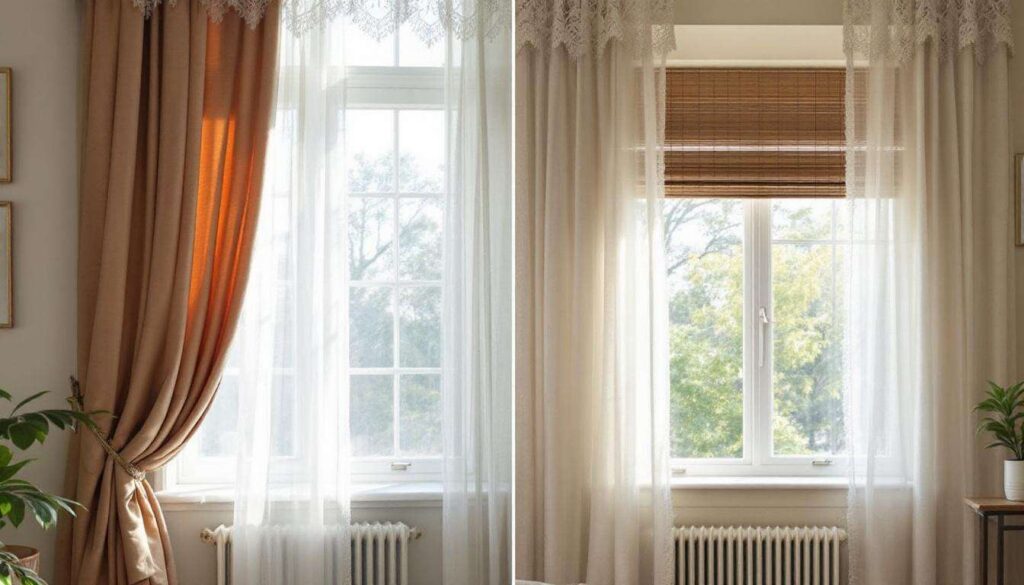
Contemporary design favours linen curtains or layered treatments that offer flexibility. Lightweight linen provides texture and softness whilst allowing natural light to filter through, creating an airy atmosphere. Pairing simple curtain panels with roller blinds or Roman shades enables homeowners to adjust privacy and light levels throughout the day, adapting to changing needs without the heaviness of traditional drapes.
This preference for lighter materials naturally leads to questions about pattern choices and their place in current design thinking.
The decline of floral patterns: a modern touch
Why bold florals feel outdated
Large-scale floral prints, particularly those featuring bright, contrasting colours, dominated window treatments during previous decades. These patterns now appear overly busy and clash with the minimalist sensibilities that characterise contemporary interiors. Floral curtains can overwhelm a space, making it difficult to incorporate other decorative elements without creating visual chaos.
Contemporary pattern alternatives
Modern design embraces subtlety and restraint. Instead of abandoning patterns entirely, consider these refined options:
- Geometric prints in muted tones that complement rather than dominate
- Abstract designs with organic shapes for visual interest without fussiness
- Subtle textures such as linen weaves or jacquard patterns
- Monochromatic schemes that create depth through tone-on-tone variations
These understated patterns integrate seamlessly with various décor styles whilst maintaining a fresh, current appearance. They provide visual interest without overwhelming the senses, allowing other design elements to shine.
Pattern choices connect closely with material selections, particularly when considering classic options that may no longer suit contemporary needs.
Venetian blinds: choose warm alternatives
The cold aesthetic of traditional Venetian blinds
Venetian blinds, especially those in metallic finishes, project an institutional feel that contradicts the warmth most homeowners desire. Their stark appearance suits office environments better than residential spaces. The horizontal slats create visual lines that can make rooms feel segmented rather than cohesive, whilst the materials often feel cold to the touch.
Warmer, more inviting selections
For those seeking the functionality of slatted blinds without the coldness, wooden blinds or bamboo shades offer excellent alternatives. Natural materials introduce warmth and texture, creating an organic connection between indoors and outdoors. These options provide:
- Superior insulation properties compared to metal alternatives
- A softer, more residential aesthetic
- Durability that improves with age rather than deteriorating
- Compatibility with various design styles from traditional to contemporary
The natural grain and colour variations in wooden treatments add character whilst maintaining the practical benefits of adjustable slats for light control and privacy.
Whilst some window treatments suffer from being too heavy or cold, others face different challenges related to their delicate nature.
Sheer drapes: chic yet not always practical
The limitations of purely decorative treatments
Sheer curtains alone offer minimal functionality despite their ethereal appearance. They provide neither adequate privacy nor effective light blocking, serving primarily as decorative elements. In bedrooms or street-facing windows, their translucent nature becomes problematic, requiring additional layers that complicate the overall window treatment scheme.
Functional layering solutions
Rather than relying solely on sheers, consider implementing dual-layer systems that combine beauty with practicality. Pairing sheer panels with blackout roller blinds concealed behind a pelmet creates flexibility—sheers soften the window during daytime whilst blinds provide complete privacy and darkness when needed. This approach delivers:
| Benefit | Description |
|---|---|
| Versatility | Adjust coverage throughout the day |
| Energy efficiency | Blackout layers reduce heat loss |
| Aesthetic appeal | Maintains soft, elegant appearance |
This layered approach acknowledges that window treatments must serve multiple purposes in modern homes, balancing visual appeal with genuine functionality.
Beyond texture and layering, colour choices significantly impact whether window treatments feel current or dated.
Bright colour palettes: making way for subtlety
The problem with bold, saturated hues
Window treatments in vibrant colours—electric blues, hot pinks, or lime greens—quickly date a space and limit decorating flexibility. These attention-grabbing shades dominate rooms, making it challenging to update other elements without clashing. What feels trendy initially often becomes tiresome, requiring replacement sooner than neutral alternatives.
Embracing neutral sophistication
Contemporary design favours a refined colour palette that creates a calming backdrop. Neutral tones don’t equate to boring; instead, they offer sophisticated versatility:
- Warm greys provide modern elegance without coldness
- Soft taupes and beiges create cosy, inviting atmospheres
- Creamy whites brighten spaces whilst maintaining warmth
- Muted sage or dusty blue introduce subtle colour without overwhelming
These understated shades allow homeowners to refresh décor through accessories and furnishings without replacing expensive window treatments. They complement rather than compete with architectural features and furniture selections, providing a timeless foundation that adapts to evolving tastes.
Window treatments represent significant investments in both money and aesthetic impact. Selecting styles that balance current design sensibilities with lasting appeal ensures spaces remain fresh and functional for years to come. By moving away from dated options like horizontal blinds, heavy drapes, bold florals, cold Venetian blinds, impractical sheers, and bright colour schemes, homeowners can embrace alternatives that offer superior functionality, timeless elegance, and genuine versatility. The most successful window treatments quietly enhance rooms rather than demanding attention, creating harmonious environments that support daily living whilst reflecting personal style.