



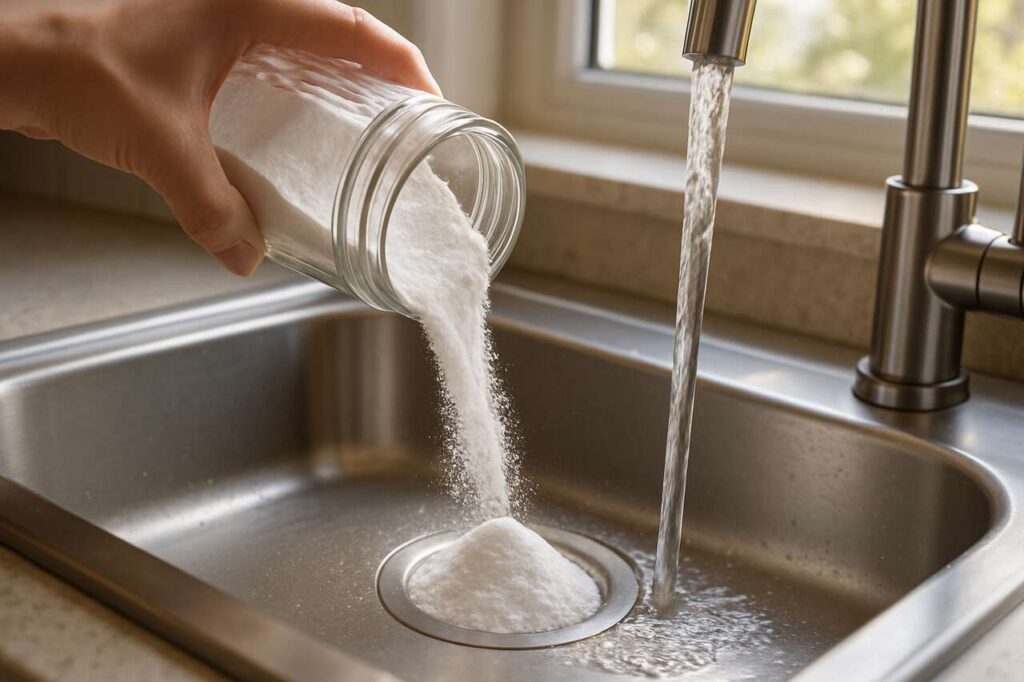
Blocked drains represent one of the most frustrating household problems, often requiring expensive interventions or harsh chemical products. However, a simple and natural solution exists that can transform the way you maintain your plumbing system. By pouring half a glass of a carefully prepared mixture down your drain, you can create a self-cleaning effect that prevents blockages and keeps your pipes flowing freely. This method relies on basic household ingredients and scientific principles that have been used for generations, offering an environmentally responsible alternative to commercial drain cleaners.
How self-cleaning drains work
The science behind natural drain cleaning
The self-cleaning mechanism relies on a chemical reaction that occurs when acidic and alkaline substances combine. When vinegar, an acid, meets bicarbonate of soda, an alkali, they create carbon dioxide gas and water. This reaction produces effervescence and foam that physically dislodges debris whilst the solution breaks down organic matter clinging to pipe walls. The bubbling action reaches areas that water alone cannot penetrate, creating a thorough cleaning effect throughout the drainage system.
Physical properties that enhance cleaning
Beyond the chemical reaction, several physical factors contribute to the effectiveness of this method:
- The foam expands to fill the entire pipe diameter, ensuring comprehensive coverage
- Heat generated during the reaction helps to soften grease and soap residue
- The effervescence creates mechanical agitation that scrubs pipe surfaces
- The solution’s low viscosity allows it to penetrate small crevices and gaps
Understanding these mechanisms helps explain why this simple approach can be remarkably effective at maintaining clear drains without resorting to harsh chemicals that damage pipes and harm the environment.
Essential ingredients for eco-friendly maintenance
Bicarbonate of soda as the foundation
Bicarbonate of soda serves as the primary cleaning agent in this natural solution. This mild alkaline compound effectively neutralises odours whilst providing gentle abrasive properties that help remove buildup. Its crystalline structure allows it to scour surfaces without causing damage to pipes, making it safe for all plumbing materials including older metal pipes and modern PVC systems.
White vinegar for acidic action
White vinegar provides the acidic component necessary to trigger the cleaning reaction. Its acetic acid content dissolves mineral deposits and breaks down organic matter effectively. The antimicrobial properties of vinegar also help eliminate bacteria that contribute to unpleasant odours in drains.
Optional enhancing ingredients
| Ingredient | Purpose | Quantity |
|---|---|---|
| Salt | Increases abrasive action | 2 tablespoons |
| Lemon juice | Adds fresh scent and acidity | 50ml |
| Hot water | Enhances grease dissolution | 500ml |
These simple, affordable ingredients work together to create a powerful yet environmentally friendly cleaning solution that costs pennies compared to commercial alternatives.
Steps to prepare your homemade descaling solution
Basic preparation method
Creating your drain-cleaning solution requires minimal effort and no special equipment. Begin by measuring half a cup of bicarbonate of soda and pouring it directly down the drain. Follow this immediately with half a cup of white vinegar, which will trigger the fizzing reaction. Allow the mixture to work for at least 30 minutes, during which time the foam will penetrate the pipes and break down accumulated debris.
Enhanced formula for stubborn blockages
For drains showing signs of slow drainage or persistent odours, an enhanced approach proves more effective:
- Mix bicarbonate of soda with salt in equal proportions
- Pour the dry mixture down the drain first
- Heat white vinegar until warm but not boiling
- Pour the warm vinegar slowly to maximise the reaction time
- Cover the drain opening with a plug or cloth to contain the foam
- Wait 45 minutes before flushing with hot water
Timing and frequency recommendations
The timing of application significantly affects results. Performing this maintenance before bedtime allows the solution to work overnight without interruption from water use. For preventive maintenance, monthly applications suffice for most households. Kitchens with heavy cooking may benefit from fortnightly treatments, whilst bathroom drains typically require attention every six weeks.
The benefits of regular and environmentally-friendly maintenance
Cost savings and environmental impact
Regular use of natural drain cleaners delivers substantial financial benefits whilst protecting the environment. Commercial drain cleaners typically cost between £5 and £15 per bottle, whereas a year’s supply of bicarbonate of soda and vinegar costs less than £10. Moreover, these natural ingredients decompose harmlessly in wastewater systems, unlike chemical cleaners that introduce toxins into water supplies and harm aquatic ecosystems.
Pipe preservation and longevity
Chemical drain cleaners generate extreme heat that can weaken pipe joints and corrode metal components over time. Natural alternatives clean effectively without causing structural damage, potentially extending the lifespan of your plumbing system by years. This gentle approach proves particularly valuable in older properties where pipes may already show signs of wear.
Health and safety advantages
Households with children, pets, or individuals with respiratory sensitivities benefit enormously from eliminating harsh chemicals. Natural drain cleaners produce no toxic fumes, require no special handling precautions, and pose minimal risk if accidentally contacted with skin or eyes.
Common mistakes to avoid when using homemade products
Improper ingredient combinations
Whilst natural ingredients are generally safe, certain combinations reduce effectiveness or create problems. Never mix bleach with vinegar, as this produces toxic chlorine gas. Avoid using boiling water in toilets or with PVC pipes, as extreme temperatures can cause cracks. Using too much bicarbonate of soda without sufficient vinegar leaves residue that may contribute to blockages rather than preventing them.
Inadequate follow-through procedures
Many people make the mistake of not flushing thoroughly after the cleaning reaction completes. The dislodged debris and spent cleaning solution must be completely removed from the pipes to prevent it from settling and causing new blockages. Always finish with a generous flush of hot water, running for at least two minutes to ensure everything clears the system.
Unrealistic expectations for severe blockages
Natural cleaning methods excel at prevention and maintenance but have limitations when addressing complete blockages. Expecting these gentle solutions to clear solid obstructions or tree root intrusions leads to disappointment and wasted time.
When to call a professional for blocked drains
Warning signs requiring expert intervention
Certain symptoms indicate problems beyond the scope of homemade solutions:
- Multiple drains backing up simultaneously, suggesting a main line blockage
- Gurgling sounds from toilets when using sinks, indicating venting issues
- Water pooling around floor drains or external gullies
- Persistent slow drainage despite repeated natural cleaning attempts
- Foul sewage odours that cleaning cannot eliminate
Professional tools and techniques
Plumbers possess specialised equipment that homeowners cannot replicate. CCTV drain surveys identify the exact location and nature of blockages, whilst high-pressure water jetting removes stubborn obstructions without damaging pipes. Professionals can also detect underlying structural issues such as collapsed pipes or root infiltration that require repair rather than cleaning.
Cost-benefit analysis of professional services
Whilst calling a plumber represents a significant expense, typically ranging from £80 to £200 for standard callouts, this investment prevents potentially catastrophic damage. Ignoring serious drainage problems can lead to sewage backups, property damage, and health hazards that cost thousands to remediate. Professional intervention becomes cost-effective when natural methods fail after two or three attempts.
Maintaining clear drains need not involve expensive chemicals or frequent plumber visits. The simple combination of bicarbonate of soda and vinegar provides an effective, affordable, and environmentally responsible solution for regular drain maintenance. By understanding the science behind this method and applying it correctly, households can prevent most common drainage problems whilst protecting both their plumbing systems and the environment. However, recognising when professional assistance becomes necessary ensures that minor issues never escalate into major disasters.