



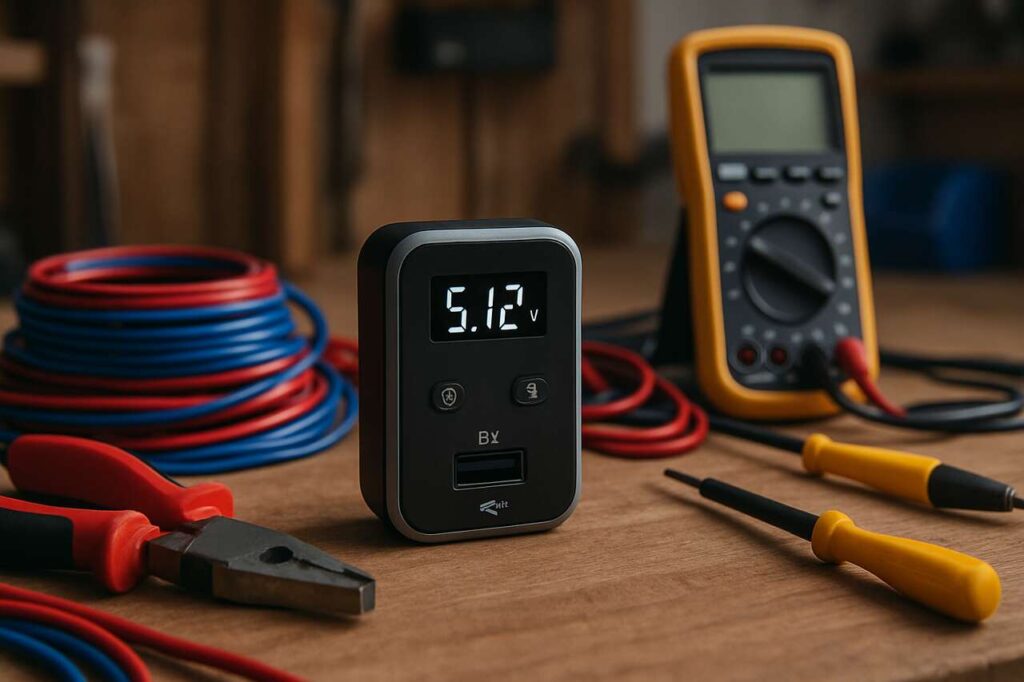
Every electrician, professional or amateur, knows the importance of safety when working with electrical installations. Before touching any wire or circuit, one essential step remains paramount: verifying the absence of voltage. This simple precaution can prevent serious accidents, electric shocks, and even fatal incidents. Among the various tools available, one stands out for its affordability, reliability, and ease of use. This modest device has become the first item I reach for before any electrical intervention, and for good reason.
The usefulness of inexpensive gadgets in electricity
Electrical work does not always require expensive professional equipment. Many affordable tools offer excellent performance and reliability, making them accessible to both seasoned electricians and DIY enthusiasts. The key lies in understanding which gadgets provide genuine value rather than simply accumulating equipment.
Cost-effectiveness without compromising safety
Inexpensive electrical gadgets have evolved significantly over recent years. Manufacturers now produce reliable voltage testers, circuit detectors, and safety devices at prices that won’t strain any budget. These tools often incorporate the same fundamental technology as their premium counterparts, delivering accurate results without the hefty price tag. For homeowners tackling occasional electrical projects, investing hundreds of pounds in professional-grade equipment makes little financial sense when affordable alternatives perform admirably.
Accessibility for everyone
The democratisation of electrical safety tools has made proper practices available to a wider audience. When essential equipment costs only a few pounds, there’s no excuse for cutting corners on safety. This accessibility encourages responsible electrical work and reduces the temptation to bypass crucial safety checks. Budget-friendly options have transformed electrical safety from a professional privilege into a universal standard.
Understanding the value of affordable tools naturally leads to identifying which specific gadget deserves a permanent place in every toolbox.
Introduction to the must-have gadget
The non-contact voltage tester, often called a voltage pen or voltage detector, represents the quintessential first-grab tool for electrical work. This compact device, typically resembling a thick marker pen, detects the presence of alternating current without requiring direct contact with bare wires. Priced between £5 and £20 for reliable models, it offers exceptional value for its critical function.
How it works
Non-contact voltage testers operate on a simple yet effective principle. The device contains a sensor that detects the electromagnetic field generated by live electrical current. When brought near an energised wire, cable, or outlet, the tester alerts the user through visual indicators, audible beeps, or both. Most models feature:
- LED lights that illuminate when voltage is detected
- Audible alarms with varying tones for different voltage levels
- Sensitivity adjustment options for different applications
- Pocket clips for convenient carrying
- Battery-powered operation with long-lasting cells
Why it stands out
Unlike multimeters or contact-based testers, the non-contact voltage tester requires no setup, no probe positioning, and no direct contact with potentially dangerous conductors. This simplicity and speed make it invaluable for quick safety checks before commencing work. A simple wave near a wire or switch provides immediate confirmation of electrical status, allowing work to proceed safely or alerting to unexpected live circuits.
Having established what this gadget is, examining its specific benefits reveals why it has earned its place as an indispensable tool.
Advantages of the tool before electrical work
The non-contact voltage tester delivers numerous practical advantages that justify its position as the first tool to employ before any electrical intervention.
Speed and convenience
Time efficiency matters in electrical work. The voltage tester provides instant verification without requiring circuit isolation, probe attachment, or complex settings. This speed proves particularly valuable when checking multiple points or confirming that isolation procedures have successfully de-energised circuits. The ability to test through insulation, switch plates, and junction box covers further enhances convenience.
Enhanced safety profile
Safety represents the paramount consideration. The non-contact nature eliminates risks associated with touching live conductors during testing. Traditional contact-based methods require deliberate connection to potentially energised circuits, creating exposure opportunities. The voltage pen maintains a protective barrier between the user and dangerous voltage levels whilst still providing reliable detection.
Versatility across applications
| Application | Benefit |
|---|---|
| Socket testing | Quick verification before removal or modification |
| Cable identification | Distinguishing live cables in crowded junction boxes |
| Isolation confirmation | Verifying successful circuit breaker operation |
| Fault finding | Tracing live conductors behind walls |
| Appliance checking | Detecting voltage on appliance casings |
These advantages become fully realised only when the tool is employed correctly, making proper usage techniques essential knowledge.
How to use this tool effectively
Maximising the effectiveness of a non-contact voltage tester requires understanding proper techniques and recognising its limitations.
Basic operation steps
Using the voltage tester follows a straightforward process:
- Verify the tester functions by testing a known live circuit
- Approach the area to be tested slowly with the sensor tip
- Move the tester around the conductor or fixture systematically
- Observe both visual and audible indicators
- Test at multiple points to ensure comprehensive coverage
- Reconfirm with a known live source after testing to ensure continued function
Important considerations
The tool’s effectiveness depends on proper application. Always test the device before and after use on a confirmed live circuit to verify battery condition and sensor operation. Be aware that extremely thick insulation or shielded cables may reduce sensitivity. Never rely solely on a negative reading; combine voltage testing with other safety measures including proper isolation procedures and lockout protocols.
Common mistakes to avoid
Users sometimes develop overconfidence, trusting the tester without verification checks. Battery depletion can render the device non-functional without obvious indication. Additionally, some individuals wave the tester too quickly, not allowing sufficient time for detection. Maintain slow, deliberate movements and allow the sensor adequate exposure time to each test point.
Understanding how this tool compares to alternatives helps appreciate its unique position in the electrical toolkit.
Comparison with other tools on the market
The electrical tool market offers various voltage detection options, each with distinct characteristics.
Multimeters versus voltage testers
Digital multimeters provide comprehensive measurement capabilities including voltage, current, and resistance. However, they require direct contact with conductors and more complex operation. For quick safety verification, multimeters prove slower and potentially more hazardous. The voltage tester excels at its single purpose: rapid voltage detection without contact. For detailed measurements and diagnostics, multimeters remain essential, but for initial safety checks, the voltage pen wins decisively.
Contact voltage testers
Two-probe voltage testers require touching both conductors simultaneously, creating deliberate contact with potentially live circuits. Whilst they confirm actual voltage presence definitively, they introduce unnecessary risk for preliminary checks. The non-contact alternative provides adequate verification for safety purposes without the exposure.
Premium versus budget models
| Feature | Budget Models | Premium Models |
|---|---|---|
| Price range | £5-£15 | £20-£50 |
| Voltage detection | Basic AC detection | AC/DC with voltage indication |
| Build quality | Plastic construction | Reinforced materials |
| Additional features | LED and beeper | Flashlight, laser pointer, adjustable sensitivity |
For most users, budget models provide entirely adequate performance for safety verification tasks, making expensive upgrades unnecessary.
Selecting the right electrical equipment extends beyond voltage testers to encompass a broader range of considerations.
Tips for choosing the right electrical equipment
Building an effective electrical toolkit requires thoughtful selection based on actual needs rather than marketing claims.
Prioritise safety certifications
Always verify that electrical tools carry appropriate safety certifications and comply with relevant standards. Look for CE marking and verification that the device meets IEC standards for electrical testing equipment. Certification ensures the tool has undergone testing and meets minimum safety requirements, providing confidence in its protective capabilities.
Match tools to intended applications
Consider the specific electrical work you undertake. Occasional home maintenance requires different equipment than professional electrical contracting. Avoid purchasing unnecessary professional-grade tools that exceed your requirements, but equally, don’t compromise on essential safety equipment. The voltage tester represents a universal need regardless of skill level or project scope.
Balance cost and quality
Cheap doesn’t always mean inferior, but extremely low prices may indicate substandard components or inadequate quality control. Research reviews, seek recommendations from experienced users, and favour established brands with proven track records. For critical safety equipment, spending slightly more for reliability proves worthwhile, though the voltage tester demonstrates that affordability and quality can coexist.
Essential toolkit components
- Non-contact voltage tester for primary safety verification
- Insulated screwdrivers for working on electrical fixtures
- Wire strippers for cable preparation
- Electrical tape for insulation and marking
- Torch for illuminating work areas
- Personal protective equipment including safety glasses
The non-contact voltage tester deserves its reputation as an essential first tool for electrical work. Its combination of affordability, simplicity, and safety makes it indispensable for anyone working with electrical systems. By providing rapid, contact-free voltage detection, it enables safe working practices without requiring significant investment or complex operation. Whether you’re a professional electrician or a homeowner tackling occasional repairs, this modest gadget offers protection that far exceeds its modest cost. Proper selection of electrical equipment, with safety as the paramount consideration, ensures that every project proceeds with appropriate precautions. The voltage tester exemplifies how the right tool, regardless of price, becomes invaluable through consistent, reliable performance when it matters most.