



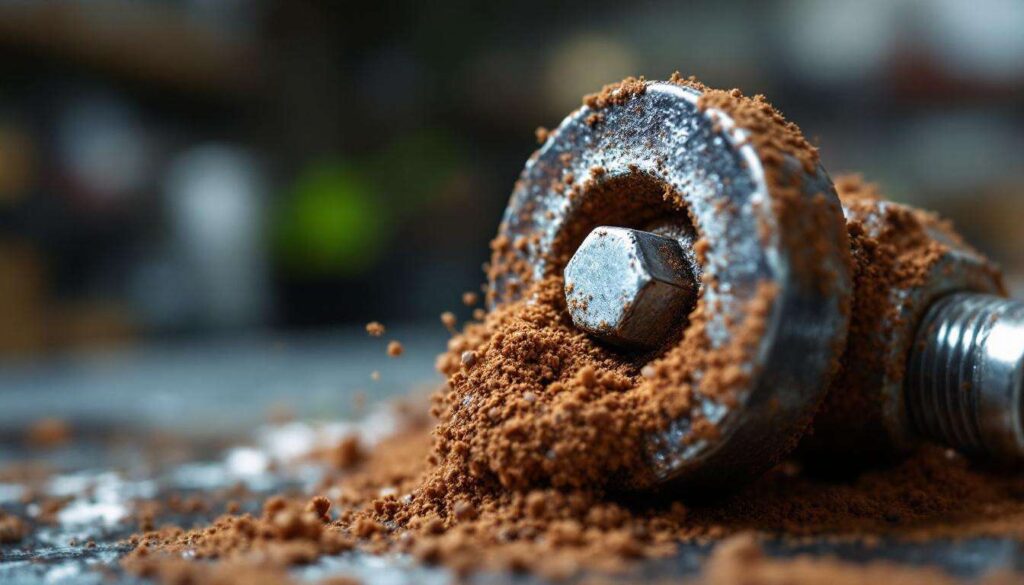
Rusty bolts present a frustrating challenge for anyone attempting home repairs or maintenance work. The corrosion forms a stubborn bond that makes removal seem nearly impossible without specialised tools or harsh chemicals. However, a simple pantry staple offers an effective and surprisingly gentle solution to this common problem. White vinegar, an ingredient found in virtually every kitchen, possesses remarkable properties that can dissolve rust and make bolt removal considerably easier.
The miracle ingredient hiding in your kitchen
White vinegar stands as the unsung hero in the battle against rust. This acidic liquid, typically used for cooking and cleaning, contains acetic acid at concentrations between four and eight per cent. The modest appearance of this clear liquid belies its powerful ability to tackle one of the most persistent maintenance issues faced by homeowners and mechanics alike.
Why vinegar works where brute force fails
The secret lies in vinegar’s chemical composition. Unlike mechanical methods that risk damaging threads or breaking bolts entirely, vinegar works through a chemical reaction that specifically targets rust without harming the underlying metal. This selective action makes it particularly valuable for delicate situations where preserving the bolt’s integrity remains essential.
Most households already stock white vinegar for various purposes, making it an immediately accessible solution. The affordability factor cannot be overlooked either, as a bottle costs merely a fraction of commercial rust removers or penetrating oils. This combination of effectiveness and economy explains why experienced mechanics and DIY enthusiasts increasingly turn to this traditional remedy.
Understanding how this humble ingredient achieves such impressive results requires examining the science behind rust formation and dissolution.
How does this ingredient act on rust ?
Rust forms when iron or steel reacts with oxygen and moisture, creating iron oxide. This reddish-brown compound expands as it forms, creating the tight grip that makes rusty bolts so difficult to remove. Vinegar attacks this compound through a process called chelation.
The chemical breakdown process
When acetic acid contacts rust, it initiates a chemical reaction that converts iron oxide into iron acetate, a water-soluble compound. This transformation essentially dissolves the rust rather than simply loosening it. The process occurs gradually, allowing the acid to penetrate deep into crevices and threads where rust has accumulated.
| Time soaked | Rust removal effectiveness |
|---|---|
| 2-4 hours | Light surface rust removed |
| 8-12 hours | Moderate rust significantly reduced |
| 24 hours | Heavy rust substantially dissolved |
Factors affecting dissolution speed
Several variables influence how quickly vinegar works on rusty bolts. Temperature plays a significant role, as warmer vinegar accelerates the chemical reaction. The concentration of acetic acid also matters, with higher percentages working faster. The severity of rust accumulation determines the required soaking time, with heavily corroded bolts needing extended exposure.
Practical application of this knowledge requires following specific steps to maximise effectiveness.
Steps to use this ingredient against rust
Successfully removing rusty bolts with vinegar demands proper technique and patience. The process itself remains straightforward, but attention to detail ensures optimal results.
Preparation and application method
Begin by assessing whether the bolt can be submerged or requires localised treatment. For removable items, complete submersion in a container of white vinegar provides the most thorough coverage. When dealing with fixed bolts, create a vinegar-soaked cloth wrap or use a small cup secured around the bolt.
- Clean away loose debris and dirt from around the bolt
- Pour undiluted white vinegar into an appropriate container
- Submerge the rusty bolt completely or apply soaked cloths
- Allow sufficient soaking time based on rust severity
- Check progress periodically and refresh vinegar if needed
- Scrub with a wire brush to remove loosened rust
- Rinse thoroughly with water and dry immediately
Enhancing the process
For particularly stubborn bolts, adding salt to the vinegar creates a more aggressive solution. The salt acts as a mild abrasive whilst also enhancing the chemical reaction. Heating the vinegar slightly before application can also accelerate the process, though care must be taken to avoid temperatures that might damage surrounding materials.
After successfully removing rust, attempting to turn the bolt should prove considerably easier. Apply penetrating oil or a lubricant before using tools to minimise the risk of breaking the bolt during removal.
Beyond its practical effectiveness, this method offers significant advantages for environmentally conscious individuals.
The environmental benefits of this method
Choosing vinegar over commercial rust removers represents a responsible environmental decision. The ecological impact of maintenance choices often goes unconsidered, yet these small decisions accumulate into significant effects.
Biodegradability and safety
White vinegar breaks down naturally without leaving harmful residues in soil or water systems. Unlike petroleum-based penetrating oils or chemical rust removers containing phosphoric acid, vinegar poses minimal risk to ecosystems. The spent solution can typically be disposed of through normal drainage systems without special handling requirements.
The safety profile extends to personal health as well. Vinegar produces no toxic fumes, eliminating respiratory concerns associated with many commercial products. Skin contact, whilst best avoided, causes no serious harm compared to the burns or irritation possible with stronger chemicals.
Reducing chemical dependency
Adopting vinegar for rust removal reduces demand for products packaged in plastic containers and manufactured through energy-intensive industrial processes. This shift, multiplied across thousands of users, contributes meaningfully to reducing the chemical load introduced into the environment through household maintenance activities.
These environmental advantages complement the practical benefits, but how does vinegar compare directly to conventional solutions ?
Comparison with traditional solutions
Evaluating vinegar against established rust removal methods reveals distinct advantages and limitations worth considering.
Performance analysis
| Method | Cost | Effectiveness | Safety |
|---|---|---|---|
| White vinegar | Very low | Moderate to high | Excellent |
| Commercial rust remover | Moderate | High | Fair |
| Penetrating oil | Low to moderate | Moderate | Good |
| Wire brushing alone | Very low | Low | Good |
Commercial rust removers often work faster than vinegar, particularly on severe corrosion. However, they command higher prices and require careful handling. Penetrating oils excel at loosening bolts but do little to actually remove rust. They work best in combination with other methods rather than as standalone solutions.
Time investment considerations
The primary drawback of vinegar involves the extended soaking time required. Situations demanding immediate bolt removal may necessitate faster alternatives. However, for planned maintenance or non-urgent repairs, the time requirement becomes negligible when weighed against the cost savings and safety benefits.
Once bolts are freed from rust’s grip, taking preventive measures ensures the problem doesn’t recur.
Tips for preventing rust in the future
Proactive rust prevention proves far easier than dealing with established corrosion. Several straightforward practices significantly reduce the likelihood of bolts seizing due to rust.
Protective coatings and barriers
Applying a thin layer of grease, oil, or specialised anti-seize compound to bolt threads before installation creates a moisture barrier that prevents rust formation. This simple step takes seconds but can save hours of frustration later. For outdoor applications, consider using stainless steel or galvanised bolts that resist corrosion inherently.
- Apply anti-seize compound to threads before installation
- Use appropriate bolt materials for the environment
- Paint exposed bolt heads with rust-inhibiting paint
- Install in sheltered locations when possible
- Regularly inspect and reapply protective coatings
Environmental control
Moisture drives rust formation, so reducing exposure to water and humidity protects bolts effectively. Store tools and equipment in dry locations. For outdoor fixtures, ensure proper drainage prevents water pooling around bolted connections. Regular cleaning removes salt and contaminants that accelerate corrosion in coastal or winter road environments.
White vinegar offers an accessible, effective, and environmentally sound solution for removing rusty bolts. Its chemical properties specifically target rust whilst remaining safe for users and the environment. Though requiring patience, this method delivers results comparable to commercial products at a fraction of the cost. Combined with preventive measures, vinegar-based rust removal represents a practical approach that every homeowner and DIY enthusiast should consider adding to their maintenance repertoire.