



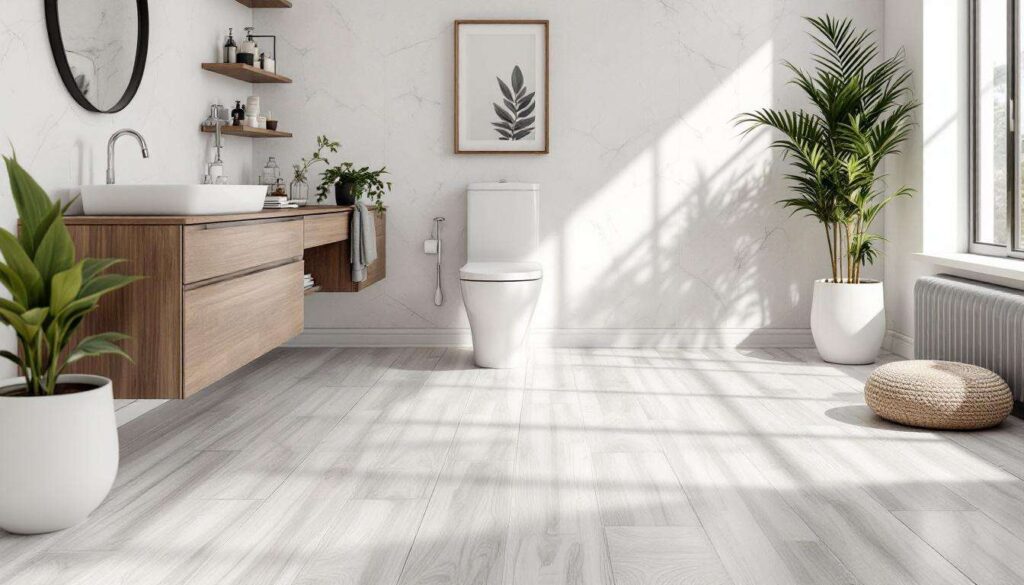
Laying vinyl flooring in a bathroom appears deceptively straightforward at first glance. Armed with a few online tutorials and a weekend to spare, many homeowners dive into this project expecting a quick transformation. Yet beneath the surface of this seemingly simple task lies a series of challenges and considerations that rarely feature in glossy how-to guides. From unexpected subfloor issues to the nuances of moisture management, the reality of installing vinyl in one of the home’s most demanding environments often proves far more complex than anticipated. Understanding these hidden aspects before beginning can mean the difference between a successful renovation and a costly mistake.
Essential steps to properly plan your project
Assessing your bathroom’s unique conditions
Before purchasing a single plank of vinyl, a thorough assessment of your bathroom environment is absolutely critical. Bathrooms present unique challenges that other rooms simply do not face, particularly regarding moisture levels and temperature fluctuations. Begin by examining the current state of your existing flooring and the subfloor beneath. Check for any signs of water damage, soft spots, or irregularities that could compromise your installation. Many DIYers discover rotted floorboards or previous water damage only after removing old flooring, which can dramatically alter project timelines and budgets.
Consider these essential evaluation points:
- Measure moisture levels using a moisture metre, particularly near the toilet, shower, and sink areas
- Inspect the subfloor for levelness using a long spirit level
- Check for any existing damage from previous leaks or plumbing issues
- Assess whether your bathroom floor can accommodate the additional height of new vinyl
- Determine if door clearances will need adjustment after installation
Creating a realistic timeline and budget
Time estimates for DIY vinyl installation are notoriously optimistic. What manufacturers suggest as a weekend project frequently extends into a week or more when accounting for proper preparation, acclimatisation of materials, and unforeseen complications. Factor in at least double the estimated installation time, particularly if this is your first vinyl flooring project. Budget considerations extend beyond the vinyl itself to include underlayment, adhesives, cutting tools, and potentially subfloor repairs that only become apparent once work begins.
| Project element | Typical cost range | Time required |
|---|---|---|
| Vinyl flooring material | £15-45 per square metre | N/A |
| Underlayment | £3-8 per square metre | N/A |
| Adhesive and sealants | £20-60 total | N/A |
| Surface preparation | £50-200 | 4-8 hours |
| Installation | DIY labour | 8-16 hours |
Understanding these planning fundamentals sets the foundation for addressing the equally important question of material selection.
How to choose the right vinyl for the bathroom
Understanding vinyl flooring types and their suitability
Not all vinyl flooring performs equally well in bathroom environments. Luxury vinyl tile (LVT) and luxury vinyl plank (LVP) have largely superseded traditional sheet vinyl for bathroom applications, offering superior water resistance and aesthetic appeal. However, within these categories exist significant variations in quality and performance. Look for products specifically rated for wet areas, with waterproof cores rather than merely water-resistant surfaces. This distinction becomes crucial when dealing with inevitable bathroom moisture and occasional flooding from overflowing baths or leaking toilets.
Key specifications to examine include:
- Wear layer thickness of at least 0.3mm for residential bathrooms
- Waterproof core construction, typically WPC (wood plastic composite) or SPC (stone plastic composite)
- Attached underlayment with moisture barrier properties
- Slip resistance rating suitable for wet conditions
- Dimensional stability to withstand temperature variations
Aesthetic considerations that impact functionality
The visual appeal of vinyl flooring has improved dramatically, with convincing wood and stone effects now widely available. However, pattern selection impacts more than aesthetics in bathroom settings. Lighter colours and busier patterns effectively conceal water spots and minor imperfections, whilst darker solid colours show every droplet and footprint. Textured surfaces provide better slip resistance but can harbour dirt in grout-like embossing. Consider how your chosen design will appear when wet, as bathrooms rarely remain completely dry.
These material considerations directly influence the tools you will need for proper installation.
Essential tools for successful installation
Cutting and measuring equipment
Precision cutting makes the difference between professional-looking results and obvious DIY work. Whilst basic utility knives suffice for straight cuts in thinner vinyl, investing in proper tools dramatically improves outcomes. A vinyl tile cutter or guillotine-style cutter produces cleaner edges than repeated scoring and snapping. For intricate cuts around toilet bases, pedestal sinks, and pipework, a jigsaw with a fine-tooth blade proves invaluable, though templates made from cardboard should be created first to avoid costly mistakes.
Your cutting toolkit should include:
- Heavy-duty utility knife with fresh blades
- Vinyl tile cutter or guillotine cutter for straight cuts
- Jigsaw with fine-tooth blade for curved cuts
- Measuring tape, carpenter’s square, and chalk line
- Cardboard or paper for creating cutting templates
- Scribing tool for fitting against irregular walls
Installation and finishing tools
Proper adhesion and finishing require specialised tools that many first-time installers overlook. A 100-pound roller ensures complete contact between vinyl and subfloor when using adhesive methods, whilst tapping blocks and rubber mallets help click-lock planks engage properly without damage. Edge trimmers create professional transitions at doorways, and profile gauges replicate complex shapes around architraves and door frames. These tools represent an additional investment but prove essential for achieving results that do not immediately identify themselves as amateur work.
Having assembled the proper tools, attention must turn to the critical foundation of any successful vinyl installation.
Surface preparation: the key steps
Removing existing flooring and addressing the subfloor
The subfloor condition determines installation success more than any other single factor. Vinyl flooring telegraphs every imperfection beneath it, meaning bumps, dips, and debris all become visible once installation is complete. Complete removal of existing flooring is nearly always preferable to installing over it, despite the additional labour involved. Old adhesive residue must be scraped away, protruding nails hammered down or removed, and any damaged boards replaced entirely. This stage frequently reveals unpleasant surprises, from water-damaged joists to asbestos tiles in older properties, which require professional remediation.
Levelling and smoothing techniques
A perfectly level subfloor is non-negotiable for quality vinyl installation. Use a long straightedge to identify high and low spots, marking areas that deviate more than 3mm over a 2-metre span. Low areas require filling with floor levelling compound, applied according to manufacturer instructions and allowed to cure completely. High spots need sanding or planing until flush with surrounding areas. For concrete subfloors, which are common in ground-floor bathrooms, moisture testing becomes essential, as excessive moisture will compromise adhesive bonds and potentially damage vinyl backing.
Surface preparation checklist:
- Remove all existing flooring materials completely
- Repair or replace damaged subfloor sections
- Fill low spots with appropriate levelling compound
- Sand or plane high areas until level
- Clean thoroughly, removing all dust and debris
- Test concrete for moisture and apply sealant if necessary
- Install vapour barrier if required by vinyl manufacturer
With a properly prepared surface established, the focus shifts to the precise work of cutting and fitting.
Tips for cutting and adjusting vinyl
Achieving precise measurements and cuts
Measure twice, cut once remains the golden rule, but bathroom installations demand even greater precision due to numerous obstacles and irregular spaces. Begin by creating a detailed floor plan noting exact locations of toilets, vanities, pipework, and any architectural features. When measuring for cuts, always add a small margin for error rather than cutting exactly to size, as vinyl can be trimmed but not extended. Allow planks to acclimate to bathroom temperature and humidity for at least 48 hours before cutting, as dimensional changes can affect fit.
Managing complex cuts around fixtures
Cutting around toilets and pedestal sinks challenges even experienced installers. Create precise templates using stiff paper or cardboard, testing the fit before transferring the pattern to vinyl. For circular cuts around toilet flanges, drill a starting hole and use a jigsaw, cutting slightly inside your marked line and test-fitting repeatedly. Remember that toilet bases and escutcheon plates will cover minor imperfections, so perfection matters less here than ensuring adequate coverage. Undercut door frames and architraves slightly to allow vinyl to slide beneath for a seamless appearance.
These cutting techniques help avoid many pitfalls, though several common mistakes still trap unwary DIYers.
Common mistakes to avoid during installation
Adhesive and acclimation errors
Rushing installation before materials properly acclimate ranks among the most frequent and costly mistakes. Vinyl expands and contracts with temperature changes, and installing cold material in a warm bathroom or vice versa results in gaps or buckling as it adjusts. Similarly, using incorrect adhesive or applying it improperly creates failures that may not appear immediately but manifest within weeks. Follow manufacturer specifications exactly regarding adhesive type, trowel size, and open time before laying vinyl.
Improper expansion gaps and sealing
Vinyl requires expansion space around all fixed objects and room perimeters, typically 5-10mm depending on room size and product specifications. Failing to leave adequate gaps results in buckling as the floor expands, whilst excessive gaps create unsightly spaces that collect debris. These gaps must then be properly concealed with appropriate trim or sealant. Around wet areas, particularly shower enclosures and bathtub edges, use 100% silicone sealant rather than standard caulk to prevent water infiltration beneath the vinyl.
Critical installation mistakes to avoid:
- Installing vinyl immediately after delivery without acclimation period
- Using wood adhesive or general-purpose glue instead of vinyl-specific products
- Failing to leave expansion gaps around room perimeter
- Installing in extremely cold conditions below 15°C
- Not staggering plank joints adequately, creating weak points
- Applying sealant before adhesive fully cures
- Walking on freshly installed adhesive-down vinyl before set time elapses
Successfully navigating a bathroom vinyl flooring project requires understanding these often-overlooked aspects that separate satisfactory results from disappointing outcomes. Proper planning establishes realistic expectations and budgets, whilst selecting appropriate materials ensures the floor withstands bathroom-specific challenges. Investing in correct tools and dedicating sufficient time to thorough surface preparation creates the foundation for professional-looking installation. Precise cutting techniques and awareness of common pitfalls help avoid the mistakes that plague many first-time installers. Though more demanding than initial impressions suggest, a methodical approach to vinyl bathroom flooring delivers durable, attractive results that justify the effort invested.