


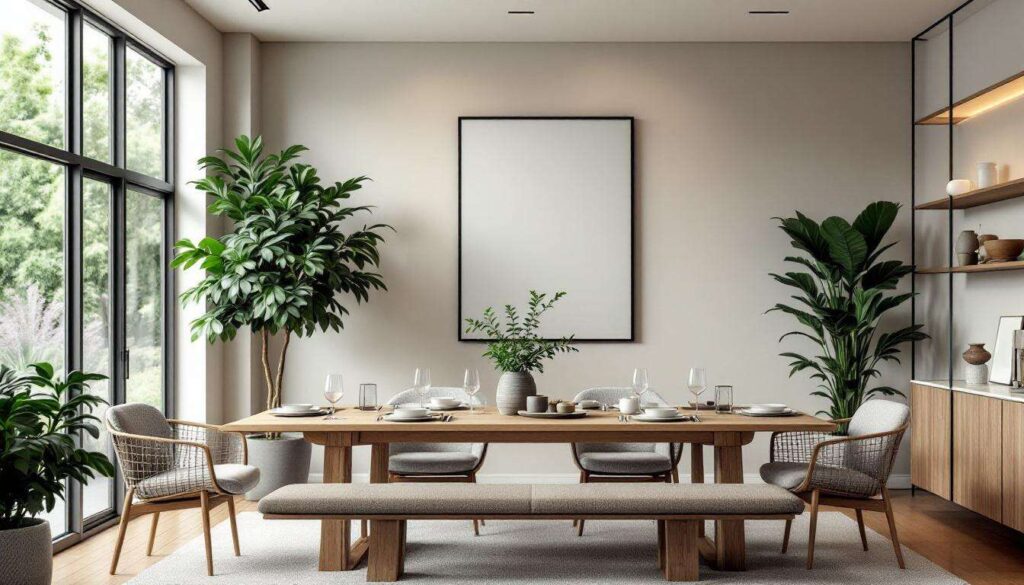
The dining room is experiencing a renaissance as homeowners rediscover the joy of gathering around the table. Design professionals across the industry are observing a marked shift towards creating spaces that blend sophistication with warmth, where functionality meets visual drama. These emerging trends reflect a deeper understanding of how we use our homes, with the dining area reclaiming its status as a cherished space for connection and celebration. From architectural details that command attention to subtle touches that enhance comfort, the evolution of dining room design speaks to our changing relationship with domestic entertaining.
Reflective Ceilings for a Luminous Ambiance
The fifth wall of any room is finally receiving the attention it deserves, with reflective ceiling treatments emerging as a transformative design element. High-gloss paints in rich jewel tones, metallic finishes, and even gold leaf applications are creating dining spaces that shimmer with sophistication.
The Science Behind the Shimmer
Reflective ceiling treatments work by bouncing natural and artificial light throughout the space, effectively amplifying luminosity without additional fixtures. This technique creates a jewel-box effect that makes dining rooms feel both intimate and expansive. The interplay of light across glossy surfaces adds depth and dimension, transforming a static ceiling into a dynamic design feature that changes throughout the day.
Popular Reflective Finishes
- High-gloss lacquer paints in deep blues, emerald greens, and burgundy
- Metallic plasters with subtle shimmer effects
- Traditional gold and silver leaf applications
- Mirror tiles or panels for dramatic impact
- Venetian plaster with polished finishes
| Finish Type | Light Reflection | Maintenance Level |
|---|---|---|
| High-gloss paint | 70-80% | Moderate |
| Gold leaf | 85-90% | Low |
| Mirror panels | 95% | High |
This emphasis on ceiling design naturally complements the broader movement towards creating multifunctional spaces that serve various purposes throughout the day.
Flexible and Multifunctional Living Spaces
The pendulum is swinging away from completely open-plan living towards intentionally defined spaces that maintain flexibility. This trend acknowledges that whilst connectivity remains important, rooms with distinct purposes create more meaningful experiences.
Architectural Separations
Rather than reverting to completely closed-off rooms, designers are employing subtle architectural elements to create definition. Cased openings with decorative mouldings, varied ceiling heights, and strategically placed columns allow spaces to maintain visual connection whilst establishing clear boundaries. These features enable the dining room to function as a dedicated entertaining zone without feeling isolated from the rest of the home.
Adaptable Furniture Solutions
The modern dining room must accommodate various activities beyond formal meals. Extendable tables, modular seating arrangements, and storage-integrated furniture pieces allow the space to transform from intimate dinner setting to workspace or children’s activity area. This versatility ensures the room earns its place in contemporary homes where every square metre must justify its existence.
- Drop-leaf tables that expand for entertaining
- Benches with hidden storage compartments
- Sideboards that double as serving stations and home offices
- Stackable or foldable chairs for space efficiency
- Mobile bar carts that can be relocated as needed
This practical approach to space planning pairs beautifully with the growing desire for intimate dining experiences within the home.
Cosy Kitchen Nook Trend
The integrated kitchen nook is redefining casual dining, offering a relaxed alternative to formal dining rooms. These intimate spaces create opportunities for everyday meals and spontaneous gatherings, reflecting a shift towards more approachable entertaining.
Designing the Perfect Nook
Successful kitchen nooks balance comfort with efficiency. Built-in banquette seating maximises space whilst providing generous storage beneath cushioned seats. The key lies in creating a spot that feels deliberately carved out rather than an afterthought, with proper lighting, comfortable seating, and surfaces that invite lingering over coffee or conversation.
Essential Nook Elements
- Upholstered banquette seating with lumbar support
- Round or oval tables that facilitate conversation
- Pendant lighting positioned at appropriate height
- Cushions and textiles that add warmth and comfort
- Windows or artwork to create visual interest
| Nook Size | Recommended Table Diameter | Seating Capacity |
|---|---|---|
| Small (2m²) | 90-100cm | 3-4 people |
| Medium (3m²) | 110-120cm | 4-6 people |
| Large (4m²) | 130-140cm | 6-8 people |
The warmth and intimacy of kitchen nooks align perfectly with another resurgent trend: the return of rich wood panelling.
Return of Warm Dark Wood Panelling
After years of dominance by white and grey interiors, warm dark wood panelling is making a sophisticated comeback. This trend represents a desire for depth, texture, and a connection to traditional craftsmanship.
Modern Interpretations of Classic Panelling
Contemporary wood panelling differs from its heavy Victorian predecessors through refined proportions and updated finishes. Designers are selecting woods with rich, warm undertones such as walnut, cherry, and teak, applying them in patterns that create visual interest without overwhelming the space. The result is rooms that feel grounded and substantial whilst maintaining an airy quality.
Installation Techniques and Patterns
The versatility of wood panelling allows for numerous creative applications. Vertical shiplap creates height, whilst horizontal boards can make rooms feel wider. Board-and-batten styles add architectural interest, and geometric patterns introduce a contemporary edge to traditional materials.
- Full-wall treatments for dramatic impact
- Wainscoting that adds character without dominating
- Accent walls behind built-in storage or display areas
- Ceiling applications that complement reflective finishes
- Mixed-material approaches combining wood with plaster or tile
This embrace of natural materials extends beyond panelling to encompass comprehensive wall treatments throughout the dining space.
Revamped Wall Décor
Dining room walls are becoming curated galleries that reflect personal style and create conversation. The trend moves beyond simple picture hanging towards layered, thoughtful compositions that incorporate various elements.
Layered Textural Approaches
Modern wall décor combines multiple elements to create depth and interest. Textile wall hangings, sculptural pieces, mirrors, and traditional artwork coexist in carefully balanced arrangements. This approach transforms walls into three-dimensional experiences rather than flat surfaces, adding warmth and personality to dining spaces.
Popular Wall Treatment Combinations
- Gallery walls mixing photography, paintings, and objects
- Oversized mirrors paired with sconce lighting
- Decorative plates and ceramics in clustered arrangements
- Wallpaper accent walls with complementary artwork
- Floating shelves displaying collections and greenery
- Architectural salvage pieces as focal points
| Wall Size | Recommended Artwork Scale | Optimal Hanging Height |
|---|---|---|
| Small (under 3m) | 40-60cm pieces | 145-150cm centre point |
| Medium (3-4m) | 70-100cm pieces | 150-155cm centre point |
| Large (over 4m) | 120cm+ or gallery wall | 155-160cm centre point |
The careful curation of wall elements creates the perfect backdrop for another crucial design component: statement lighting fixtures.
Vintage and Timeless Lighting
Lighting has transcended its functional role to become the jewellery of the dining room. Vintage-inspired and timeless fixtures are commanding attention as sculptural centrepieces that define the character of the space.
The Appeal of Heritage Designs
There is growing appreciation for lighting fixtures that reference historical periods whilst incorporating modern technology. Chandeliers with character, whether genuine antiques or contemporary interpretations, bring a sense of permanence and quality to dining spaces. These pieces often feature handcrafted details, natural materials like brass and glass, and proportions that create visual weight without overwhelming the room.
Selecting the Perfect Fixture
The right dining room light balances scale, style, and function. As a general principle, the fixture diameter in centimetres should equal the room’s length plus width in metres, multiplied by eight. However, aesthetic considerations often take precedence over strict formulas.
- Multi-arm chandeliers for traditional elegance
- Linear pendants for rectangular tables
- Clustered globe fixtures for contemporary spaces
- Sputnik-style designs for mid-century appeal
- Lantern pendants for transitional interiors
Layering Light Sources
Sophisticated dining rooms incorporate multiple light sources to create ambience and flexibility. Wall sconces provide ambient lighting, whilst table lamps on sideboards add warmth. Dimmer switches allow adjustment for different occasions, from bright family meals to intimate dinner parties.
The dining room trends emerging reflect a sophisticated understanding of how design influences experience. Reflective ceilings create luminous environments that enhance every gathering, whilst flexible spaces adapt to our evolving needs. Kitchen nooks offer casual intimacy, and warm wood panelling grounds rooms in natural beauty. Revamped wall treatments provide personal expression, and vintage lighting adds character and focal interest. Together, these elements create dining spaces that honour tradition whilst embracing contemporary living, proving that the most enduring designs balance aesthetic ambition with practical wisdom. The dining room is reclaiming its position as the heart of the home, where thoughtful design facilitates the connections that matter most.