

Interior design moves in cycles, and what was once considered passé often finds its way back into contemporary homes with fresh interpretations. Designers are increasingly drawing inspiration from decades past, reimagining features that fell out of favour and presenting them through a modern lens. These resurrected elements bring character, warmth and individuality to spaces that might otherwise feel generic. From flooring patterns to wall treatments, the revival of certain design choices reflects a broader shift towards embracing personality and craftsmanship in our living environments.
The Comeback of Patterned Parquet
Parquet flooring, particularly in geometric patterns, dominated interiors throughout the mid-twentieth century before being replaced by simpler wood finishes and engineered alternatives. Today’s designers are championing its return, citing its ability to add visual interest without overwhelming a space.
Why Designers Are Choosing Parquet Again
The resurgence of patterned parquet stems from several factors. Herringbone and chevron arrangements create movement and depth, whilst more intricate designs such as Versailles panels serve as focal points in entrance halls and reception rooms. Contemporary installations often feature wider planks and lighter finishes, distinguishing them from their darker, more formal predecessors.
- Adds architectural interest to open-plan spaces
- Works equally well in traditional and modern settings
- Offers durability and longevity compared to carpeting
- Available in sustainable materials and reclaimed wood
Modern Applications of Classic Patterns
Designers are applying parquet in unexpected ways, extending patterns onto walls or using contrasting wood tones to create subtle geometric effects. The key to successful contemporary parquet lies in restraint: pairing ornate flooring with minimalist furnishings prevents spaces from feeling cluttered or dated.
This renewed appreciation for detailed flooring naturally extends to other surfaces where pattern and texture can make equally dramatic statements.
The Revival of Tiled Kitchens
Wall-to-wall tiling in kitchens was once considered dated and reminiscent of institutional spaces. However, designers are now embracing tiles beyond the traditional splashback area, covering entire walls and even ceilings with decorative ceramic and porcelain.
Practical Benefits Meet Aesthetic Appeal
The functional advantages of extensive tiling are considerable. Tiles provide easy-to-clean surfaces that withstand moisture, heat and everyday wear far better than painted walls or wallpaper. Modern tile technology offers improved durability and stain resistance, addressing previous concerns about grout maintenance.
| Tile Style | Characteristics | Best Suited For |
|---|---|---|
| Zellige | Handmade, irregular glaze | Feature walls, Mediterranean aesthetics |
| Metro tiles | Rectangular, bevelled edges | Classic kitchens, versatile layouts |
| Terracotta | Earthy tones, rustic finish | Country kitchens, warm colour schemes |
| Geometric patterns | Bold designs, statement-making | Contemporary spaces, accent areas |
Creating Cohesive Tiled Environments
The success of extensive kitchen tiling depends on thoughtful colour selection and pattern placement. Monochromatic schemes prevent visual fatigue, whilst textured surfaces add depth without competing for attention. Designers often recommend continuing tiles from walls onto kitchen islands or incorporating them into furniture niches to create integrated, cohesive spaces.
As vertical surfaces receive renewed attention, so too do the structural elements that define room layouts and circulation.
The Return of Arched Openings
Rectangular doorways and openings have dominated residential architecture for decades, but arched openings are experiencing a significant revival. These curved transitions between spaces soften harsh lines and introduce an element of classical elegance.
Architectural Impact of Curved Doorways
Arches create a sense of flow and continuity throughout homes, guiding the eye and encouraging movement between rooms. They work particularly well in properties with high ceilings, where their proportions can be properly appreciated. Modern interpretations range from gentle curves to dramatic Moorish-inspired forms, each bringing distinct character to interiors.
- Softens the transition between adjoining spaces
- Adds architectural detail without requiring extensive renovation
- Complements both period and contemporary furnishings
- Creates visual interest in otherwise plain hallways
Implementation Considerations
Installing arched openings requires careful planning, particularly in load-bearing walls. Designers recommend working with structural engineers to ensure proper support, especially when converting existing rectangular doorways. The radius and height of arches should relate proportionally to room dimensions and ceiling heights to avoid awkward or cramped appearances.
These structural curves share a common thread with another returning trend that embraces boldness and personality through colour.
The 70s Colours Revival
The colour palette of the 1970s, once dismissed as garish and overwhelming, is being reassessed by contemporary designers who appreciate its warmth and earthiness. Burnt orange, avocado green, harvest gold and chocolate brown are reappearing in carefully curated schemes.
Incorporating Retro Hues Thoughtfully
The key to successfully employing seventies colours lies in balance and context. Rather than recreating entire period rooms, designers use these shades as accents against neutral backgrounds or pair them with modern materials and forms. A burnt orange velvet sofa in an otherwise minimalist room, for instance, provides warmth without overwhelming the space.
Colour Combinations That Work Today
Contemporary applications of seventies colours often involve unexpected pairings and updated finishes. Terracotta works beautifully with sage green and cream, whilst mustard yellow gains sophistication when combined with charcoal grey and brass accents. These colours particularly suit rooms with abundant natural light, where their richness can be fully appreciated.
| Seventies Colour | Modern Pairing | Recommended Use |
|---|---|---|
| Burnt orange | Navy blue, cream | Upholstery, accent walls |
| Avocado green | Blush pink, natural wood | Kitchen cabinetry, tiles |
| Harvest gold | Charcoal, white | Textiles, lighting fixtures |
| Chocolate brown | Caramel, ivory | Wood finishes, leather furniture |
This embrace of distinctive colour naturally extends to wall treatments that offer both visual and tactile interest.
The Comeback of Textured Wallpapers
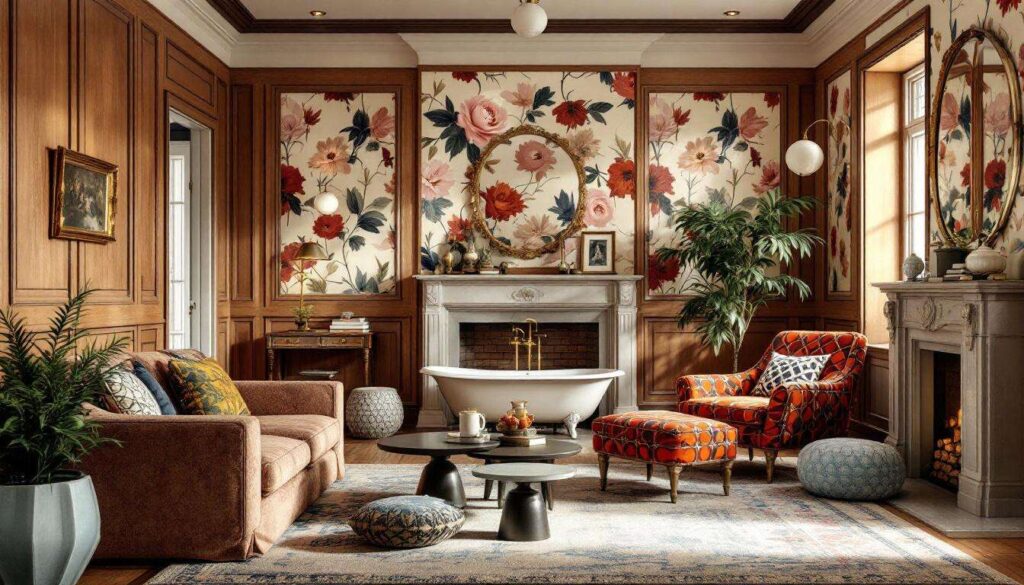
Wallpaper fell from favour as minimalism dominated design trends, but textured varieties are now being recognised for their ability to add depth and sophistication to interiors. From grasscloth to embossed patterns, these wall coverings provide dimension that paint alone cannot achieve.
Types of Textured Wallpapers Gaining Popularity
Natural fibre wallpapers, including grasscloth, sisal and hemp, bring organic warmth to spaces whilst their irregular surfaces create subtle visual interest. Embossed and raised-pattern papers offer tactile appeal, with designs ranging from delicate florals to bold geometric forms. Fabric-backed vinyl options provide durability in high-traffic areas without sacrificing aesthetic appeal.
- Grasscloth: adds natural texture and warmth, ideal for bedrooms and dining rooms
- Embossed patterns: creates shadow and depth, suitable for feature walls
- Metallic finishes: reflects light and adds glamour to powder rooms
- Flock wallpaper: provides luxurious tactile quality for formal spaces
Strategic Application in Modern Homes
Contemporary designers typically apply textured wallpapers to single feature walls rather than entire rooms, preventing spaces from feeling overwhelming or dated. Hallways, alcoves and chimney breasts serve as ideal locations for these statement treatments. The texture itself becomes the focal point, often requiring minimal additional decoration or artwork.
These returning design features demonstrate that good ideas rarely disappear permanently. Each element offers opportunities to inject personality, craftsmanship and visual interest into homes that might otherwise lack distinction. Whether through patterned floors, extensive tiling, architectural curves, bold colours or textured walls, designers are proving that looking backwards can propel interiors forward, creating spaces that feel both familiar and refreshingly new.