

Bathroom design has evolved from a purely functional space into a sanctuary of comfort and style. Homeowners increasingly seek to transform their bathrooms into personal retreats that reflect contemporary aesthetics whilst offering enhanced functionality. The latest design movements emphasise clean lines, technological integration, and environmental consciousness, creating spaces that balance beauty with practicality. These emerging trends demonstrate a shift towards thoughtful design choices that prioritise both visual appeal and long-term sustainability.
Minimalist design: the sleek trend that enchants
The essence of minimalist bathroom aesthetics
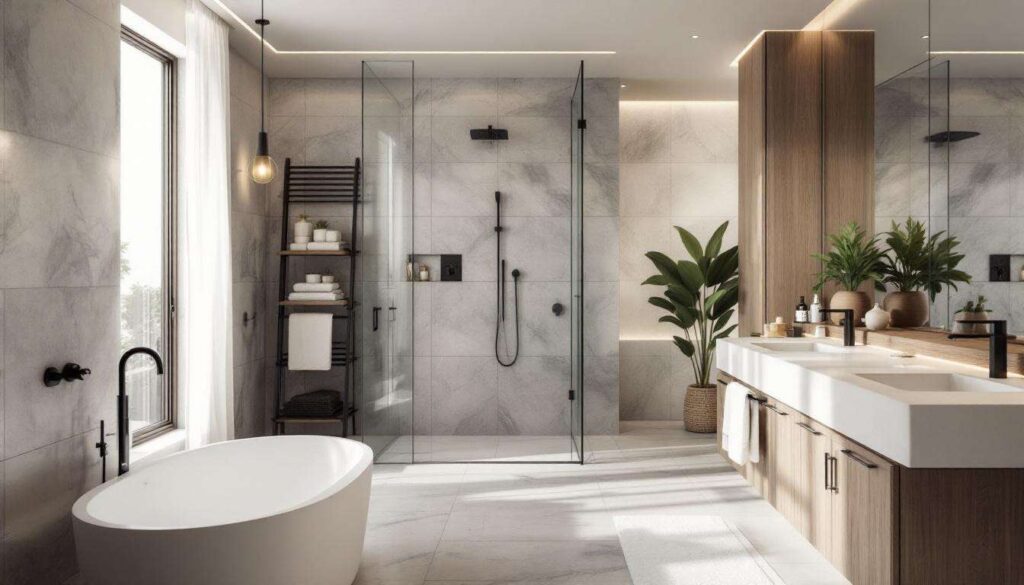
Minimalist bathroom design continues to captivate homeowners with its uncluttered elegance and timeless appeal. This approach centres on removing excess elements whilst maintaining essential functionality, creating spaces that feel both spacious and serene. The philosophy emphasises quality over quantity, with each fixture and fitting serving a deliberate purpose within the overall design scheme.
- Streamlined vanities with concealed storage solutions
- Wall-mounted toilets and basins that maximise floor space
- Frameless glass shower enclosures for visual continuity
- Hidden plumbing and minimised hardware
- Integrated storage niches within shower areas
Material choices in minimalist spaces
The success of minimalist design relies heavily on carefully selected materials that offer textural interest without visual clutter. Natural stone, polished concrete, and large-format tiles create seamless surfaces that enhance the sense of space. Monochromatic colour schemes dominate, with subtle variations in texture providing depth and character. Chrome and brushed nickel fixtures maintain the clean aesthetic whilst offering durability and easy maintenance.
This pared-back approach naturally leads to considerations about how modern conveniences can be seamlessly incorporated into such refined spaces.
Integrated technology: the bathroom of the future
Smart fixtures revolutionising daily routines
Technology has become an integral component of contemporary bathroom design, offering unprecedented levels of comfort and personalisation. Smart toilets with bidet functions, heated seats, and automatic lids represent just the beginning of this technological revolution. Digital shower systems allow users to programme precise temperature and flow settings, creating consistent experiences at the touch of a button.
| Technology | Primary Benefit | Water Savings |
|---|---|---|
| Smart showers | Temperature precision | Up to 30% |
| Touchless taps | Hygiene enhancement | Up to 70% |
| Digital thermostats | Comfort control | Up to 15% |
Connected bathroom ecosystems
The integration of voice-activated controls and smartphone connectivity transforms bathrooms into responsive environments. Mirrors with built-in displays provide weather updates, news briefings, and calendar reminders whilst users prepare for the day. Chromotherapy lighting systems adjust colour temperatures to support circadian rhythms, whilst heated floors can be programmed to activate before morning routines begin. These technological advances demonstrate how innovation can enhance daily life without compromising aesthetic principles.
Alongside these technological advancements, there is growing awareness about the environmental impact of design choices.
Sustainable and eco-friendly materials
Environmental consciousness in material selection
Sustainability has moved from niche concern to mainstream priority in bathroom design. Homeowners increasingly select materials based on their environmental credentials alongside aesthetic appeal. Reclaimed wood vanities, recycled glass tiles, and low-VOC paints reduce environmental impact whilst creating distinctive visual statements. Bamboo cabinetry offers rapid renewability combined with natural beauty, whilst concrete alternatives made from industrial by-products provide durability without the carbon footprint.
- Recycled porcelain and ceramic tiles
- Cork flooring for warmth and sustainability
- Reclaimed timber for vanities and shelving
- Natural stone from ethical quarries
- Bio-based composite materials
Water conservation through design
Sustainable bathroom design extends beyond materials to encompass water-efficient fixtures and systems. Low-flow taps, dual-flush toilets, and aerated showerheads significantly reduce water consumption without sacrificing performance. Greywater recycling systems, whilst still emerging in residential applications, represent the future of responsible water management. These choices demonstrate that environmental stewardship and luxury need not be mutually exclusive concepts.
The materials we choose naturally influence the colour palettes that dominate contemporary bathroom spaces.
Neutral colours take the lead
The dominance of understated palettes
Neutral colour schemes have established themselves as the foundation of modern bathroom design, offering versatility and longevity. Shades of white, beige, grey, and taupe create calming environments that transcend fleeting trends. These timeless hues provide the perfect backdrop for natural materials and architectural features, allowing textures and forms to take centre stage. The psychological benefits of neutral spaces include reduced visual stress and enhanced feelings of cleanliness.
Layering neutrals for depth
Successful neutral bathrooms avoid monotony through careful layering of tones and textures. Warm greys paired with cool whites create subtle contrast, whilst matte and glossy finishes add dimensional interest. Natural wood accents introduce warmth without disrupting the cohesive palette, and metallic fixtures provide punctuation points that catch the eye. This nuanced approach to neutral design creates sophisticated spaces that feel both restful and refined.
Within these neutral canvases, statement pieces like freestanding bathtubs have found renewed prominence.
The return of freestanding bathtubs
Sculptural centrepieces in modern bathrooms
Freestanding bathtubs have experienced a remarkable resurgence, serving as focal points that combine functionality with artistic expression. These sculptural pieces transform bathrooms into spa-like retreats, offering visual drama and luxurious bathing experiences. Contemporary designs range from classic clawfoot styles to sleek modern forms, accommodating diverse aesthetic preferences whilst maintaining their statement-making presence.
- Oval soaking tubs for ergonomic comfort
- Angular geometric designs for contemporary spaces
- Stone resin constructions for heat retention
- Copper and cast iron for traditional elegance
- Double-ended tubs for shared relaxation
Practical considerations for freestanding installations
The installation of freestanding bathtubs requires careful planning regarding plumbing, floor reinforcement, and spatial arrangement. Floor-mounted taps positioned alongside the tub create striking visual compositions whilst maintaining functionality. Adequate space surrounding the tub ensures comfortable access and enhances the sense of luxury. Proper waterproofing becomes particularly important when tubs are positioned away from walls, requiring professional installation to prevent long-term moisture issues.
The dramatic presence of these bathtubs can be further enhanced through thoughtful illumination strategies.
Intelligent lighting for a bespoke ambiance
Layered lighting schemes
Sophisticated bathroom lighting moves beyond single overhead fixtures to embrace multi-layered approaches that serve different functions and moods. Task lighting around mirrors provides essential illumination for grooming activities, whilst ambient lighting creates overall atmosphere. Accent lighting highlights architectural features or artwork, and decorative fixtures serve as design elements in their own right. This comprehensive approach ensures bathrooms function effectively throughout the day whilst offering flexibility for different scenarios.
| Lighting Type | Purpose | Recommended Placement |
|---|---|---|
| Task lighting | Grooming activities | Mirror sides, 150-180cm height |
| Ambient lighting | General illumination | Ceiling-mounted, evenly distributed |
| Accent lighting | Highlighting features | Niches, bathtubs, architectural details |
Adjustable systems for personalisation
Dimmer switches and colour-temperature controls allow users to customise lighting according to time of day and personal preference. Warm light in evening hours promotes relaxation before sleep, whilst cooler tones in morning support alertness and energy. LED technology provides energy efficiency alongside longevity, with many systems offering programmable settings that automatically adjust throughout the day. Waterproof LED strips concealed beneath vanities or within shower niches create dramatic effects whilst maintaining safety standards.
These design trends collectively represent a holistic approach to bathroom spaces that prioritises comfort, sustainability, and aesthetic sophistication. The convergence of minimalist principles, technological innovation, and environmental responsibility creates bathrooms that serve as personal sanctuaries whilst reflecting contemporary values. Whether through the serene simplicity of neutral palettes, the luxury of freestanding bathtubs, or the practicality of integrated technology, modern bathroom design offers unprecedented opportunities for personalisation. As these trends continue to evolve, they demonstrate that thoughtful design choices can enhance daily routines whilst creating spaces of enduring beauty and functionality.