


Kitchen hardware has evolved from purely functional components into defining design elements that shape the entire aesthetic of a culinary space. Designers are witnessing a remarkable shift towards pieces that blend artistry with practicality, creating environments where every detail contributes to a cohesive visual narrative. The latest innovations reflect broader lifestyle changes, emphasising sustainability, technological integration, and personalised touches that transform kitchens into bespoke sanctuaries. Understanding these emerging directions allows homeowners to make informed choices that will keep their spaces relevant and stylish for years to come.
Choosing Sustainable Materials for an Eco-Friendly Kitchen
Environmental consciousness has become central to contemporary kitchen design, with hardware manufacturers responding to growing demand for responsible sourcing and production methods. Designers increasingly specify materials that minimise ecological impact whilst maintaining exceptional quality and durability.
Reclaimed and Recycled Metals
Recycled brass, copper, and stainless steel have emerged as preferred choices for cabinet handles, drawer pulls, and fixtures. These materials offer distinctive character whilst reducing the environmental footprint associated with virgin metal extraction. Reclaimed metals often develop unique patinas that add warmth and authenticity to kitchen schemes, creating hardware with genuine stories embedded within their surfaces.
Responsibly Sourced Wood and Bamboo
Natural materials bring organic warmth to kitchen hardware applications. Designers favour:
- FSC-certified hardwoods for drawer handles and knobs
- Rapidly renewable bamboo for sustainable alternatives
- Cork-based components offering tactile appeal and renewability
- Reclaimed timber elements that introduce rustic charm
These materials complement broader sustainability initiatives whilst introducing textural variety that softens harder surfaces typically found in kitchen environments.
Low-Impact Manufacturing Processes
Beyond material selection, designers now scrutinise production methods. Hardware created through water-based finishing processes, powder coating instead of chemical plating, and local manufacturing that reduces transportation emissions represents the new standard for environmentally conscious projects. This holistic approach ensures that aesthetic choices align with ecological values throughout the supply chain.
As sustainability considerations reshape material choices, designers are simultaneously exploring how different finishes and colours can work together harmoniously within kitchen schemes.
Subtle Mix of Colours and Metals
The rigid rule of matching all metal finishes has been definitively abandoned in favour of layered, sophisticated combinations that add depth and visual interest to kitchen spaces. This approach requires careful curation to avoid visual chaos whilst celebrating diversity.
Complementary Metal Pairings
Designers strategically combine metals with similar undertones to create cohesive yet varied schemes. Popular combinations include:
| Primary Metal | Complementary Metal | Visual Effect |
|---|---|---|
| Brushed brass | Aged bronze | Warm, vintage aesthetic |
| Polished nickel | Chrome | Cool, contemporary feel |
| Matte black | Brushed gold | Dramatic, luxurious contrast |
| Copper | Rose gold | Feminine, sophisticated warmth |
Strategic Placement for Visual Balance
Successful mixed-metal schemes require thoughtful distribution throughout the space. Designers typically select one dominant metal finish for approximately 60-70% of hardware, a secondary finish for 20-30%, and occasional accent pieces in a third finish. This proportional approach creates intentional variety rather than accidental mismatch.
Integrating Coloured Hardware
Beyond traditional metallic finishes, coloured hardware introduces personality and playfulness. Powder-coated handles in deep forest greens, navy blues, or terracotta tones provide unexpected focal points whilst maintaining sophistication. These coloured elements work particularly effectively when coordinated with other kitchen features such as tile backsplashes or appliance colours.
Whilst mixed finishes add complexity and richness, some designers are simultaneously pursuing the opposite direction through minimalist hardware solutions.
Invisible Handles for a Sleek Style
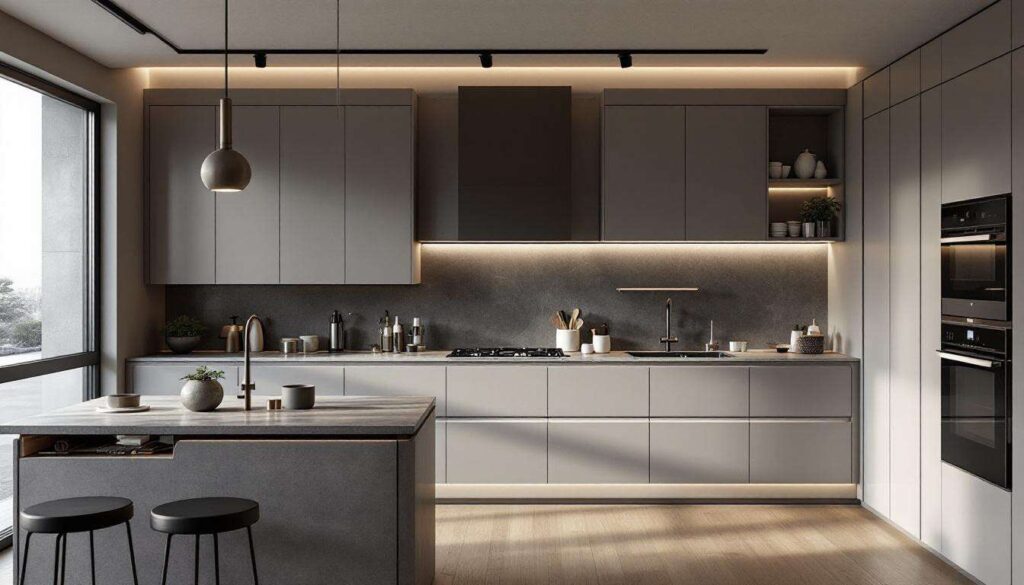
The pursuit of uninterrupted surfaces and streamlined aesthetics has elevated handleless cabinetry from niche preference to mainstream design choice. This approach creates visual calm and emphasises architectural lines over decorative details.
Push-to-Open Mechanisms
Mechanical push latches allow cabinets and drawers to open with gentle pressure, eliminating the need for visible hardware entirely. These systems offer:
- Seamless cabinet fronts that enhance minimalist aesthetics
- Easier cleaning without hardware crevices collecting debris
- Universal accessibility without grip strength requirements
- Flexibility to add handles later if design preferences change
Integrated Grip Profiles
Recessed channels routed into cabinet edges provide functional grip points without protruding hardware. These profiles can be positioned horizontally along top edges, vertically on cabinet sides, or as finger pulls on drawer fronts. The technique works particularly effectively with thicker door panels that accommodate deeper routing whilst maintaining structural integrity.
Ledge and Rail Systems
Continuous horizontal ledges create subtle shadow lines whilst offering practical opening mechanisms. These architectural details serve dual purposes, functioning as both hardware and design features that emphasise horizontal planes and create visual rhythm across cabinet runs.
The same technological advances enabling invisible hardware are transforming kitchen functionality in broader, more ambitious ways.
Integrated Technology: the Kitchen of the Future
Smart technology has transcended standalone appliances to become embedded within hardware systems, creating kitchens that respond intuitively to user needs whilst maintaining clean aesthetic lines.
Touch-Activated and Sensor-Based Systems
Motion sensors and capacitive touch surfaces eliminate the need for physical contact with hardware. Drawers glide open as hands approach, whilst cabinets respond to gentle taps on their surfaces. These systems offer particular advantages for food preparation scenarios where hands may be occupied or messy, enhancing both convenience and hygiene.
Powered Drawer and Cabinet Systems
Motorised mechanisms provide effortless operation for heavy drawers and high cabinets. Features include:
- Soft-close technology preventing slammed doors and extending hardware lifespan
- Powered lift systems for overhead cabinets and appliance garages
- Adjustable opening speeds accommodating different user preferences
- Battery backup ensuring functionality during power interruptions
Integrated Lighting Within Hardware
LED strips embedded within drawer systems and cabinet interiors activate automatically when opened, illuminating contents without separate switching. This integration creates ambient lighting effects whilst serving practical purposes, particularly valuable in deep drawers or corner cabinets where visibility typically challenges users.
Technology enables standardised solutions, yet designers simultaneously recognise that truly successful kitchens must adapt to individual requirements and preferences.
Customisation and Modularity of Spaces
The recognition that kitchens serve diverse functions for different households has driven demand for adaptable hardware solutions that evolve alongside changing needs rather than requiring complete renovations.
Adjustable Internal Fittings
Modular drawer organisers, repositionable shelving systems, and configurable storage inserts allow users to modify internal arrangements without altering cabinet structures. Hardware manufacturers now offer comprehensive systems with standardised mounting points that accommodate various accessories, from utensil dividers to specialised storage for appliances, spices, or cleaning supplies.
Interchangeable Decorative Elements
Cabinet hardware with replaceable decorative components allows aesthetic updates without complete replacement. Systems featuring interchangeable backplates, removable decorative caps, or swappable handle materials enable homeowners to refresh their kitchen’s appearance affordably as design preferences evolve or when preparing properties for sale.
Flexible Height and Position Adjustments
Mounting systems that permit vertical repositioning of shelves, hooks, and organisers accommodate changing storage requirements. This flexibility proves particularly valuable in households with evolving compositions or when adapting kitchens for users with different physical abilities or heights.
Whilst customisation addresses functional diversity, surface treatments are undergoing their own transformation towards understated elegance.
Matte Finishes, new Stars of Kitchens
Reflective, polished surfaces have yielded prominence to sophisticated matte treatments that offer visual subtlety whilst presenting practical advantages for daily kitchen life.
Practical Benefits of Matte Surfaces
Beyond aesthetic considerations, matte finishes provide tangible functional advantages:
- Fingerprint resistance maintaining cleaner appearance between cleanings
- Reduced glare creating more comfortable visual environments
- Scratch concealment as matte surfaces disguise minor wear more effectively
- Easier maintenance requiring less frequent polishing than glossy alternatives
Matte Black: the Contemporary Classic
Matte black hardware has achieved near-universal appeal, functioning as a neutral element that grounds diverse colour schemes whilst adding graphic definition. This finish complements both light and dark cabinetry, works across traditional and contemporary styles, and provides striking contrast against natural materials like wood and stone.
Expanding Matte Colour Palette
Manufacturers have extended matte treatments beyond black to encompass whites, greys, metallics, and even bold colours. Matte brass offers warmth without excessive shine, whilst matte nickel provides cool sophistication. These expanded options allow designers to specify matte finishes throughout entire schemes, creating cohesive environments with consistent surface treatments that enhance rather than compete with other design elements.
Kitchen hardware has transcended its utilitarian origins to become a crucial design component that reflects personal values, aesthetic preferences, and lifestyle requirements. The convergence of sustainability, technological innovation, and refined aesthetics creates opportunities for truly personalised spaces. Whether embracing mixed metals for visual richness, invisible hardware for minimalist purity, or smart systems for enhanced functionality, these emerging directions offer pathways to kitchens that balance beauty with purpose. The most successful schemes thoughtfully integrate multiple trends, selecting elements that genuinely serve the space and its users rather than following fashion indiscriminately. As hardware continues evolving, the emphasis remains on creating environments that feel both current and timeless, functional and beautiful.