

Kitchen cabinets serve as the cornerstone of culinary spaces, shaping both functionality and aesthetic appeal. Whilst homeowners often invest considerable thought into selecting cabinet colours that reflect their personal style, certain shades that once dominated design trends now quietly signal a dated interior. Understanding which hues have fallen from favour allows property owners to make informed decisions about refreshing their kitchens without undertaking complete renovations. The colours adorning cabinetry can dramatically influence how modern or outdated a home appears to potential buyers and guests alike.
The classic white that’s waning
Stark, bright white cabinets have long been celebrated as the quintessential choice for creating clean, spacious-looking kitchens. However, the particular shade of white matters significantly in determining whether cabinetry appears contemporary or tired.
The problem with cool-toned whites
Cabinets painted in cool, bluish-white tones now convey an institutional atmosphere rather than the welcoming warmth homeowners desire. These shades, which proliferated during the early minimalist movement, create spaces that feel sterile and unwelcoming. The harsh quality of these whites becomes particularly apparent under modern LED lighting, which amplifies their cold undertones.
Distinguishing dated from fresh whites
Contemporary design favours warmer white variations with subtle cream or greige undertones. Consider the following distinctions:
- Outdated whites possess blue or grey undertones that clash with warm wood flooring
- Modern whites incorporate slight warmth that complements natural materials
- Bright whites without depth appear flat and one-dimensional
- Layered whites with subtle complexity create visual interest
The shift away from stark white cabinets reflects broader preferences for kitchens that feel lived-in rather than showroom-perfect. Whilst white cabinetry remains popular, the specific shade determines whether it enhances or detracts from a home’s contemporary appeal.
Alternatives to consider
Homeowners seeking to update without abandoning lighter cabinets might explore off-white shades such as alabaster, ivory, or linen. These alternatives provide the brightness associated with white whilst introducing warmth that prevents spaces from feeling clinical.
Beyond the limitations of cool whites, another popular neutral has similarly begun to show its age in kitchen designs.
The dull grey and its coldness
Grey cabinets experienced an extraordinary surge in popularity, becoming the default alternative to white for homeowners seeking something different. Unfortunately, this widespread adoption has rendered many grey kitchens indistinguishable and decidedly passé.
The grey saturation problem
Medium-toned grey cabinets now appear in countless homes, creating a homogeneous aesthetic that lacks personality. The colour’s initial appeal stemmed from its perceived versatility and modern sensibility, yet its ubiquity has transformed it into a marker of a specific design era rather than timeless sophistication.
| Grey cabinet issue | Visual impact | Psychological effect |
|---|---|---|
| Flat medium grey | Lifeless, monotonous | Depressing, uninspiring |
| Cool blue-grey | Cold, unwelcoming | Sterile, institutional |
| Builder-grade grey | Generic, characterless | Impersonal, forgettable |
Why grey fails in kitchens
The fundamental issue with grey cabinetry lies in its tendency to absorb rather than reflect light. Kitchens finished in dull grey tones often feel smaller and darker than they actually are, particularly in spaces with limited natural illumination. The colour also struggles to complement the warm tones found in wood flooring, brass fixtures, and natural stone countertops that have returned to favour.
Whilst grey represented a departure from traditional choices, certain historically inspired colours have also outstayed their welcome in contemporary kitchens.
The timeless pastel blue
Soft blue cabinets evoke cottage charm and coastal living, yet these pale blue shades increasingly communicate a dated sensibility rather than fresh sophistication.
The cottage aesthetic trap
Pastel blue cabinetry became synonymous with country-style kitchens, particularly those attempting to recreate farmhouse or coastal themes. Whilst these colours once felt refreshing, they now appear overly thematic and lacking in versatility. The shade often clashes with contemporary appliances and modern fixtures, creating visual discord rather than harmony.
When blue cabinets miss the mark
Several characteristics identify outdated blue cabinetry:
- Powder blue shades reminiscent of baby nurseries
- Robin’s egg blue that appears juvenile rather than sophisticated
- Faded denim tones that lack depth and richness
- Chalky pastels without proper saturation
The problem extends beyond the colour itself to the styling choices that typically accompany these cabinets. Pastel blue kitchens often feature distressed finishes and ornate hardware that compound the dated appearance, creating spaces that feel frozen in a particular design moment.
Contemporary blue alternatives
Homeowners drawn to blue cabinetry might instead consider deeper, more saturated navy tones or sophisticated blue-greens that offer complexity without appearing theme-driven. These richer shades provide the colour interest of pastels whilst maintaining a more grounded, contemporary aesthetic.
Alongside problematic paint colours, certain natural wood finishes have also begun to detract from modern kitchen designs.
The dark woods that weigh down
Heavy, dark wood cabinets dominated kitchen design for decades, particularly in traditional and transitional homes. These sombre wood tones now create oppressive atmospheres that make spaces feel smaller and less inviting.
The mahogany and cherry problem
Cabinets finished in dark mahogany, cherry, or walnut stains absorb light and create visual heaviness that conflicts with contemporary preferences for airy, open kitchens. These woods often feature reddish undertones that clash with current neutral palettes and cooler-toned materials.
Why dark wood feels outdated
Several factors contribute to the dated appearance of dark wood cabinetry:
- Ornate detailing and raised panel doors that accompany traditional dark woods
- Glossy finishes that appear overly formal and difficult to maintain
- Lack of contrast with similarly dark countertops and flooring
- Association with specific design eras, particularly the 1990s and early 2000s
| Dark wood type | Common issue | Design era association |
|---|---|---|
| Cherry with red tones | Orange undertones intensify with age | 1990s–2000s |
| Dark mahogany | Creates cave-like atmosphere | 1980s–1990s |
| Espresso stain | Overly trendy, quickly dated | 2000s–2010s |
The shift away from dark wood reflects broader design movements towards lighter, more natural materials that celebrate rather than conceal wood grain. Contemporary kitchens favour pale oak, maple, and other light woods with minimal staining that create warmth without heaviness.
Natural wood tones aren’t the only finishes showing their age; certain painted colours have similarly become problematic in kitchen spaces.
The outdated faded greens
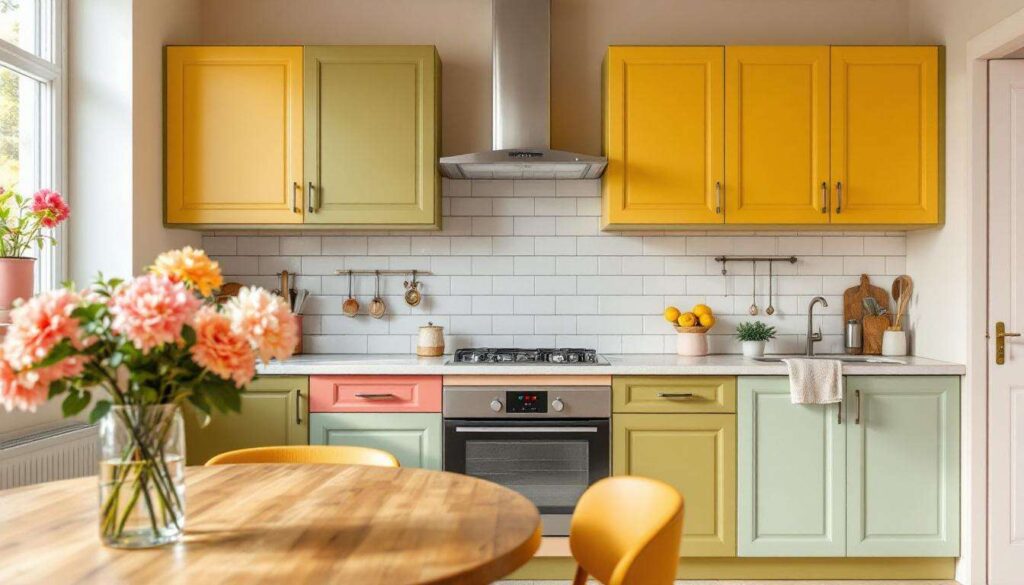
Sage green and similar muted green tones experienced a resurgence as homeowners sought alternatives to neutral greys and whites. However, many faded green shades now appear tired rather than tranquil.
The sage saturation issue
Dusty sage cabinets flooded the market as part of the farmhouse aesthetic movement, resulting in oversaturation that has diminished the colour’s appeal. These greyish-green tones often lack the vibrancy necessary to energise kitchen spaces, instead creating environments that feel dull and lifeless.
Identifying problematic greens
Certain green cabinet colours particularly signal dated design choices:
- Pale mint greens that appear washed out and insipid
- Greyish sages without sufficient colour saturation
- Seafoam tones that evoke bathroom tiles rather than kitchen sophistication
- Chalky greens with excessive white content that appear faded
The fundamental issue with these greens lies in their lack of commitment to being truly green. They hover uncomfortably between grey and green, failing to deliver the freshness of genuine green tones or the neutrality of proper greys. This ambiguity creates visual confusion rather than the intended calming effect.
Moving beyond faded greens
Homeowners attracted to green cabinetry should consider deeper forest greens or vibrant emerald tones that provide richness and depth. These saturated alternatives offer the natural connection of green without appearing washed out or trendy.
Whilst faded greens struggle with insufficient saturation, another colour family suffers from associations with specific historical periods that limit its contemporary appeal.
The aged burgundy reds
Deep red cabinets, particularly those in burgundy and wine tones, once signified elegance and sophistication in kitchen design. These colours now unmistakably date interiors to specific decades whilst creating oppressive atmospheres.
The formal dining problem
Burgundy cabinets emerged from traditional dining room aesthetics, bringing a level of formality to kitchens that conflicts with contemporary preferences for casual, comfortable cooking spaces. These deep red tones create environments that feel more suited to Victorian parlours than modern family kitchens.
Why burgundy fails today
Several characteristics render burgundy cabinets particularly problematic:
- Overwhelming darkness that makes spaces feel enclosed
- Difficulty coordinating with contemporary appliances and fixtures
- Association with outdated country or colonial design styles
- Tendency to show dust and fingerprints prominently
The colour also suffers from its strong association with specific design movements that have fallen from favour. Burgundy cabinets typically appear alongside other dated elements such as ornate crown moulding, decorative corbels, and elaborate hardware that compound the old-fashioned appearance.
The psychological weight of dark reds
Beyond aesthetic concerns, burgundy cabinets create psychological heaviness that makes kitchens feel less welcoming. The colour’s intensity demands attention in ways that exhaust rather than energise, particularly in smaller spaces where dark colours amplify feelings of confinement.
| Red cabinet shade | Primary issue | Visual effect |
|---|---|---|
| Deep burgundy | Overly formal, dated | Heavy, oppressive |
| Wine red | Difficult to coordinate | Overwhelming, dark |
| Barn red | Overly thematic | Rustic to a fault |
Homeowners considering red cabinetry should recognise that this colour choice requires exceptional skill to execute successfully in contemporary contexts, with most attempts resulting in spaces that feel immediately outdated.
Kitchen cabinet colours profoundly influence how modern or dated a home appears, with certain shades now clearly signalling design choices from bygone eras. The stark whites, ubiquitous greys, pastel blues, heavy dark woods, faded greens, and aged burgundies discussed here share common problems of either oversaturation in the market or associations with specific historical periods. Homeowners seeking to refresh their kitchens should consider whether their current cabinet colours fall into these problematic categories and explore alternatives that offer both visual appeal and longevity. Updating cabinet colours represents one of the most impactful ways to modernise a kitchen without undertaking complete renovations, making colour selection a decision worthy of careful consideration.