

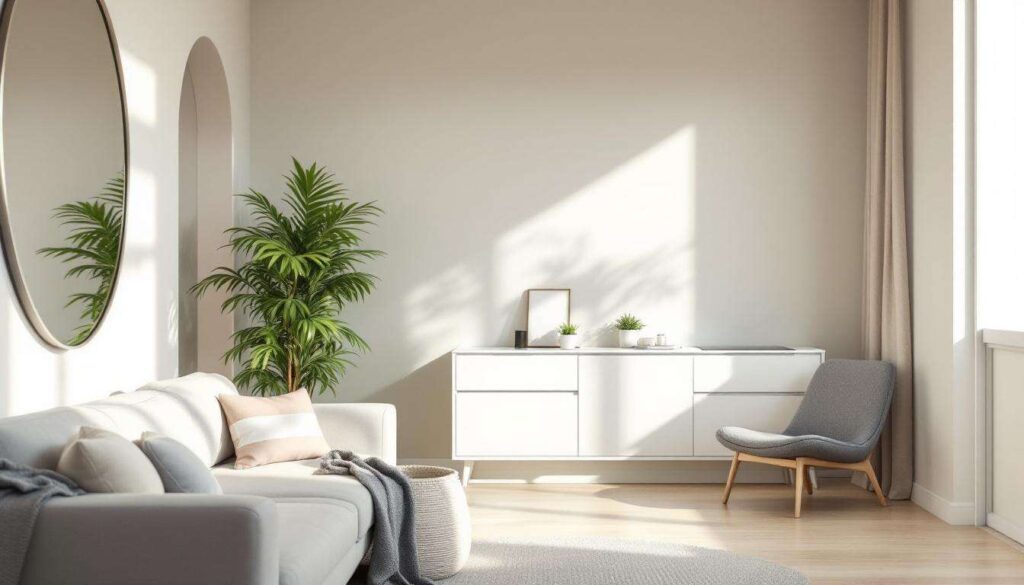
Small apartments present unique challenges when it comes to selling or letting properties. Prospective buyers and tenants often struggle to see beyond cramped quarters, making it essential to employ strategic techniques that transform perception. Home staging offers powerful solutions to make compact spaces feel considerably larger, brighter and more inviting. Through careful attention to lighting, colour schemes, furniture selection and spatial arrangement, even the most modest flat can be presented as a desirable living space. These professional staging techniques don’t require substantial investment but deliver remarkable results in creating the illusion of spaciousness that appeals to potential occupants.
Optimising the use of natural light
Removing obstacles to window access
Natural light represents the most valuable asset in any small apartment. Maximising sunlight penetration instantly makes rooms appear larger and more welcoming. Begin by removing heavy furniture positioned directly in front of windows, as these pieces create visual barriers that block precious daylight. Even modest obstructions can significantly reduce the amount of light entering a space, so ensure window areas remain completely clear.
Consider the following steps to enhance natural light flow:
- Remove bulky items from window sills entirely
- Position furniture at angles that allow light to travel freely across rooms
- Clean windows thoroughly, both inside and outside, to maximise transparency
- Trim any outdoor plants or trees that cast shadows into the apartment
Enhancing reflective surfaces near windows
Strategic placement of reflective elements near windows amplifies available natural light throughout the space. Glass tables, metallic picture frames and glossy finishes on nearby furniture all contribute to bouncing light deeper into rooms. This technique proves particularly effective in apartments with limited window space, where every ray of sunlight must work harder to illuminate the interior.
| Surface type | Light reflection capacity | Best placement |
|---|---|---|
| Glass tables | 85-90% | Adjacent to windows |
| Polished metals | 70-80% | Window surrounds |
| Glossy paint | 60-70% | Window walls |
Once natural light has been maximised, the next consideration involves selecting appropriate colour palettes that work harmoniously with available illumination.
Choosing light and neutral colours
The psychology of pale tones
Colour selection fundamentally affects spatial perception in small apartments. Light and neutral shades create an airy atmosphere that makes walls appear to recede, effectively expanding perceived dimensions. White, cream, soft grey and pale beige work particularly well as base colours, providing a blank canvas that allows light to circulate freely without absorption by darker pigments.
Research consistently demonstrates that light colours can make rooms feel up to 20% larger than identical spaces painted in darker hues. This psychological effect occurs because pale tones reflect rather than absorb light, creating brightness that tricks the eye into perceiving greater space.
Creating cohesion through consistent palettes
Maintaining a unified colour scheme throughout the apartment prevents visual fragmentation that makes small spaces feel even more cramped. When walls, ceilings and major furniture pieces share similar tonal values, the eye travels smoothly across surfaces without encountering jarring boundaries that emphasise limited square footage.
- Select three complementary neutral shades as your primary palette
- Use the lightest tone for walls and ceilings
- Apply mid-tones to larger furniture pieces
- Reserve slightly darker accents for small decorative items
With appropriate colours established, attention turns to reflective surfaces that multiply the spacious effect already created.
Maximising the use of mirrors
Strategic mirror placement for spatial expansion
Mirrors function as architectural illusions, doubling perceived space through reflection. Positioning large mirrors opposite windows creates the impression of additional light sources whilst simultaneously suggesting the room extends beyond its actual boundaries. This technique proves especially effective in narrow hallways and compact living areas where physical expansion remains impossible.
The most impactful mirror placements include:
- Full-length mirrors on walls perpendicular to windows
- Mirrored panels behind light sources to amplify illumination
- Decorative mirror clusters that create focal points whilst expanding space
- Mirrored furniture such as console tables or wardrobe doors
Avoiding common mirror mistakes
Whilst mirrors offer tremendous benefits, incorrect placement can actually diminish rather than enhance spatial perception. Avoid positioning mirrors directly opposite cluttered areas, as this merely doubles visual chaos. Similarly, mirrors facing other mirrors create disorienting infinite reflections that confuse rather than expand perceived space.
| Mirror placement | Effect on space | Recommendation |
|---|---|---|
| Opposite windows | Doubles light | Highly recommended |
| Opposite clutter | Doubles mess | Avoid completely |
| Facing other mirrors | Creates confusion | Not advisable |
Beyond reflective surfaces, the furniture itself must be carefully selected to serve multiple purposes without overwhelming limited floor space.
Opting for multifunctional furniture
Identifying dual-purpose pieces
Small apartments demand furniture that works harder, serving multiple functions without occupying excessive floor area. Multifunctional pieces represent intelligent investments that maintain comfort whilst preserving precious square metres. Ottoman storage boxes provide seating and concealment, sofa beds accommodate overnight guests, and extending dining tables adapt to different entertaining needs.
Essential multifunctional furniture for compact spaces includes:
- Sofa beds that transform living rooms into guest bedrooms
- Coffee tables with lift-top surfaces for dining or working
- Storage ottomans that offer seating and hidden compartments
- Wall-mounted fold-down desks that disappear when not needed
- Nesting tables that separate or stack according to requirements
Selecting appropriately scaled furniture
Even multifunctional pieces must be appropriately proportioned to avoid overwhelming small rooms. Furniture with exposed legs creates visual lightness by revealing floor space beneath, making rooms appear less congested. Transparent materials such as acrylic or glass further reduce visual weight whilst maintaining functionality.
Proper storage solutions work alongside intelligent furniture choices to eliminate the clutter that makes small spaces feel suffocating.
Clever storage to declutter
Vertical storage maximisation
Small apartments require creative storage solutions that utilise often-neglected vertical space. Floor-to-ceiling shelving units draw the eye upward, creating an impression of height whilst providing substantial storage capacity. Wall-mounted cabinets keep belongings organised without consuming valuable floor area, and high-level storage takes advantage of space that typically remains unused.
| Storage type | Space efficiency | Visual impact |
|---|---|---|
| Floor-to-ceiling shelving | Excellent | Creates height |
| Wall-mounted units | Very good | Frees floor space |
| Under-bed storage | Good | Hidden from view |
Implementing the one-in-one-out rule
Effective staging requires ruthless decluttering to showcase the apartment’s potential rather than the current occupant’s possessions. Remove at least 50% of visible items, including personal photographs, excessive decorative objects and unnecessary furniture. Potential buyers and tenants need to envision their own belongings in the space, which becomes impossible when confronted with someone else’s clutter.
- Clear all kitchen worktops except essential appliances
- Remove personal items from bathrooms
- Limit decorative objects to three items per room
- Store seasonal clothing and rarely used items off-site
With storage optimised and clutter eliminated, attention shifts to window treatments that complement rather than compromise the spacious atmosphere achieved thus far.
Using light and flowing curtains
Selecting appropriate fabric and length
Window treatments significantly influence spatial perception in small apartments. Light, flowing fabrics in sheer or semi-sheer materials allow natural light to filter through whilst maintaining privacy. Heavy, dark curtains absorb light and create visual weight that makes rooms feel smaller and more oppressive. Opt for linen, cotton voile or lightweight polyester blends in white or neutral tones that harmonise with the overall colour scheme.
Installing curtains for maximum impact
Proper curtain installation creates vertical lines that draw the eye upward, making ceilings appear higher than their actual measurement. Mount curtain rods as close to the ceiling as possible rather than just above the window frame, and select curtains that extend to the floor. This technique elongates walls and creates an impression of generous proportions even in modest spaces.
- Install rods 10-15 centimetres below ceiling height
- Choose curtains that just touch or slightly puddle on the floor
- Select rods that extend 15-20 centimetres beyond window frames on each side
- Avoid fussy patterns that create visual noise
Small apartments need not feel cramped or uninviting when properly staged. Strategic use of natural light, carefully selected colour palettes, well-placed mirrors, multifunctional furniture, clever storage solutions and appropriate window treatments combine to create convincing illusions of spaciousness. These techniques require minimal financial investment yet deliver substantial returns by helping potential buyers and tenants envision comfortable living within compact quarters. Professional staging transforms perceived limitations into attractive possibilities, ultimately accelerating sales and lettings whilst potentially commanding higher prices.