


Rattan headboards have long been a staple of bohemian and coastal interior design, but their once-trendy appeal can quickly make a bedroom feel dated and tired. The natural fibres that once promised warmth and texture now risk creating a space that feels stuck in a bygone era. Fortunately, contemporary materials like plasterboard, wood, and microcement offer transformative possibilities for those seeking to refresh their sleeping quarters with a sophisticated, modern aesthetic. These innovative solutions provide not only visual impact but also durability and versatility, allowing homeowners to craft a bedroom that truly reflects current design sensibilities whilst maintaining timeless elegance.
The impact of an ageing headboard on your space
Visual weight and outdated aesthetics
An ageing rattan headboard can significantly diminish the overall appeal of your bedroom. The natural material, whilst initially charming, tends to yellow, fray, and accumulate dust in its woven crevices, creating an unkempt appearance that undermines even the most carefully curated décor. The textural heaviness of rattan can overwhelm smaller spaces, making rooms feel cluttered and visually congested rather than serene and restful.
Psychological effects on rest and relaxation
The condition of your headboard directly influences the psychological atmosphere of your bedroom. A worn, dated piece creates subtle stress, reminding occupants of neglected maintenance and outdated choices. Research in environmental psychology suggests that bedroom aesthetics significantly affect sleep quality and overall wellbeing. Key concerns include:
- Reduced sense of cleanliness and order
- Visual distraction preventing mental relaxation
- Associations with past design trends rather than current identity
- Diminished pride in one’s personal sanctuary
Addressing these issues through thoughtful material choices sets the foundation for exploring contemporary alternatives that can revitalise your space.
Modernising your bedroom with innovative materials
The shift towards minimalist sophistication
Contemporary bedroom design increasingly favours clean lines and refined surfaces over the textural complexity of natural fibres. This evolution reflects broader cultural shifts towards minimalism, where quality trumps quantity and intentional design choices create calm, focused environments. Modern materials offer superior longevity and maintenance ease whilst providing the aesthetic flexibility to adapt as tastes evolve.
Material selection criteria
Choosing the right headboard material requires consideration of multiple factors beyond mere appearance:
| Criterion | Plasterboard | Wood | Microcement |
|---|---|---|---|
| Installation complexity | Moderate | Low to moderate | High |
| Maintenance requirements | Low | Moderate | Very low |
| Customisation potential | High | High | Very high |
| Cost range | £200-600 | £300-1200 | £500-1500 |
Understanding these material properties helps inform decisions that align with both aesthetic preferences and practical constraints, leading naturally to specific implementation strategies.
Plasterboard solutions for a sleek design
Architectural integration
Plasterboard headboards offer remarkable versatility through their ability to become architectural features rather than mere furniture pieces. By extending from floor to ceiling or incorporating recessed lighting, these installations create dramatic focal points that transform bedroom atmosphics entirely. The smooth, paintable surface accepts any colour scheme, from subtle neutrals to bold accent shades.
Design variations and functional enhancements
Plasterboard construction enables numerous innovative approaches:
- Recessed shelving for books and decorative objects
- Integrated LED strip lighting for ambient illumination
- Textured finishes through decorative plaster techniques
- Concealed storage compartments behind removable panels
- Sound-dampening properties when combined with acoustic insulation
Installation considerations
Whilst plasterboard offers design flexibility, proper installation requires structural support and professional finishing. Wall studs must provide adequate anchoring, and joints require careful taping and sanding to achieve seamless surfaces. The material’s relative fragility demands protective measures in households with children or pets, though its repairability makes damage management straightforward.
For those seeking warmer aesthetics alongside contemporary sensibilities, natural materials provide compelling alternatives.
Integrating wood for a warm and timeless atmosphere
Species selection and aesthetic impact
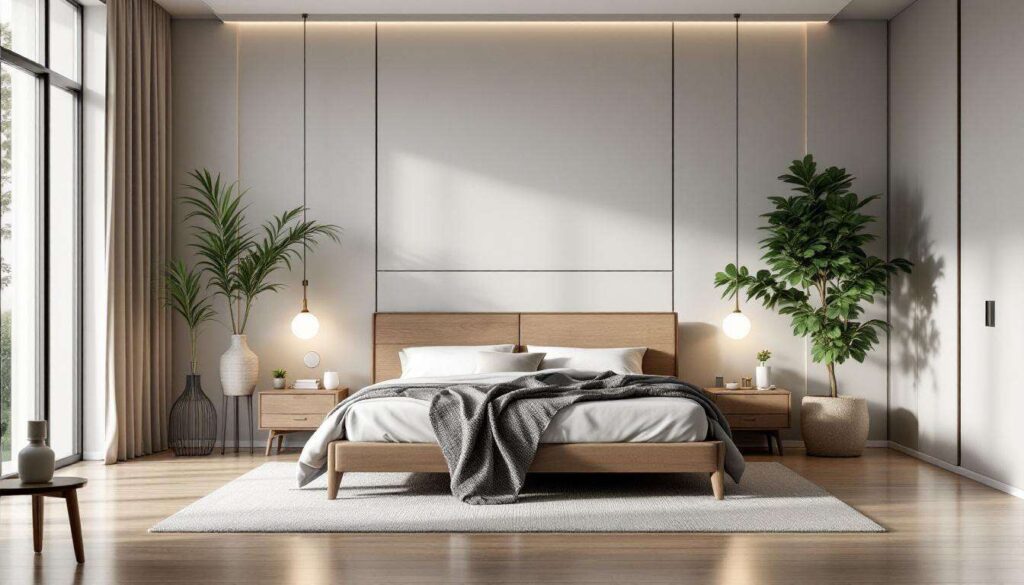
Wooden headboards bridge traditional craftsmanship and modern design through careful species selection and finishing techniques. Light woods like oak, ash, and maple create Scandinavian-inspired serenity, whilst darker walnut or teak varieties introduce sophisticated drama. Reclaimed timber adds character through weathered patinas and historical texture, appealing to those valuing sustainability and narrative.
Contemporary wood applications
Modern wooden headboards transcend conventional panel designs through innovative approaches:
- Vertical slat arrangements creating rhythmic visual interest
- Live-edge installations celebrating natural wood forms
- Geometric patterns combining multiple wood tones
- Floating shelves integrated within headboard structures
- Mixed-material combinations incorporating metal or glass accents
Maintenance and longevity
Properly finished wood requires minimal upkeep beyond occasional dusting and periodic treatment with appropriate oils or waxes. Quality hardwoods develop richer patinas over time, actually improving aesthetically with age rather than deteriorating. This durability makes wooden headboards sound long-term investments, particularly when construction quality ensures structural integrity through decades of use.
For those prioritising cutting-edge aesthetics and industrial elegance, microcement presents unparalleled possibilities.
Microcement: the contemporary option par excellence
Material characteristics and visual appeal
Microcement represents the pinnacle of contemporary surface treatments, offering seamless, monolithic appearances previously achievable only through poured concrete. This polymer-modified cement coating creates utterly smooth surfaces with subtle tonal variations that add depth without pattern. The material’s inherent coolness and minimalist aesthetic perfectly complement modern architectural sensibilities.
Application versatility
Microcement’s thin application layer enables remarkable flexibility:
- Direct application over existing plasterboard or masonry
- Curved or sculptural forms impossible with rigid materials
- Colour customisation through pigment addition
- Matte, satin, or polished finish options
- Continuation across walls and ceilings for cohesive design
Practical advantages
Beyond aesthetics, microcement offers exceptional durability and maintenance ease. The sealed surface resists staining, requires only damp cloth cleaning, and withstands daily wear without degradation. Its water-resistant properties make it suitable even for bedrooms with ensuite facilities where humidity might affect other materials. Professional application ensures proper adhesion and finishing, with costs reflecting the specialised skills required.
Successfully implementing any of these materials requires careful planning and execution.
Expert tips for a successful makeover
Planning and preparation
Successful headboard renovation begins with thorough assessment of existing conditions. Measure wall dimensions precisely, identify structural elements like studs or masonry, and evaluate electrical access for potential lighting integration. Creating detailed sketches or digital mockups helps visualise final results and identify potential issues before commencing work.
Professional versus DIY execution
Material choice significantly influences whether professional assistance proves necessary:
| Task | DIY Feasibility | Professional Recommendation |
|---|---|---|
| Wooden panel installation | High | Optional for complex designs |
| Plasterboard construction | Moderate | Recommended for finishing |
| Microcement application | Low | Essential |
| Electrical integration | Low | Essential (certified electrician) |
Coordinating with existing décor
Successful integration requires considering how new headboards interact with flooring, window treatments, and furniture. Maintain visual balance through complementary rather than matching elements, allowing the headboard to serve as either a subtle backdrop or commanding focal point depending on design intent. Sample materials in actual lighting conditions before finalising choices, as artificial and natural light dramatically affect colour and texture perception.
Transforming an ageing rattan headboard into a contemporary design statement requires thoughtful material selection aligned with personal aesthetics and practical requirements. Plasterboard offers architectural integration and customisation flexibility, wood provides warmth and timeless appeal, whilst microcement delivers uncompromising modern sophistication. Each material brings distinct advantages regarding installation complexity, maintenance demands, and visual impact. Careful planning, appropriate professional engagement, and coordination with existing décor elements ensure successful outcomes that revitalise bedrooms for years to come, creating restful sanctuaries that reflect current design sensibilities rather than dated trends.