


Living rooms across the country are witnessing a quiet revolution as homeowners abandon their traditional three-seater sofas in favour of something entirely different. This shift isn’t merely about aesthetics; it represents a fundamental rethinking of how we inhabit our spaces, prioritise comfort, and express our values through furniture choices. The alternative that’s capturing hearts and transforming interiors combines innovative design with practical benefits that classic sofas simply cannot match.
The renewal of the modern sofa
Breaking away from conventional seating
The furniture industry has long relied on standardised sofa designs that dominated showrooms for decades. However, contemporary lifestyles demand more versatility than these rigid pieces can offer. Modular seating systems have emerged as the game-changing alternative, allowing users to reconfigure their arrangements according to shifting needs. Unlike traditional sofas that anchor a room in one fixed layout, these adaptable solutions respond to everything from hosting dinner parties to creating intimate conversation nooks.
Consumer preferences driving change
Market research reveals compelling reasons behind this transformation:
- Flexibility to accommodate varying numbers of guests
- Ability to move house without furniture becoming obsolete
- Personalisation options that reflect individual style
- Space efficiency in increasingly compact living areas
- Multi-functional elements that serve diverse purposes
This evolution reflects broader societal changes, where adaptability trumps permanence and personal expression matters more than conformity. The modern sofa has transformed from a static centrepiece into a dynamic element that evolves alongside its owners.
Understanding these shifting preferences naturally leads to examining the materials that make such innovation possible.
The revolutionary materials shaking up the market
High-performance fabrics redefining durability
Contemporary seating solutions leverage advanced textile technologies that outperform traditional upholstery in every measurable category. Stain-resistant treatments now come integrated at the molecular level, eliminating the need for chemical sprays. Water-repellent fabrics protect against spills whilst maintaining breathability, and antimicrobial properties ensure hygiene without compromising comfort. These performance fabrics withstand daily wear far better than conventional materials, making them ideal for households with children or pets.
Sustainable material innovations
| Material Type | Environmental Benefit | Performance Feature |
|---|---|---|
| Recycled polyester | Diverts plastic from landfills | Superior durability |
| Natural latex foam | Biodegradable and renewable | Excellent support |
| Hemp blends | Low water cultivation | Naturally antimicrobial |
| Bamboo fabrics | Rapid growth cycle | Softness and strength |
Manufacturers are also exploring bio-based foams derived from plant oils, which offer comparable comfort to petroleum-based alternatives whilst reducing carbon footprints. These material innovations don’t require consumers to sacrifice quality for conscience; they deliver both simultaneously.
The materials revolution works hand in hand with equally dramatic changes in design philosophy.
Bold designs that captivate the public
Sculptural forms replacing boxy silhouettes
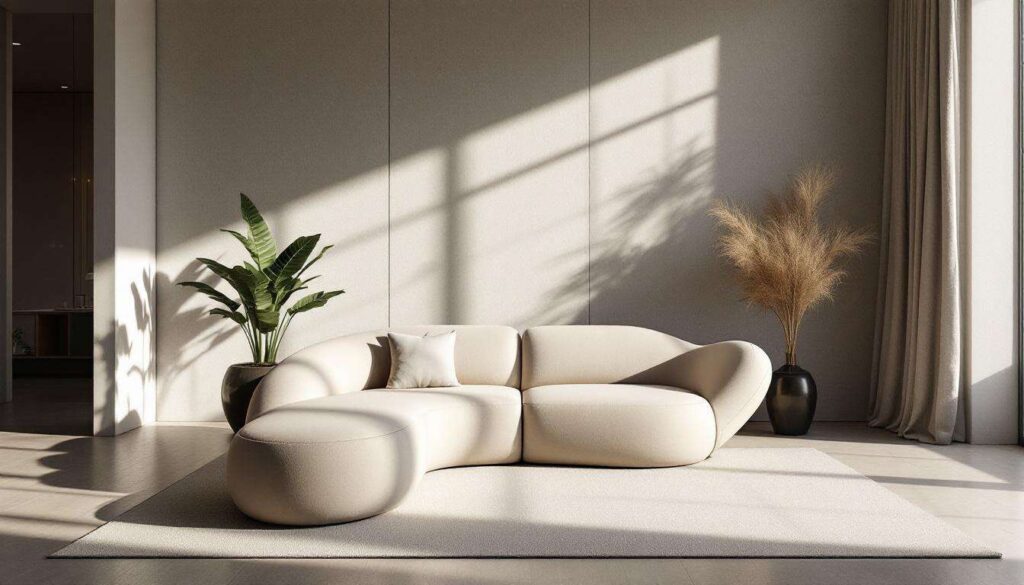
Contemporary seating embraces organic shapes and unexpected geometries that transform furniture into artistic statements. Curved lines soften interiors, creating visual flow that rigid rectangles cannot achieve. Asymmetrical configurations add visual interest whilst providing practical benefits, such as integrated side tables or built-in storage compartments. These designs challenge the notion that sofas must fade into the background, instead positioning them as focal points worthy of attention.
Colour and texture as design elements
The palette has expanded dramatically beyond neutral beiges and greys:
- Jewel tones like emerald and sapphire make bold statements
- Earthy terracottas and ochres bring warmth
- Mixed textures combine velvet, bouclé, and linen
- Contrasting piping and stitching add definition
- Two-tone combinations create visual depth
This chromatic confidence reflects a broader cultural shift towards self-expression in home décor. People increasingly view their living spaces as extensions of personality rather than showroom replicas.
Yet bold aesthetics mean little without practical application across diverse living situations.
An adaptable solution for all spaces
Scaling to fit any room dimension
Modular systems excel precisely because they refuse to impose limitations. A studio flat might utilise two pieces configured as a loveseat, whilst the same system expands to create a sprawling sectional in a spacious lounge. This scalability eliminates the frustration of furniture shopping, where finding pieces that fit specific dimensions often proves impossible. Corner units, chaise extensions, and ottoman additions allow homeowners to build configurations that maximise their particular floor plans.
Multi-room versatility
The adaptability extends beyond size adjustments. Individual modules can migrate between rooms as needs change:
- Ottoman converts to guest room seating
- Armless sections create office waiting areas
- Corner pieces transform into reading nooks
- Chaise modules provide bedroom lounging
This functional flexibility represents exceptional value, as a single furniture investment serves multiple purposes throughout its lifespan.
Versatility matters little, however, if the fundamental purpose—providing comfortable seating—falls short.
Comfort and ergonomics: the key to success
Scientific approach to seating support
Modern designs incorporate ergonomic research that traditional sofas ignored. Seat depths accommodate various body types, with options ranging from shallow perches ideal for upright conversation to deep cushions perfect for lounging. Lumbar support is engineered into back cushions rather than added as an afterthought, promoting healthy posture during extended sitting. Armrest heights follow ergonomic guidelines that reduce shoulder strain, whilst cushion firmness balances immediate comfort with long-term support.
Customisable comfort levels
| Comfort Element | Customisation Options | Benefit |
|---|---|---|
| Cushion density | Soft, medium, firm | Personal preference matching |
| Seat depth | Standard, deep, shallow | Body type accommodation |
| Back support | High, low, adjustable | Activity-specific comfort |
| Armrest style | Wide, narrow, none | Space and function optimisation |
This personalisation ensures that comfort isn’t a one-size-fits-all compromise but rather a tailored experience meeting individual requirements.
Beyond personal comfort, today’s consumers increasingly evaluate purchases through an environmental lens.
The ecological impact: a responsible choice
Longevity reducing consumption cycles
The most sustainable furniture is that which doesn’t need replacing. Modular systems combat planned obsolescence through several mechanisms. Replaceable covers extend lifespan when fabrics show wear, whilst individual modules can be swapped if damaged rather than discarding entire pieces. Timeless designs resist trend-driven obsolescence, and the ability to reconfigure prevents the “tired of it” syndrome that sends perfectly functional furniture to landfills. This durability represents genuine environmental responsibility rather than greenwashing.
Transparent manufacturing practices
Leading manufacturers now provide detailed information about their production methods:
- Carbon footprint calculations for each piece
- Certifications for sustainable forestry and materials
- Factory energy sources and efficiency measures
- Worker welfare and fair labour practices
- End-of-life recycling programmes
This transparency empowers consumers to make informed choices aligned with their values, transforming furniture purchases into votes for responsible business practices.
The movement away from classic sofas represents far more than fleeting fashion. It embodies a comprehensive reimagining of home furnishings that prioritises adaptability, sustainability, and personalisation. Revolutionary materials deliver performance without environmental compromise, whilst bold designs transform seating into artistic expression. The flexibility to accommodate any space, combined with scientifically informed comfort, creates furniture that genuinely serves modern lifestyles. As ecological awareness grows, these choices reflect responsible consumption that values longevity over disposability. Those who embrace this alternative discover not merely a replacement for their old sofa, but a fundamentally better approach to furnishing their homes.