
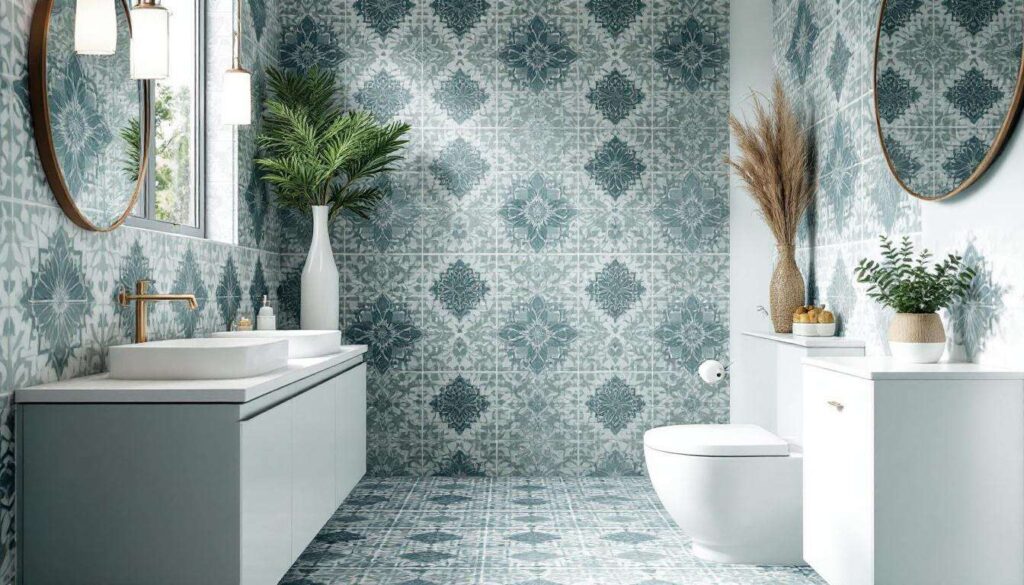
Bathroom renovations can be costly, disruptive and time-consuming. However, if your tiles are in good condition but simply look dated or dull, painting them offers a practical and budget-friendly alternative. This technique allows you to transform the appearance of your bathroom without the expense of removing old tiles and installing new ones. With the right preparation, suitable paint and careful application, you can achieve a professional-looking finish that breathes new life into your space. Whether you want to create a modern aesthetic or simply refresh tired surfaces, painting tiles is an accessible solution that delivers impressive results.
Why paint your bathroom tiles ?
Cost-effective transformation
Replacing bathroom tiles involves significant expenses, including labour costs for removal, disposal fees and the price of new materials. Painting existing tiles reduces costs dramatically, often by as much as 80% compared to a full renovation. The materials required are minimal: paint, primer, cleaning supplies and basic tools. This makes it an ideal solution for homeowners working with limited budgets or those who prefer to allocate funds elsewhere.
Minimal disruption to daily life
Traditional tile replacement can render your bathroom unusable for several days or even weeks. Painting tiles, by contrast, can typically be completed over a weekend. The process involves:
- Cleaning and preparing surfaces
- Applying primer
- Painting two or three coats
- Allowing adequate drying time between stages
This streamlined approach means less disruption to your household routine and faster results.
Environmental benefits
Removing and disposing of old tiles generates considerable waste that ends up in landfills. By painting existing tiles, you extend their lifespan and reduce the environmental impact associated with manufacturing and transporting new materials. This sustainable approach aligns with growing awareness about reducing construction waste and making more environmentally conscious home improvement choices.
Understanding the advantages of painting tiles naturally leads to considering which products will deliver the best results for your project.
The types of paint suitable for tiles
Specialist tile paint
Purpose-formulated tile paints are specifically designed to adhere to glossy, non-porous surfaces. These products contain advanced resins and bonding agents that ensure durability in humid environments. They typically offer excellent resistance to moisture, mould and regular cleaning. Most tile paints are water-based, making them low in volatile organic compounds and easier to clean up than oil-based alternatives.
Epoxy paint
Epoxy paint provides an exceptionally hard-wearing finish that withstands heavy use and frequent cleaning. This two-part system consists of resin and hardener that chemically bond when mixed. The resulting surface is highly resistant to water, chemicals and abrasion. However, epoxy paint requires careful application and adequate ventilation during use due to strong fumes. It also has a limited working time once mixed, demanding efficient application.
Comparison of paint types
| Paint Type | Durability | Application Difficulty | Drying Time | Cost |
|---|---|---|---|---|
| Specialist Tile Paint | Good | Easy | 4-6 hours | Moderate |
| Epoxy Paint | Excellent | Moderate | 12-24 hours | Higher |
| Standard Emulsion | Poor | Easy | 2-4 hours | Low |
Primers and undercoats
Using a suitable primer is essential for successful tile painting. Tile primers create a key between the glossy surface and topcoat, improving adhesion and longevity. Some tile paints include primer properties, whilst others require a separate primer application. Always check manufacturer recommendations to ensure compatibility between products and optimal performance.
Once you have selected appropriate paint products, proper preparation and application techniques become crucial for achieving professional results.
The steps to successfully paint your tiles
Thorough cleaning and preparation
Surface preparation determines the success of your project. Begin by cleaning tiles with a strong degreasing agent to remove soap residue, limescale and any mould. Pay particular attention to grout lines, which accumulate grime. After cleaning, rinse thoroughly and allow surfaces to dry completely. Any remaining moisture will compromise paint adhesion. Lightly sand tiles with fine-grit sandpaper to create a key for the primer, then wipe away dust with a damp cloth.
Repairing damaged areas
Inspect tiles for cracks, chips or loose grout. Repair these issues before painting:
- Fill chips with tile filler or epoxy putty
- Replace cracked tiles if possible, or stabilise with adhesive
- Remove and replace deteriorated grout
- Ensure all repairs are completely dry before proceeding
Protecting surrounding areas
Use masking tape and plastic sheeting to protect fixtures, fittings and adjacent surfaces. Cover the floor, bath, sink and toilet. Remove or tape over light switches and socket covers. Good preparation at this stage saves considerable cleaning effort later and ensures crisp, professional edges.
Applying primer and paint
Apply primer according to manufacturer instructions, using a small roller for flat surfaces and a brush for edges and grout lines. Allow primer to dry completely before applying the first coat of paint. Apply paint in thin, even coats rather than one thick layer, which may drip or take longer to cure. Most projects require two to three coats for complete coverage. Allow adequate drying time between coats, typically 4-6 hours for water-based paints. Ensure good ventilation throughout the process.
With your tiles properly painted, selecting the right colour scheme can enhance the overall impact of your bathroom transformation.
Tips for choosing the ideal colour
Consider bathroom size and lighting
Light colours make small bathrooms feel more spacious and airy. White, cream and pale grey reflect natural light and create an open atmosphere. Darker colours can add drama and sophistication to larger bathrooms with good lighting but may make compact spaces feel cramped. Consider how much natural light your bathroom receives throughout the day when selecting your palette.
Coordinate with existing fixtures
Your painted tiles should complement existing bathroom elements that cannot easily be changed, such as the bath, sink and toilet. Create a cohesive scheme by:
- Matching or contrasting with sanitaryware colours
- Coordinating with towels and accessories
- Considering flooring and countertop colours
- Harmonising with any remaining untreated surfaces
Trending colour choices
Contemporary bathroom design favours neutral palettes with accent colours. Soft greys, warm whites and muted blues remain popular choices. For those seeking bolder statements, deep navy, forest green or charcoal can create striking feature walls. Consider using different colours for different areas: lighter shades for walls and darker tones for lower sections or behind vanity units to add visual interest.
After investing time in painting your tiles, proper maintenance ensures your new finish remains attractive and durable for years to come.
Tricks for maintaining your tile paint
Allow adequate curing time
Although paint may feel dry to the touch within hours, it requires several days to fully cure. Avoid using the bathroom heavily during the first 48 hours. Wait at least one week before exposing painted surfaces to water and cleaning products. This patience allows the paint to achieve maximum hardness and water resistance.
Gentle cleaning practices
Use mild, non-abrasive cleaning products to maintain painted tiles. Harsh chemicals and abrasive scrubbers can damage the finish. Recommended cleaning methods include:
- Wiping with a soft cloth and warm soapy water
- Using pH-neutral bathroom cleaners
- Avoiding bleach-based products on coloured paint
- Drying surfaces after cleaning to prevent water spots
Managing moisture and ventilation
Excessive moisture remains the primary threat to painted tiles. Ensure your bathroom has adequate ventilation to reduce humidity levels. Run extractor fans during and after showers, open windows when possible and wipe down wet surfaces. These simple habits significantly extend the lifespan of your painted finish by preventing moisture-related deterioration.
Touch-ups and maintenance
Keep leftover paint for future touch-ups. Small chips or scratches can be easily repaired before they develop into larger problems. Clean the affected area, lightly sand if necessary and apply a thin coat of paint. Regular inspection allows you to address minor issues before they require more extensive remedial work.
Being aware of common pitfalls helps ensure your tile painting project succeeds without unnecessary setbacks or disappointing results.
Mistakes to avoid when painting tiles
Insufficient surface preparation
The most common cause of paint failure is inadequate preparation. Skipping the cleaning stage or failing to remove all grease and soap residue prevents proper adhesion. Paint applied to dirty or damp surfaces will peel or bubble within weeks or months. Invest time in thorough preparation rather than rushing to the painting stage. This foundation work determines the longevity of your finish.
Using inappropriate paint products
Standard emulsion or wall paint lacks the durability and water resistance required for bathroom tiles. These products may initially appear satisfactory but will quickly deteriorate in humid conditions. Always use paint specifically formulated for tiles or high-moisture environments. Similarly, omitting primer or using incompatible products compromises adhesion and reduces the lifespan of your work.
Applying paint too thickly
Thick coats of paint take longer to dry, are more prone to drips and runs, and may never fully cure. Multiple thin coats provide superior coverage and durability compared to fewer thick applications. Exercise patience and allow each coat to dry completely before applying the next. This approach delivers a smoother, more professional finish.
Painting in poor conditions
Temperature and humidity affect paint application and curing. Avoid painting when:
- Temperatures fall below 10°C or exceed 30°C
- Humidity levels are very high
- Ventilation is inadequate
- Direct sunlight creates hot spots on surfaces
These conditions can cause uneven drying, poor adhesion and finish defects. Wait for suitable weather and ensure proper ventilation throughout the process.
Painting bathroom tiles offers a practical, affordable method for updating tired spaces without the disruption and expense of complete renovations. By selecting appropriate paint products, preparing surfaces thoroughly and applying coats carefully, you can achieve durable, attractive results. Thoughtful colour selection enhances the impact of your transformation, whilst proper maintenance practices preserve the finish for years. Avoiding common mistakes ensures your project succeeds, delivering a refreshed bathroom that reflects your style and meets your practical needs. This accessible approach to home improvement demonstrates that significant visual changes need not require major construction work or substantial financial investment.