



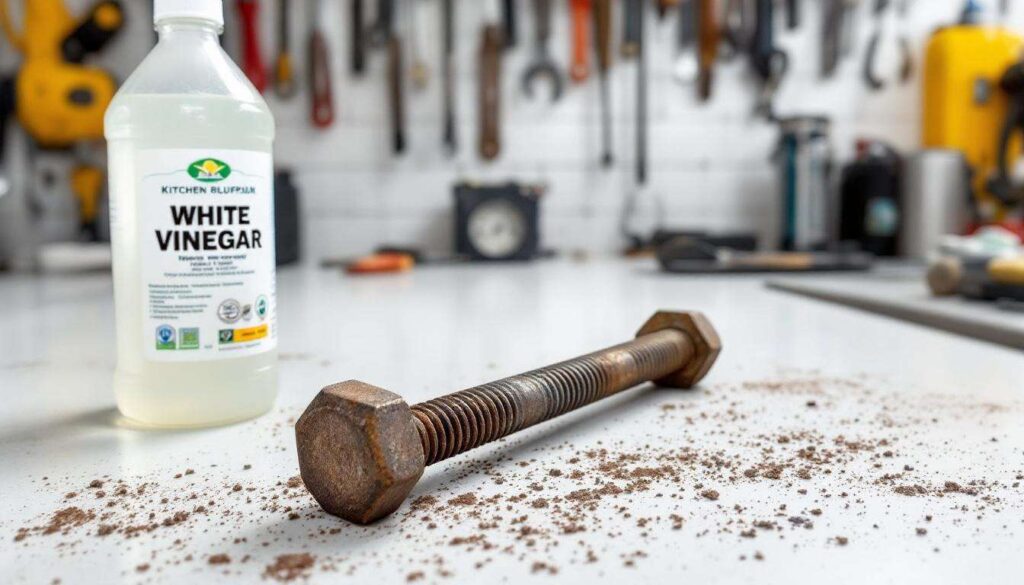
Dealing with stubborn, corroded fasteners is one of the most frustrating challenges faced by DIY enthusiasts and professional mechanics alike. When metal components have been exposed to moisture and air over extended periods, the resulting oxidation can transform a straightforward task into an exhausting ordeal. However, a remarkably effective solution may already be sitting in your kitchen cupboard. White vinegar, a common household ingredient typically reserved for cooking and cleaning, possesses powerful properties that can break down rust and liberate seized bolts with minimal effort and expense.
What is a rusty nut ?
A rusty nut refers to a threaded fastener that has undergone corrosion due to exposure to moisture, oxygen, and various environmental factors. This deterioration process creates a layer of iron oxide on the metal surface, which not only compromises the structural integrity of the component but also causes the nut to bond with the bolt thread it secures.
The formation process
Rust develops through an electrochemical reaction when iron or steel comes into contact with water and oxygen. The process accelerates in the presence of:
- Salt water or road salt commonly used in winter maintenance
- High humidity environments such as coastal regions
- Industrial pollutants and acidic rain
- Lack of protective coatings or deteriorated paint
As oxidation progresses, the rust expands within the narrow gaps between the nut and bolt threads, creating an increasingly tight mechanical bond that makes separation extraordinarily difficult using conventional methods.
Common locations for rusty fasteners
Certain areas are particularly susceptible to rust formation. Automotive components exposed to road spray, outdoor furniture subjected to weather cycles, and plumbing fixtures in damp environments frequently develop corroded nuts and bolts. Garden equipment, bicycles stored outdoors, and marine hardware represent additional contexts where this problem commonly manifests.
Understanding the nature of rust formation helps explain why chemical intervention proves more effective than brute force when attempting removal, which brings us to consider the potential risks associated with corroded fasteners.
The dangers of rusty bolts
Corroded fasteners present multiple hazards that extend beyond mere inconvenience. Recognising these risks is essential for anyone working with aged metal components.
Structural failure risks
Rust significantly weakens the load-bearing capacity of bolts and nuts. As corrosion progresses, it reduces the effective cross-sectional area of the metal, compromising its ability to withstand stress. In critical applications such as vehicle suspension systems, structural supports, or machinery assemblies, this deterioration can lead to catastrophic failure with potentially serious consequences.
Tool damage and personal injury
Attempting to force a severely corroded nut can result in:
- Stripped threads that render the fastener unusable
- Rounded bolt heads that prevent proper tool engagement
- Broken wrenches or sockets due to excessive force application
- Sudden tool slippage causing hand injuries or knuckle abrasions
- Metal fragments that can cause eye injuries if protective equipment is not worn
The temptation to apply excessive torque often exacerbates these problems, creating additional damage that complicates the removal process further.
Time and financial implications
| Consequence | Impact |
|---|---|
| Extended labour time | Increased project costs and delays |
| Damaged components | Replacement parts required |
| Professional intervention | Additional service charges |
These challenges highlight the importance of employing effective rust-removal techniques, and fortunately, a readily available kitchen staple offers a practical solution.
The properties of white vinegar
White vinegar, chemically known as diluted acetic acid, contains approximately five per cent acetic acid in water. This seemingly modest concentration belies its remarkable effectiveness in various applications beyond culinary use.
Chemical composition
The acetic acid in vinegar gives it a pH level between 2.4 and 3.4, making it sufficiently acidic to dissolve mineral deposits and metal oxides whilst remaining safe for household use. This balance of effectiveness and safety distinguishes vinegar from more aggressive industrial rust removers that may require special handling and disposal procedures.
Advantages over commercial products
White vinegar offers several compelling benefits:
- Non-toxic formulation safe for home environments
- Minimal environmental impact compared to chemical rust removers
- Readily available at supermarkets and convenience stores
- Economical pricing that makes it cost-effective for repeated use
- No special storage requirements or hazardous waste concerns
These characteristics make vinegar an accessible first-line treatment for rust problems before resorting to more aggressive chemical solutions.
Having established vinegar’s beneficial properties, we can now examine the specific mechanisms by which it attacks rust.
How white vinegar works on rust
The interaction between acetic acid and iron oxide involves a straightforward chemical reaction that dissolves the corrosion layer.
The chemical reaction
When acetic acid contacts rust, it reacts with the iron oxide to form iron acetate, a water-soluble compound that can be easily wiped away. This process effectively converts the solid rust into a liquid solution that no longer bonds the fastener components together. The reaction proceeds gradually, requiring time for the acid to penetrate the rust layer and complete the dissolution process.
Penetration and dissolution
Unlike mechanical methods that attempt to break the rust bond through force, vinegar works by chemically dismantling the corrosion at a molecular level. The liquid penetrates into microscopic crevices and thread gaps where rust has accumulated, reaching areas that would be impossible to address through scraping or wire brushing alone.
Timeframe expectations
| Rust severity | Typical soaking duration |
|---|---|
| Light surface rust | 30 minutes to 2 hours |
| Moderate corrosion | 4 to 12 hours |
| Heavy rust accumulation | 24 to 48 hours |
Understanding this chemical process helps set realistic expectations for treatment duration, which informs the practical application method.
Steps to use white vinegar
Implementing this technique requires minimal equipment and follows a straightforward procedure.
Materials required
- White distilled vinegar in sufficient quantity
- A container suitable for submerging the fastener
- Wire brush or old toothbrush for cleaning
- Clean cloths or paper towels
- Protective gloves and safety glasses
- Appropriate wrench or socket for removal
Application method
For removable components, completely submerge the rusted fastener in white vinegar within a glass or plastic container. Ensure the entire affected area remains covered throughout the soaking period. Check progress periodically and use a wire brush to remove loosened rust, then return the item to the vinegar if corrosion remains.
For fixed installations where removal is impractical, saturate cloth rags with vinegar and wrap them around the rusty bolt. Cover the cloth with plastic wrap to prevent evaporation and maintain contact with the metal surface. Reapply vinegar every few hours to keep the cloth thoroughly saturated.
Post-treatment procedure
Once the rust has dissolved sufficiently, remove the component from the vinegar and scrub away remaining residue with a wire brush. Rinse thoroughly with water to halt the acidic reaction, then dry completely to prevent new rust formation. Apply a thin coating of oil or rust-preventative spray to protect the cleaned metal surface.
Whilst this method proves highly effective, certain considerations ensure optimal results and safety.
Precautions and additional tips
Maximising success whilst avoiding potential complications requires attention to several important factors.
Safety considerations
Although vinegar is relatively benign, prolonged skin contact can cause irritation. Wear protective gloves throughout the process and ensure adequate ventilation when working with larger quantities. Avoid contact with eyes, and should splashing occur, rinse immediately with copious amounts of water.
Material compatibility
Vinegar safely treats ferrous metals but may affect certain other materials:
- Aluminium and other non-ferrous metals may discolour or pit
- Some protective coatings and paints may be damaged
- Rubber seals and gaskets adjacent to treated areas should be protected
Test on an inconspicuous area first when treating valuable or delicate items.
Enhancement techniques
For particularly stubborn cases, gently heating the vinegar increases reaction speed. Adding salt to the vinegar creates a more aggressive solution that accelerates rust dissolution. Combining vinegar treatment with penetrating oil applied after initial soaking can further improve results on severely seized fasteners.
White vinegar represents a remarkably effective, economical, and environmentally responsible solution for removing rusty bolts. Its chemical properties allow it to dissolve rust that would otherwise require expensive commercial products or laborious mechanical removal. By following the straightforward application methods outlined and observing appropriate precautions, anyone can successfully tackle corroded fasteners using this simple kitchen essential. The technique proves particularly valuable for home mechanics, DIY enthusiasts, and anyone maintaining aged equipment or outdoor structures where rust inevitably develops over time.