


The kitchen has long been considered the heart of the home, and for decades, designers have sworn by the work triangle as the golden rule for creating functional cooking spaces. This principle, which positions the sink, cooker, and refrigerator at three strategic points, has shaped countless kitchen layouts since its inception in the 1940s. However, leading interior designers and architects are now declaring this conventional approach obsolete, arguing that modern lifestyles, technological advances, and evolving social habits demand a fresh perspective on kitchen design. As we approach the midpoint of the decade, a new philosophy is emerging that prioritises flexibility, collaboration, and seamless integration with living spaces.
Revolution in kitchen design: why the work triangle is outdated
The changing nature of domestic life
The work triangle concept was developed during an era when kitchens served a singular purpose: food preparation by one person, typically the housewife. Today’s households operate very differently. Multiple people often work simultaneously in the kitchen, whether preparing meals together, supervising children’s homework, or entertaining guests whilst cooking. The rigid three-point system simply cannot accommodate these multifunctional demands.
Contemporary kitchens have evolved into social hubs where families gather, friends congregate, and remote workers occasionally set up their laptops. This transformation requires layouts that facilitate movement, conversation, and various activities beyond traditional cooking tasks.
The rise of specialist appliances and zones
Modern kitchens contain far more than the three basic elements of the work triangle. Consider the array of appliances now deemed essential:
- Coffee stations with dedicated machines and grinders
- Wine coolers and beverage refrigerators
- Steam ovens and combination microwaves
- Dishwasher drawers positioned throughout the space
- Instant boiling water taps
- Integrated recycling and waste management systems
Attempting to incorporate these elements into a triangular framework creates awkward compromises and inefficient workflows. Designers now recognise that kitchens require multiple work zones rather than three fixed points.
This fundamental shift in how we perceive kitchen functionality naturally leads to examining the specific shortcomings of the traditional model.
The limitations of the traditional work triangle
Spatial constraints and modern architecture
The work triangle was conceived for enclosed, rectangular kitchens with clearly defined boundaries. However, open-plan living has become the dominant architectural preference, particularly in new builds and renovations. When kitchen, dining, and living areas merge into one continuous space, the triangle concept loses its relevance entirely.
Island units, peninsula configurations, and galley layouts present further challenges. A strict triangular arrangement often proves impossible or creates inefficient traffic patterns in these popular designs.
The single-cook assumption
Perhaps the most significant flaw in the work triangle philosophy is its assumption that only one person will use the kitchen at any given time. This outdated notion fails to reflect contemporary cooking habits where:
- Couples prepare meals collaboratively
- Children participate in cooking activities
- Guests help with food preparation during social gatherings
- Multiple household members access the kitchen simultaneously for different purposes
A triangular layout can create bottlenecks and collisions when several people attempt to work within the same confined circuit.
Inflexibility and personalisation
Every household has unique needs, cooking styles, and preferences. The work triangle offers a one-size-fits-all solution that cannot adapt to individual requirements. Someone who bakes extensively needs different spatial arrangements compared to someone who primarily reheats prepared meals or focuses on raw food preparation.
Understanding these limitations helps explain why designers are embracing more adaptable approaches to kitchen planning.
New design trends for 2026
The work zone philosophy
The emerging alternative to the work triangle is the work zone concept, which divides the kitchen into dedicated areas based on specific tasks. Rather than three points, this approach creates five or more distinct zones:
| Zone | Primary Function | Key Elements |
|---|---|---|
| Preparation | Chopping, mixing, assembling | Worktop space, knife storage, mixing bowls |
| Cooking | Hob, oven, microwave use | Heat sources, ventilation, utensil storage |
| Cleaning | Washing, dishwasher loading | Sink, dishwasher, drying area |
| Storage | Pantry, refrigeration | Cupboards, fridge-freezer, larder |
| Serving | Plating, beverage preparation | Counter space, glassware, coffee station |
This zonal approach allows multiple people to work simultaneously without interfering with each other’s tasks, as each zone functions semi-independently.
Circular and ergonomic layouts
Designers are increasingly favouring circular flow patterns that allow movement around the kitchen rather than back and forth between fixed points. This creates more intuitive navigation and reduces unnecessary steps during meal preparation.
Ergonomic considerations now take precedence, with careful attention to the height of work surfaces, the positioning of frequently used items, and the reduction of bending and stretching movements.
The social kitchen concept
Perhaps the most significant trend is the integration of social spaces within the kitchen itself. This includes:
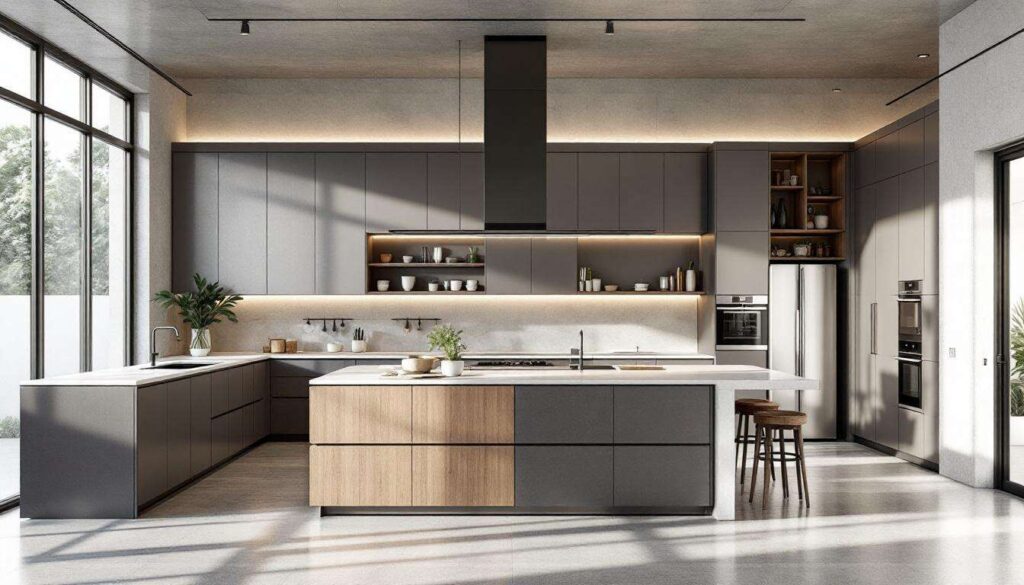
- Breakfast bars with comfortable seating facing the cooking area
- Integrated dining tables that extend from kitchen islands
- Lounge-style seating areas within the kitchen footprint
- Open shelving that displays items as decorative elements
These spatial innovations reflect how kitchens now serve as gathering places rather than purely functional workspaces, which connects directly to the advantages of more flexible kitchen designs.
The benefits of open and modular kitchens
Enhanced flexibility and adaptability
Modular kitchen systems allow homeowners to reconfigure their spaces as needs change over time. Freestanding units, moveable islands, and adjustable shelving systems provide unprecedented flexibility compared to traditional fitted kitchens.
This adaptability proves particularly valuable for growing families, changing mobility needs, or simply refreshing the space without undertaking a complete renovation.
Improved social interaction
Open kitchen layouts eliminate the isolation that cooks once experienced. The person preparing meals can maintain conversations with family members and guests, supervise children, or enjoy entertainment whilst working. This integration strengthens social bonds and makes cooking a more inclusive activity.
Maximised natural light and space perception
Removing walls and barriers allows natural light to flow throughout the entire ground floor, creating brighter, more welcoming environments. Even modest-sized homes feel more spacious when the kitchen opens onto living areas.
These spatial and social advantages are further enhanced when combined with cutting-edge technology.
How to integrate new technologies into your kitchen
Smart appliances and connectivity
Modern kitchens increasingly feature interconnected smart appliances that communicate with each other and with mobile devices. These technologies include:
- Refrigerators with internal cameras accessible via smartphone
- Ovens that can be preheated remotely
- Hobs with automatic pan detection and temperature adjustment
- Voice-activated assistants for hands-free recipe access
- Smart lighting that adjusts based on time of day and activity
When planning technology integration, designers recommend creating dedicated charging stations and ensuring adequate power outlets positioned at convenient heights.
Sustainable technology solutions
Environmental concerns are driving the adoption of eco-friendly kitchen technologies such as energy-efficient appliances, water-saving taps, and integrated composting systems. Induction hobs have gained popularity for their energy efficiency and safety features, whilst smart meters help households monitor and reduce consumption.
The materials chosen for kitchen construction and finishes play an equally important role in creating sustainable, contemporary spaces.
Innovative materials for a modern kitchen
Sustainable and recycled options
Environmental consciousness is reshaping material choices in kitchen design. Recycled and sustainable materials now compete with traditional options in both aesthetics and durability:
- Worktops made from recycled glass or paper composite
- Reclaimed wood for cabinetry and shelving
- Bamboo as a rapidly renewable alternative to hardwood
- Recycled aluminium and steel for fixtures and fittings
- Low-VOC paints and finishes for improved air quality
High-performance surfaces
Technological advances have produced materials that combine beauty with exceptional functionality. Porcelain slabs offer extraordinary durability and heat resistance whilst mimicking natural stone, marble, or wood. Engineered quartz provides consistent patterns and requires minimal maintenance compared to natural stone alternatives.
Antimicrobial surfaces have gained attention, particularly for high-touch areas like handles and worktops, offering enhanced hygiene through materials that naturally inhibit bacterial growth.
Textural variety and visual interest
Contemporary kitchens embrace mixed materials and textures rather than matching everything uniformly. Designers combine smooth and rough surfaces, matte and glossy finishes, warm woods with cool metals, creating depth and visual interest. This approach allows for greater personalisation and prevents the sterile appearance that once characterised modern kitchens.
The kitchen landscape has fundamentally transformed from the rigid work triangle model to flexible, technology-enhanced spaces that accommodate multiple users and activities simultaneously. The zone-based approach offers superior functionality for contemporary lifestyles, whilst open and modular designs create inviting social environments. Smart technologies streamline tasks and reduce environmental impact, and innovative materials provide both sustainability and aesthetic appeal. As we move forward, successful kitchen design will prioritise adaptability, connectivity, and the integration of cooking spaces with broader living areas, reflecting how these rooms have evolved from purely functional workshops into the true centres of home life.