



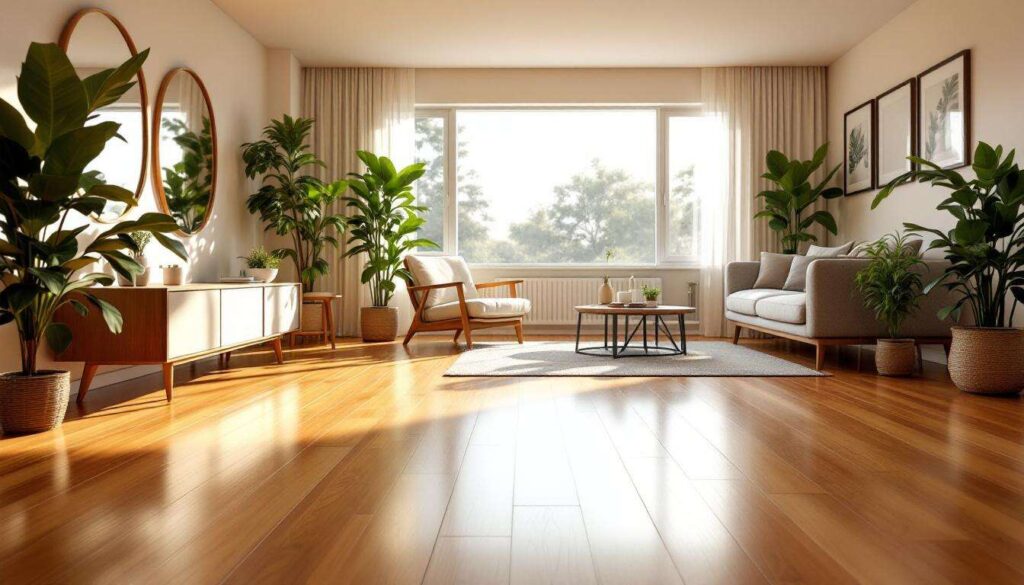
Hardwood floors remain one of the most sought-after features in homes, yet keeping them looking pristine can feel like a constant battle. Many homeowners reach for vinegar or commercial wax products, only to find their floors looking dull, streaky, or worse, damaged over time. The good news is that restoring that showroom shine doesn’t require harsh chemicals or expensive treatments. A remarkably simple approach using everyday household items can transform tired-looking wood into gleaming surfaces that rival professional results.
Common mistakes to avoid with vinegar and wax
The vinegar misconception
Whilst vinegar is frequently recommended as a natural cleaning solution, its acidic nature poses significant risks to hardwood floors. The pH level of vinegar can gradually erode the protective finish that seals wood surfaces, leaving them vulnerable to moisture damage and discolouration. Many people mistakenly believe that diluting vinegar makes it safe, yet even weak solutions can cause cumulative damage with repeated use.
- Vinegar strips away the natural oils in wood
- Acidic content can dull the finish over time
- Excessive use leads to cloudy, hazy appearances
- May void manufacturer warranties on newer floors
The wax trap
Traditional wax products create another set of problems entirely. Whilst they initially provide a glossy appearance, wax builds up in layers that attract dirt and grime. This accumulation becomes increasingly difficult to remove and can make floors look grimy rather than clean. Additionally, wax is incompatible with modern polyurethane finishes, creating a sticky residue that repels proper cleaning solutions.
Understanding these common pitfalls helps explain why a gentler approach yields far superior results without the associated risks.
Why chemicals are not the solution
Health concerns with commercial products
Commercial floor cleaners often contain a cocktail of synthetic chemicals that can affect indoor air quality. These products release volatile organic compounds (VOCs) that linger in enclosed spaces, potentially causing respiratory irritation and other health issues, particularly for children and pets who spend time close to floor level.
| Chemical Type | Common Risk | Long-term Impact |
|---|---|---|
| Ammonia-based cleaners | Respiratory irritation | Finish deterioration |
| Petroleum distillates | Skin sensitivity | Wood drying and cracking |
| Synthetic fragrances | Allergic reactions | Residue build-up |
Environmental and financial costs
Beyond health implications, harsh chemical cleaners contribute to environmental pollution through waterway contamination when rinsed down drains. The financial burden also accumulates, as these specialised products command premium prices despite often delivering disappointing results. Many homeowners find themselves purchasing multiple products in search of the perfect solution, when simpler alternatives exist right in their cupboards.
These drawbacks make a compelling case for exploring safer, more sustainable alternatives that work with the natural properties of wood rather than against them.
The importance of a gentle and natural method
Preserving wood integrity
Hardwood floors represent a significant investment that can last generations when properly maintained. A gentle cleaning approach respects the natural characteristics of wood, allowing it to breathe whilst protecting the finish. Unlike aggressive chemicals that force their way through protective layers, mild solutions work in harmony with the wood’s structure, removing dirt without compromising integrity.
Benefits of pH-neutral solutions
The key to effective yet safe floor care lies in maintaining pH balance. Neutral solutions neither strip away protective coatings nor leave alkaline residues that attract dirt. This balanced approach ensures that:
- Natural wood oils remain intact
- Protective finishes stay undamaged
- Surfaces dry streak-free
- Long-term appearance is preserved
Regular maintenance using gentle methods prevents the need for intensive restoration work, saving both time and money whilst extending the lifespan of your flooring investment.
With these principles in mind, the actual technique for achieving brilliant results becomes remarkably straightforward.
The home trick for dazzling hardwood floors
The soap and water method
The most effective approach requires nothing more than mild dish soap and water. This deceptively simple combination cuts through grime whilst remaining completely safe for all types of hardwood finishes. The secret lies in the precise ratio and application technique rather than the ingredients themselves.
To prepare your cleaning solution:
- Fill a standard spray bottle with clean water
- Add precisely 2 to 3 drops of pH-neutral dish soap
- Gently swirl to mix without creating excessive foam
- Test on an inconspicuous area first
Essential equipment
Success depends equally on using the right tools for application. A flat microfiber mop proves essential, as traditional string mops hold too much water and can damage wood. Microfiber technology traps dirt effectively whilst requiring minimal moisture, making it ideal for hardwood surfaces.
| Tool | Purpose | Why It Matters |
|---|---|---|
| Microfiber mop | Application and cleaning | Prevents over-wetting |
| Spray bottle | Controlled distribution | Avoids puddles |
| Soft broom | Preliminary debris removal | Prevents scratching |
Having gathered these simple materials, proper application technique ensures optimal results.
How to apply this technique effectively
Preparation steps
Before applying any cleaning solution, thorough preparation is crucial. Begin by removing all loose dirt, dust, and debris using a soft-bristled broom or a vacuum cleaner specifically designed for hardwood floors. This preliminary step prevents scratching when the mop passes over the surface.
Application process
The actual cleaning follows a methodical approach that respects the wood grain:
- Lightly spray a small section, approximately one metre square
- Immediately follow with the microfiber mop
- Move in the direction of the wood grain, never across it
- Use smooth, overlapping strokes without applying excessive pressure
- Work in manageable sections to prevent solution from sitting too long
The key principle is to keep the floor barely damp rather than wet. The mop should glide effortlessly across the surface, picking up dirt without leaving moisture behind. If you notice any standing liquid, your mop is too wet and should be wrung out further.
Drying considerations
Proper drying prevents water spots and ensures a streak-free finish. Open windows to promote air circulation, or use fans to speed the process. The floor should dry completely within minutes, leaving behind nothing but clean, gleaming wood.
Once you’ve mastered this technique, maintaining that fresh appearance requires consistent but minimal effort.
Maintaining the shine in the long term
Regular cleaning schedule
Consistency proves far more effective than occasional intensive cleaning. Establishing a regular maintenance routine prevents dirt accumulation and preserves the floor’s appearance with minimal effort. High-traffic areas benefit from weekly attention, whilst less-used spaces may only require fortnightly care.
Preventative measures
Beyond regular cleaning, several simple practices help maintain that like-new appearance:
- Place mats at exterior doorways to trap dirt and moisture
- Use felt pads beneath furniture legs to prevent scratches
- Trim pet nails regularly to avoid surface damage
- Address spills immediately before they penetrate the finish
- Avoid walking on floors with high heels or damaged footwear
Seasonal considerations
Wood responds to environmental changes, expanding in humidity and contracting in dry conditions. During winter months, maintaining adequate indoor humidity prevents gaps from forming between boards. Conversely, summer humidity may require more frequent cleaning as moisture can attract dirt more readily.
Hardwood floors treated with gentle, natural methods maintain their beauty far longer than those subjected to harsh chemicals. The simple soap-and-water technique offers professional-quality results without the risks associated with vinegar, wax, or commercial cleaners. By respecting the natural properties of wood and following a consistent maintenance routine, your floors will continue to shine brilliantly for decades. This straightforward approach proves that sometimes the most effective solutions are also the simplest, requiring nothing more than basic household items and proper technique to achieve stunning results.