



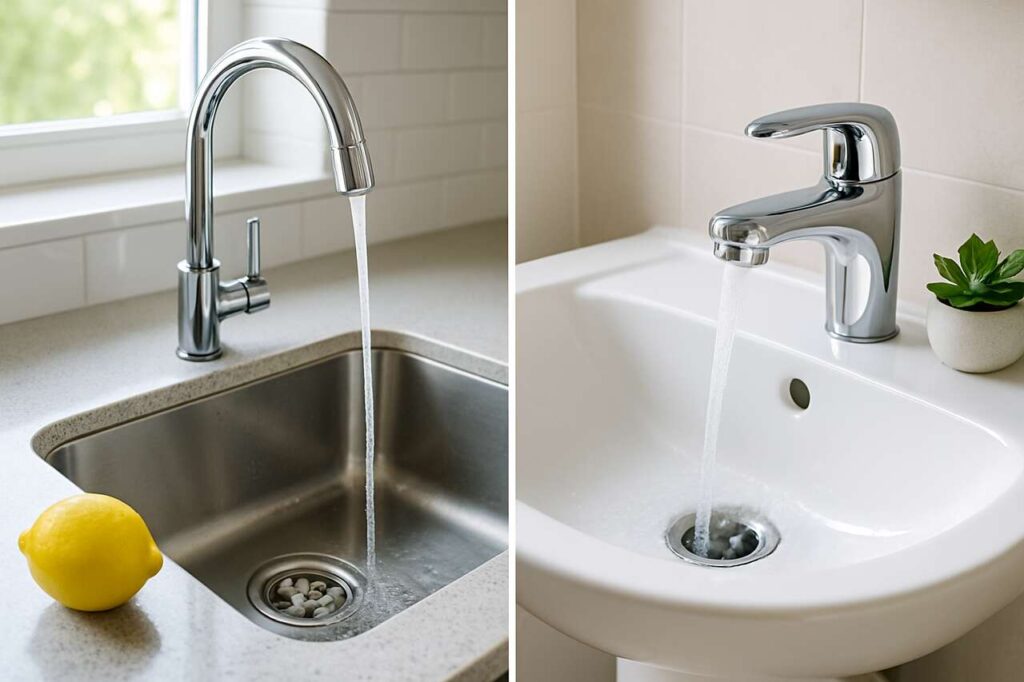
Blocked sinks represent one of the most frustrating household problems, disrupting daily routines and creating unpleasant odours throughout the home. Whether it’sa kitchen sink struggling to drain greasy water or a bathroom basin backing up with soapy residue, these issues demand immediate attention. Fortunately, clearing a clogged drain doesn’t always require expensive plumbers or harsh chemicals. A simple method using common household ingredients can restore proper drainage within minutes, saving both money and the environment whilst delivering remarkably effective results.
Why do drains get clogged ?
Common culprits in kitchen sinks
Kitchen drains face a constant barrage of materials that gradually accumulate and restrict water flow. Food particles represent the primary offender, with small scraps slipping past sink strainers and adhering to pipe walls. Grease and cooking oils pose an even greater threat, as they solidify when cooled and create stubborn deposits that trap other debris. Coffee grounds, despite their granular appearance, clump together and form dense blockages that resist simple flushing attempts.
Bathroom sink blockage causes
Bathroom drains contend with their own unique challenges. Hair stands as the most notorious culprit, weaving into tangled masses that catch soap scum and other materials. Toothpaste residue combines with mineral deposits from hard water to create a cement-like substance along pipe interiors. Personal care products, including facial scrubs containing microbeads and thick creams, contribute additional layers to these obstructions.
The accumulation process
Blockages rarely develop overnight. Instead, they build gradually through repeated exposure to problematic materials:
- Initial deposits create rough surfaces on smooth pipe walls
- These rough patches catch additional debris more easily
- Layers accumulate progressively, narrowing the drainage pathway
- Water flow slows noticeably before complete blockage occurs
- Bacterial growth on organic matter produces unpleasant odours
Understanding these mechanisms helps explain why prevention proves far easier than remediation, though effective solutions exist for established blockages as well.
The drawbacks of chemical drain cleaners
Health and safety concerns
Chemical drain cleaners contain highly caustic substances that pose significant risks to household members and pets. These products release toxic fumes that irritate respiratory systems, eyes and skin upon contact. Accidental splashes can cause severe burns, whilst improper storage creates dangers for curious children. The aggressive nature of these chemicals means that even correct usage carries inherent hazards that many homeowners prefer to avoid.
Environmental impact
The environmental consequences of chemical drain cleaners extend far beyond individual households. These substances enter water systems where they harm aquatic ecosystems and complicate water treatment processes. Persistent chemicals accumulate in the environment, affecting wildlife and potentially contaminating drinking water sources. The manufacturing process itself generates pollution, whilst plastic packaging contributes to waste problems.
Damage to plumbing systems
Ironically, products designed to clear drains can actually damage the very pipes they’re meant to help. The extreme heat generated by chemical reactions weakens PVC pipes and corrodes metal fixtures over time. Repeated use accelerates deterioration, potentially leading to leaks and costly repairs that far exceed the original blockage problem. Older plumbing systems prove particularly vulnerable to this chemical assault.
| Concern | Chemical cleaners | Natural methods |
|---|---|---|
| Health risks | High (burns, fumes) | Minimal |
| Pipe damage | Significant over time | None |
| Environmental harm | Substantial | Negligible |
| Cost per use | £5-15 | Under £1 |
These compelling drawbacks have prompted many households to seek safer, more sustainable alternatives that deliver comparable results without the associated risks.
Natural ingredients for unclogging a sink
Baking soda properties
Sodium bicarbonate, commonly known as baking soda, serves as the foundation for natural drain cleaning. This mild alkaline compound breaks down organic matter without generating dangerous fumes or causing pipe damage. Its gentle abrasive texture helps scour away deposits whilst neutralising acidic odours that emanate from blocked drains. The substance remains completely safe for household use and costs a fraction of commercial alternatives.
White vinegar effectiveness
White vinegar contains acetic acid that reacts vigorously with baking soda to create a powerful cleaning action. This fizzing reaction generates carbon dioxide bubbles that agitate blockages and dislodge trapped debris. The acidic nature of vinegar also dissolves mineral deposits and soap scum that contribute to drainage problems. Combined with baking soda, it creates a dynamic cleaning system that tackles multiple blockage types simultaneously.
Supporting ingredients
Additional natural ingredients can enhance the basic baking soda and vinegar method:
- Boiling water helps flush loosened debris and melts grease deposits
- Salt adds abrasive power for stubborn blockages
- Lemon juice provides extra acidity and pleasant fragrance
- Dish soap breaks down oily residues in kitchen drains
These simple, affordable ingredients work together to create an effective solution that rivals commercial products whilst maintaining complete safety for users and plumbing systems alike.
How to use baking soda and vinegar
Step-by-step application process
Begin by removing any visible debris from the drain opening and ensuring the sink is empty. Pour approximately half a cup of baking soda directly into the drain, using a funnel if necessary to prevent spillage. Follow immediately with one cup of white vinegar, then quickly cover the drain opening with a plug or damp cloth to contain the fizzing reaction within the pipes. Allow the mixture to work for 15 to 30 minutes whilst the chemical reaction breaks down the blockage.
Finishing the treatment
After the waiting period, boil a full kettle of water and carefully pour it down the drain in a steady stream. The hot water flushes away loosened debris and completes the cleaning process. For particularly stubborn blockages, repeat the entire procedure a second time. Most minor to moderate clogs respond well to this treatment, with drainage returning to normal within minutes of the final flush.
Optimising results
Several techniques enhance the effectiveness of this natural method:
- Perform the treatment before bedtime to allow extended contact time
- Use the hottest water possible without risking burns or pipe damage
- Add a tablespoon of salt to the baking soda for extra scouring power
- Ensure proper coverage of the drain to maximise pressure from the reaction
This straightforward approach delivers impressive results whilst requiring minimal effort and no specialised equipment, making it accessible to anyone facing drainage problems.
Preventing future blockages
Daily maintenance habits
Establishing simple routines dramatically reduces the likelihood of future clogs. Install mesh drain covers to catch hair and food particles before they enter pipes. Run hot water through drains for 30 seconds after each use to flush away potential deposits. Never pour grease down kitchen sinks; instead, collect it in containers for proper disposal. These small actions compound over time to maintain clear, free-flowing drainage systems.
Weekly preventive treatments
Regular maintenance proves far easier than addressing established blockages. Pour boiling water down drains once weekly to prevent grease accumulation. Consider a monthly application of the baking soda and vinegar method as preventive maintenance rather than waiting for problems to develop. This proactive approach keeps pipes clear and eliminates the unpleasant odours that often precede complete blockages.
What to avoid
Certain materials should never enter drain systems:
- Coffee grounds and tea leaves that clump together
- Eggshells and fibrous vegetables that resist breakdown
- Flour and starchy substances that form paste-like masses
- Hair and dental floss that create tangled obstructions
- Cotton products and paper towels that don’t dissolve
Educating all household members about proper drain care ensures everyone contributes to maintaining clear plumbing systems and avoiding frustrating blockages.
When to call a professional
Signs requiring expert intervention
Whilst natural methods handle most common blockages effectively, certain situations demand professional attention. Multiple blocked drains throughout the home suggest a main sewer line problem beyond DIY capabilities. Persistent blockages that resist repeated treatment attempts may indicate deeper structural issues. Gurgling sounds from toilets when using sinks or foul sewage odours point to serious problems requiring immediate professional assessment.
Avoiding costly damage
Attempting to resolve complex plumbing issues without proper expertise can exacerbate problems and increase repair costs. Professional plumbers possess specialised equipment including drain cameras and powered augers that diagnose and address issues inaccessible to homeowners. They can identify pipe damage, tree root intrusion and other underlying causes that simple unclogging cannot remedy. Recognising the limits of DIY solutions prevents minor issues from escalating into major renovations.
Blocked drains need not trigger panic or prompt immediate purchases of harsh chemicals. The combination of baking soda and vinegar offers a safe, effective and economical solution that clears most common blockages within minutes. By understanding blockage causes, implementing preventive measures and recognising when professional help becomes necessary, homeowners can maintain properly functioning drainage systems whilst protecting both their plumbing and the environment. This simple household trick deserves a permanent place in every home maintenance routine.