

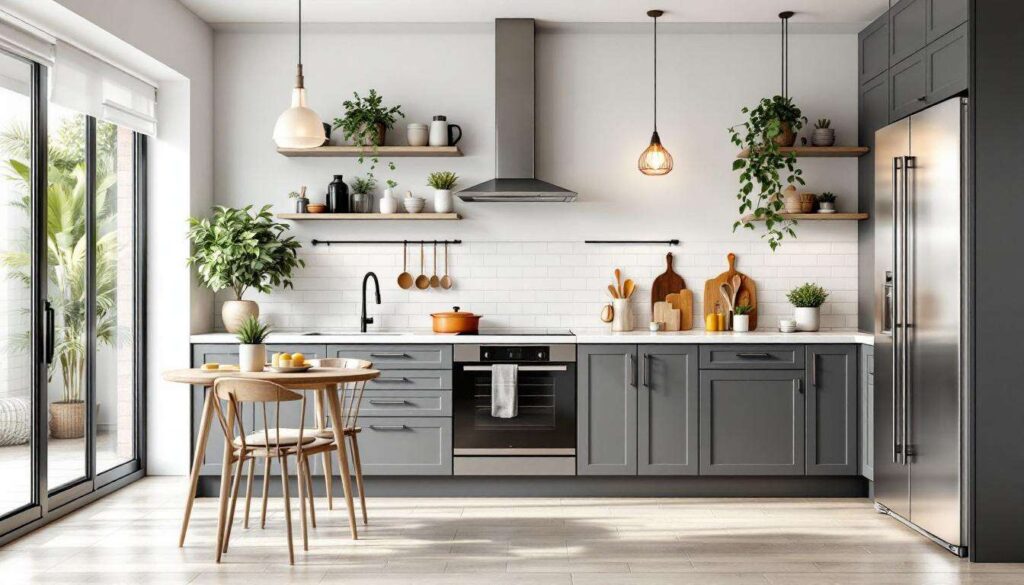
Grey kitchens have become a staple in contemporary interior design, offering a sophisticated and timeless backdrop for culinary spaces. However, the popularity of this neutral palette has led some homeowners to worry that their kitchens might lack personality or visual interest. The good news is that grey serves as an excellent canvas for creative expression, allowing you to layer textures, colours, and decorative elements that transform a potentially bland space into one brimming with character. Whether you’re working with pale dove grey or deep charcoal tones, there are countless ways to inject warmth, style, and individuality into your kitchen whilst maintaining that elegant neutral foundation.
Adding Bright Colour Accents
Strategic pops of vibrant hues
Introducing bold colour accents is one of the most effective methods to breathe life into a grey kitchen. Consider incorporating bright hues through smaller elements that can be easily changed as your tastes evolve. A collection of mustard yellow tea towels, coral-coloured mixing bowls, or a vibrant turquoise kettle can instantly lift the mood of the space without overwhelming the sophisticated grey backdrop.
Feature walls and painted elements
For those willing to commit to more permanent colour additions, painting a single wall in a complementary shade can create stunning visual impact. Popular choices include:
- Deep navy blue for a dramatic contrast
- Sage green for a calming, natural feel
- Blush pink for a softer, contemporary look
- Burnt orange for warmth and energy
Alternatively, painting the interior of open shelving units or glass-fronted cabinets in a contrasting colour adds depth and interest whilst showcasing your favourite dishware. This approach allows the grey cabinetry to remain the dominant feature whilst introducing personality through carefully considered colour placement.
Once you’ve established your colour palette through accents and painted features, the next step involves bringing organic warmth to balance the coolness of grey.
Focusing on Natural Materials
Wooden elements and textures
Natural materials provide the perfect counterpoint to grey’s inherent coolness. Wooden worktops in warm oak, walnut, or butcher block immediately soften the space and introduce tactile appeal. Even if a full wooden worktop isn’t feasible, consider incorporating timber through floating shelves, a wooden breakfast bar, or exposed ceiling beams that draw the eye upward.
Stone and natural surfaces
Pairing grey cabinetry with natural stone surfaces creates layers of texture and visual interest. Materials such as marble, granite, or quartzite offer unique veining patterns that ensure no two kitchens look identical. For a more budget-friendly option, consider:
- Terrazzo worktops with colourful aggregate pieces
- Slate tiles for splashbacks
- Limestone flooring for earthy warmth
- Concrete surfaces for industrial charm
| Material | Visual Impact | Maintenance Level |
|---|---|---|
| Marble | High luxury appeal | High (requires sealing) |
| Oak worktop | Warm, traditional | Medium (needs oiling) |
| Terrazzo | Contemporary, playful | Low |
| Slate | Dramatic, textured | Medium |
Plants and greenery
Nothing brings life to a grey kitchen quite like living plants. Position potted herbs on windowsills, hang trailing plants from ceiling hooks, or display a collection of succulents on open shelving. The organic shapes and vibrant greens create a striking contrast against grey surfaces whilst improving air quality and connecting your kitchen to nature.
With natural materials establishing warmth and texture, thoughtfully chosen accessories can further personalise your space.
Integrating Decorative Accessories
Display collections with intention
Rather than hiding everything behind closed doors, curated displays of beautiful kitchenware can serve as decorative focal points. Group items by colour, material, or style to create cohesive vignettes. Vintage copper pots arranged on open shelving, a collection of colourful ceramic bowls, or antique glass bottles catching the light all add personality without cluttering the space.
Textiles and soft furnishings
Introducing fabric elements softens the hard surfaces typically found in kitchens. Consider layering textures through:
- Patterned Roman blinds or curtains
- Colourful seat cushions on dining chairs
- Decorative tea towels displayed on hooks
- A vintage rug positioned in front of the sink
- Linen table runners for the breakfast bar
Artwork and wall decorations
Don’t overlook the walls when styling your grey kitchen. Framed prints, vintage advertising posters, or even a gallery wall of family photographs transform blank walls into conversation starters. For a more eclectic approach, hang decorative plates, woven baskets, or a collection of vintage kitchen utensils that double as functional art.
Whilst accessories add personality at eye level, the right lighting scheme can dramatically alter the entire atmosphere of your kitchen.
Using Original Lighting
Statement pendant fixtures
Lighting serves both practical and aesthetic purposes, and choosing distinctive pendant lights can become the jewellery of your kitchen. Suspended over an island or dining table, statement fixtures draw the eye upward and create visual interest. Options range from industrial metal shades and geometric brass designs to colourful glass pendants and sculptural contemporary pieces that serve as functional art installations.
Layered lighting approach
A well-lit kitchen requires multiple light sources working together. Combine ambient, task, and accent lighting to create depth and functionality:
- Under-cabinet LED strips for worktop illumination
- Recessed ceiling lights for general brightness
- Display cabinet lighting to showcase glassware
- Wall sconces flanking open shelving
- Toe-kick lighting for subtle evening ambience
| Lighting Type | Purpose | Best Placement |
|---|---|---|
| Pendant lights | Task and style | Over islands or tables |
| Under-cabinet | Task lighting | Beneath wall units |
| Spotlights | Accent lighting | Highlighting features |
| Chandeliers | Statement piece | Dining areas |
Natural light enhancement
Maximising natural light prevents grey kitchens from feeling cave-like. Keep window treatments minimal or opt for sheer fabrics that filter light whilst maintaining privacy. Strategically placed mirrors can reflect natural light deeper into the space, whilst glass cabinet doors allow light to penetrate through cabinetry rather than being blocked by solid fronts.
Just as lighting fixtures can serve as decorative elements, your choice of appliances offers another opportunity to enhance your kitchen’s style.
Choosing Stylish Appliances
Retro-inspired designs
Modern appliances with vintage aesthetics inject instant personality into grey kitchens. Brands offering retro-styled refrigerators, range cookers, and small appliances in vibrant colours like mint green, pillarbox red, or cream create nostalgic focal points. These pieces combine contemporary functionality with timeless design appeal, ensuring your kitchen feels both practical and characterful.
Integrated versus statement appliances
Decide whether you want appliances to blend seamlessly or stand out as design features. Integrated appliances hidden behind matching grey cabinetry create a streamlined, minimalist look, allowing other decorative elements to take centre stage. Conversely, choosing appliances in contrasting finishes such as:
- Brushed brass or copper for warmth
- Matte black for dramatic contrast
- Stainless steel for professional appeal
- Coloured enamel for playful personality
This decision significantly impacts the overall aesthetic, so consider which approach aligns with your vision for the space.
Small appliance coordination
Don’t underestimate the visual impact of countertop appliances. Rather than accumulating a mismatched collection, curate your visible small appliances by selecting pieces in complementary colours or finishes. A coordinated set of kettle, toaster, and coffee machine in the same shade creates cohesion, whilst displaying only your most attractive and frequently used items keeps worktops uncluttered.
Beyond functional elements, incorporating art transforms your kitchen from purely utilitarian to a space that reflects your personal taste.
Incorporating Artistic Elements
Gallery walls and framed pieces
Kitchens deserve the same artistic consideration as any other room in your home. Create a gallery wall featuring a mix of artwork, photographs, and prints that resonate with your style. Food-themed illustrations, botanical prints, or abstract pieces in colours that complement your accent choices all work beautifully. Ensure frames are sealed or positioned away from cooking areas to protect artwork from moisture and grease.
Sculptural and three-dimensional art
Art needn’t be confined to walls. Consider incorporating sculptural elements such as:
- Ceramic vessels displayed on open shelving
- Handcrafted wooden bowls as centrepieces
- Glass art pieces catching light on windowsills
- Metal sculptures adding vertical interest
- Woven wall hangings introducing texture
Architectural details as art
Sometimes the most effective artistic elements are architectural features themselves. Exposed brick walls painted white or left natural, decorative ceiling roses, picture rails, or ornate cornicing add character that complements rather than competes with grey cabinetry. For newer properties lacking original features, consider adding decorative tile patterns as splashbacks, installing ceiling medallions around light fixtures, or incorporating arched doorways that create visual interest through structural beauty.
Grey kitchens offer a versatile foundation that responds beautifully to personalisation through colour, texture, and decorative elements. By thoughtfully incorporating bright accents, natural materials, carefully chosen accessories, distinctive lighting, stylish appliances, and artistic touches, you can transform a potentially monotonous grey space into a kitchen brimming with warmth and character. The key lies in layering these elements to create depth and visual interest whilst maintaining the sophisticated elegance that drew you to grey in the first place. Your kitchen should reflect your personality and lifestyle, proving that neutral doesn’t mean boring when approached with creativity and intention.