



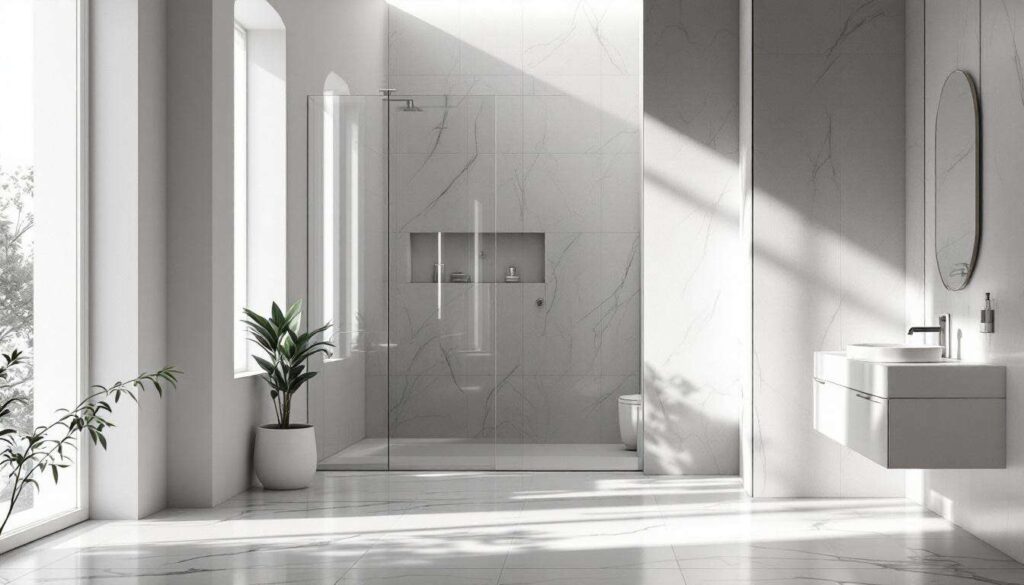
Standing beneath the rainfall showerhead in my newly installed wet room, water cascading across the tiled floor towards the discreet drain, I couldn’t help but feel I’d made a rather bold design decision. For the past six months, I’ve been living with this increasingly popular bathroom style, and the experience has been both enlightening and occasionally frustrating. The wet room, once a feature reserved for luxury hotels and spa facilities, has become an attractive option for homeowners seeking a contemporary bathroom solution. But does the reality match the glossy magazine spreads ?
What is a wet room ?
A wet room represents a fundamental departure from traditional bathroom design. Unlike conventional bathrooms where the shower is contained within a cubicle or behind a curtain, a wet room features an open-plan showering area where water flows freely across a waterproofed floor towards a drainage point. The entire room is effectively one large shower enclosure, with every surface designed to withstand constant moisture exposure.
Essential characteristics
The defining features of a wet room include:
- Complete floor-to-ceiling waterproofing using specialist tanking systems
- A gently sloped floor directing water towards a central or linear drain
- Non-slip flooring materials, typically large-format tiles or vinyl
- Minimal or absent shower screens, though some designs incorporate partial glass panels
- Exposed pipework and fittings designed to complement the minimalist aesthetic
The installation requires significant structural work, particularly regarding waterproofing and drainage. My own conversion took nearly three weeks and involved lowering the floor slightly to accommodate the necessary gradient. This isn’ta simple weekend DIY project but rather a substantial renovation requiring professional expertise.
Understanding these fundamental requirements helps explain both the appeal and the practical considerations that follow.
The aesthetic benefits of the wet room
The visual impact of my wet room exceeded expectations. The seamless, uninterrupted space creates an impression of luxury that traditional bathrooms struggle to achieve, particularly in smaller properties where bulky shower enclosures can feel oppressive.
Creating visual spaciousness
Without the visual barriers of shower doors and cubicles, even my relatively modest bathroom feels considerably larger. The continuous floor tiles extend throughout the space, and the absence of frames and screens allows natural light to flow unimpeded. This optical illusion of space proves particularly valuable in urban properties where every square metre counts.
Contemporary design appeal
The minimalist aesthetic aligns perfectly with current interior design trends. The clean lines, reduced clutter, and hotel-inspired ambience create a bathroom that photographs beautifully. Visitors consistently comment on the modern appearance, and I’ve noticed the space feels more like a personal spa than a functional bathroom.
| Design element | Traditional bathroom | Wet room |
|---|---|---|
| Visual barriers | Shower screens, curtains, frames | Minimal or none |
| Perceived space | Compartmentalised | Open and flowing |
| Maintenance visibility | Hidden behind enclosures | Immediately apparent |
These aesthetic advantages initially dominated my experience, though practicality soon demanded equal attention.
The daily challenges of cleaning
The reality of maintaining a wet room differs significantly from the effortless elegance suggested by design magazines. Every surface that gets wet requires regular attention, and that encompasses considerably more area than a traditional enclosed shower.
Increased cleaning requirements
After each shower, water spreads across approximately three-quarters of my bathroom floor. Whilst the gradient ensures drainage, water marks, soap residue, and limescale accumulate across the tiles. I’ve developed a routine of squeegeeing the walls and floor after every use, a task that adds several minutes to my morning schedule. Without this daily maintenance, the build-up becomes noticeable within days.
Mould and mildew concerns
The constant moisture exposure creates ideal conditions for mould growth, particularly in grout lines and around silicone seals. Despite installing an extractor fan with humidity sensors, I’ve found that vigilant cleaning remains essential. The areas behind the toilet and beneath the sink, which would remain dry in a conventional bathroom, now require regular inspection and cleaning.
These practical considerations influence daily life more significantly than anticipated, leading to questions about spatial functionality.
The impact on living space
Living with a wet room means accepting that traditional bathroom storage and fixtures require reimagining. The need for everything to withstand water exposure has forced me to reconsider how I use the space.
Storage limitations
Conventional bathroom cabinets and storage solutions don’t fare well in constantly damp environments. I’ve replaced wooden units with wall-mounted stainless steel shelving and waterproof containers. Towels must be stored outside the room or in sealed cupboards, and items like toilet paper require protective holders. This reduces the practical storage capacity compared to my previous bathroom.
Temperature and comfort considerations
The entire room becomes noticeably cooler and damper after showering. In winter months, this proves particularly uncomfortable when using the toilet or basin shortly after someone has showered. The lack of containment means heat and steam disperse throughout the space rather than remaining concentrated in a shower cubicle. My heating bills have increased slightly as I compensate by raising the ambient temperature.
Privacy and functionality
For households with multiple occupants, the wet room presents coordination challenges. The entire bathroom becomes essentially unusable for approximately fifteen minutes after someone showers, as surfaces remain wet and slippery. This differs markedly from traditional bathrooms where one person can shower whilst another uses the basin or toilet.
These functional adaptations connect directly to broader safety matters that deserve careful consideration.
Safety considerations
The wet room’s greatest strength, its open design, also presents its most significant safety challenge. Water on smooth surfaces creates genuine slip hazards that require ongoing vigilance.
Slip resistance measures
Despite specifying non-slip tiles rated R11 for slip resistance, the floor becomes treacherous when wet. I’ve added textured bath mats in key areas, though these require frequent washing and somewhat compromise the minimalist aesthetic. Elderly relatives and young children require particular supervision, and I’ve considered installing grab rails despite their visual impact.
Water containment issues
Even with proper drainage gradients, water occasionally escapes into adjacent areas, particularly during vigorous showering. The threshold between the wet room and hallway requires a subtle raised edge, which itself presents a minor tripping hazard. I’ve learned to position the showerhead carefully and avoid excessive water pressure to minimise splashing beyond the intended drainage area.
These experiences inform the crucial decision facing anyone considering this bathroom style.
Should you adopt a wet room in your home ?
After six months of daily use, my perspective balances enthusiasm with pragmatism. The wet room suits specific circumstances whilst presenting genuine challenges in others.
Ideal candidates for wet rooms
This bathroom style works particularly well for:
- Single occupants or couples without children who value aesthetics highly
- Properties with limited bathroom space requiring visual expansion
- Individuals with mobility considerations who benefit from step-free showering
- Those prepared to invest time in daily maintenance routines
- Homeowners planning to sell properties where contemporary design adds value
When to reconsider
Conversely, wet rooms may prove impractical for busy family households, properties with inadequate ventilation, or individuals seeking low-maintenance solutions. The installation costs, typically ranging from £3,000 to £8,000 depending on specification, represent substantial investment that won’t suit every budget or circumstance.
The decision ultimately depends on personal priorities: whether the undeniable aesthetic appeal and sense of spaciousness justify the increased maintenance demands and functional compromises.
My wet room experiment has taught me that bathroom design involves more than visual appeal. The sleek, contemporary space delivers its promised aesthetic impact whilst demanding daily attention and occasional frustration. The experience suits my lifestyle as a design-conscious single occupant, though I recognise it wouldn’t accommodate every household’s needs. For those considering this increasingly popular option, understanding both the inspirational magazine imagery and the practical reality of wet floors, increased cleaning, and spatial compromises proves essential. The wet room represents neither universal solution nor design mistake, but rather a specific choice requiring honest assessment of personal priorities and circumstances.