



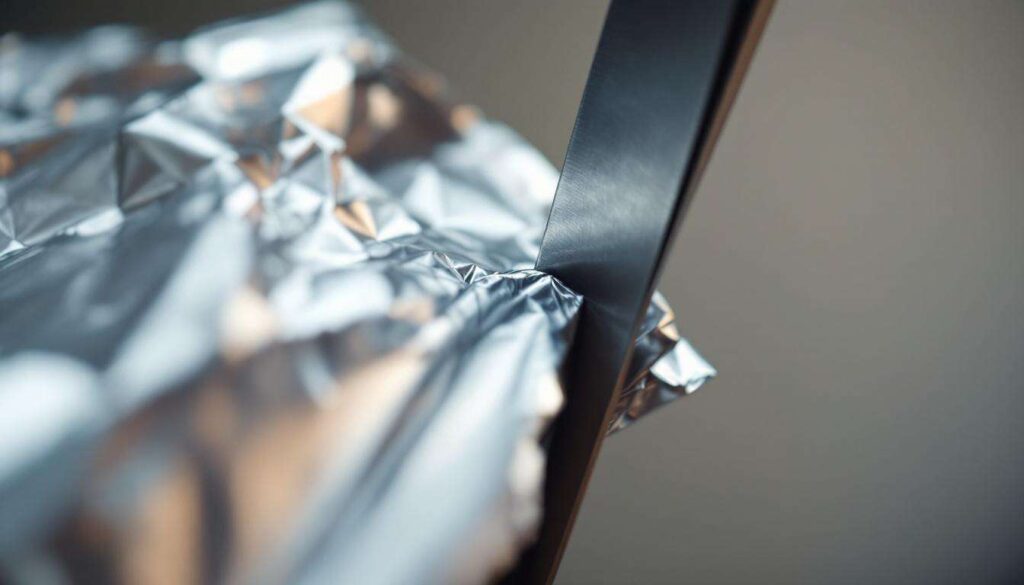
Dull scissors can turn simple cutting tasks into frustrating exercises, but a surprisingly effective solution lies in your kitchen drawer. Aluminium foil offers a quick, accessible method for restoring sharpness to tired blades without specialist equipment or professional services. This technique has gained popularity amongst households and craft enthusiasts for its simplicity and immediate results. By understanding the science behind this method and following proper procedures, anyone can revive their scissors in mere seconds.
Why use aluminium foil to sharpen scissors ?
Accessibility and convenience
The primary advantage of using aluminium foil for scissors maintenance stems from its universal availability. Most households already stock this material for food storage and cooking purposes, eliminating the need for specialised sharpening stones or professional services. This immediate accessibility means scissors can be restored to working condition without delay or additional expense.
Time efficiency
Traditional sharpening methods often require significant time investment and technical knowledge. The aluminium foil technique delivers results in approximately 30 seconds, making it ideal for busy individuals who need quick solutions. This rapid restoration process proves particularly valuable in professional environments where time equals productivity.
Minimal skill requirement
Unlike conventional sharpening tools that demand precise angles and controlled movements, the foil method requires no specialised training. The straightforward process involves simple folding and cutting actions that anyone can perform, regardless of previous experience with blade maintenance.
Understanding the mechanism behind this technique reveals why such a simple material produces effective results.
How does aluminium foil polish blades ?
The abrasive properties of aluminium
When scissors cut through multiple layers of aluminium foil, the material’s structure creates a mild abrasive action against the blade edges. The foil’s metallic composition provides sufficient hardness to remove microscopic burrs and irregularities that accumulate through regular use, whilst remaining soft enough to avoid damaging the steel.
The role of friction
The cutting action generates controlled friction between the blade surfaces and the compressed foil layers. This friction produces several beneficial effects:
- Smooths rough edges along the cutting surface
- Removes oxidation and minor rust spots
- Realigns microscopic teeth on the blade edge
- Creates a more uniform cutting surface
The importance of multiple layers
Using several layers of folded foil rather than a single sheet intensifies the sharpening effect. The compressed layers create greater resistance, which enhances the polishing action. Typically, six to eight layers provide optimal results without placing excessive stress on the scissor mechanism.
Applying this knowledge through proper technique ensures maximum effectiveness.
Steps to sharpen scissors with aluminium foil
Preparation phase
Begin by tearing off a sheet of standard kitchen aluminium foil measuring approximately 20 to 25 centimetres in length. Clean the scissors with a dry cloth to remove any debris or sticky residue that might interfere with the sharpening process. Ensure the scissor pivot remains tight, as loose blades reduce cutting effectiveness.
Folding technique
Fold the foil sheet lengthwise repeatedly until achieving a strip roughly 2 to 3 centimetres wide with six to eight layers. The folded strip should maintain consistent thickness throughout its length. Smooth the folded foil to eliminate air pockets that might reduce the sharpening efficiency.
Cutting procedure
Hold the folded foil firmly and make 10 to 15 full-length cuts through the material using smooth, deliberate strokes. The cutting motion should:
- Extend from the scissor base to the tip
- Maintain consistent pressure throughout each cut
- Utilise the entire blade length
- Progress at a steady, controlled pace
Testing and refinement
After completing the initial cutting sequence, test the scissors on paper or fabric. If sharpness remains insufficient, repeat the process with a fresh folded foil strip. Most scissors respond well to one or two rounds of this treatment.
This straightforward method delivers numerous practical advantages beyond simple blade restoration.
The benefits of this cost-effective method
Financial savings
Professional scissor sharpening services typically charge between £5 and £15 per pair, whilst replacement scissors range from £10 to over £100 depending on quality. The aluminium foil method costs mere pence per application, representing substantial savings over time.
| Method | Cost per use | Time required | Skill level |
|---|---|---|---|
| Aluminium foil | £0.05 | 30 seconds | Beginner |
| Professional service | £10.00 | 1-3 days | Not applicable |
| Sharpening stone | £15.00 initial | 10-15 minutes | Intermediate |
Environmental considerations
This technique extends scissor lifespan, reducing the frequency of replacements and minimising waste. The method utilises recyclable materials already present in most homes, avoiding the purchase of additional products packaged in plastic or requiring shipping.
Versatility across scissor types
The aluminium foil method works effectively on various scissor types, including kitchen shears, craft scissors, and general household varieties. This universal applicability makes it a valuable technique for maintaining multiple cutting tools throughout the home.
However, proper precautions ensure safe and effective results.
Precautions when sharpening scissors
Safety considerations
Always maintain control of both the scissors and the foil during the sharpening process. Keep fingers away from the blade path and ensure adequate lighting to monitor the cutting action. Children should perform this technique only under adult supervision.
Limitations of the method
The aluminium foil technique provides maintenance-level sharpening rather than restoration of severely damaged blades. Scissors with the following conditions require professional attention:
- Deep nicks or chips in the blade edge
- Bent or misaligned blades
- Loose or damaged pivot mechanisms
- Significant rust or corrosion
Frequency recommendations
Whilst the foil method proves safe for regular use, excessive sharpening removes blade material unnecessarily. Apply this technique when scissors begin showing signs of dullness, typically every few months for household scissors under normal use.
For those seeking additional options, several alternative methods complement this approach.
Alternatives for effectively sharpening scissors
Sandpaper technique
Fine-grit sandpaper (220-grit or higher) provides similar results to aluminium foil. Fold the sandpaper with the abrasive side facing outward and make 10 to 15 cuts through the material. This method offers slightly more aggressive sharpening for moderately dull blades.
Steel wool option
Extra-fine steel wool creates an effective sharpening medium when compressed into a pad. Cut through the wool repeatedly, allowing the fine metal fibres to polish the blade edges. This technique particularly suits scissors requiring gentle restoration.
Mason jar method
The curved glass edge of a mason jar provides a hard surface for blade realignment. Open the scissors fully and draw each blade along the jar rim at a slight angle, repeating 10 to 12 times per blade. This method demands more precision but delivers excellent results.
Professional sharpening services
For valuable or severely damaged scissors, professional services remain the optimal choice. Experienced technicians possess specialised equipment and expertise to restore blades to factory-sharp conditions whilst preserving blade geometry and balance.
The aluminium foil sharpening method stands as a remarkably practical solution for maintaining household scissors. Its combination of accessibility, speed, and effectiveness makes it invaluable for routine blade maintenance. Whilst not suitable for severely damaged scissors, this technique successfully addresses the gradual dulling that occurs through normal use. By incorporating this simple procedure into regular household maintenance routines, scissors remain sharp and functional for extended periods. The minimal cost and environmental impact further enhance its appeal, offering a sustainable approach to tool care. Whether employed as a primary maintenance method or supplemented with occasional professional sharpening, the aluminium foil technique deserves recognition as an efficient, budget-friendly solution for keeping cutting tools in optimal condition.