



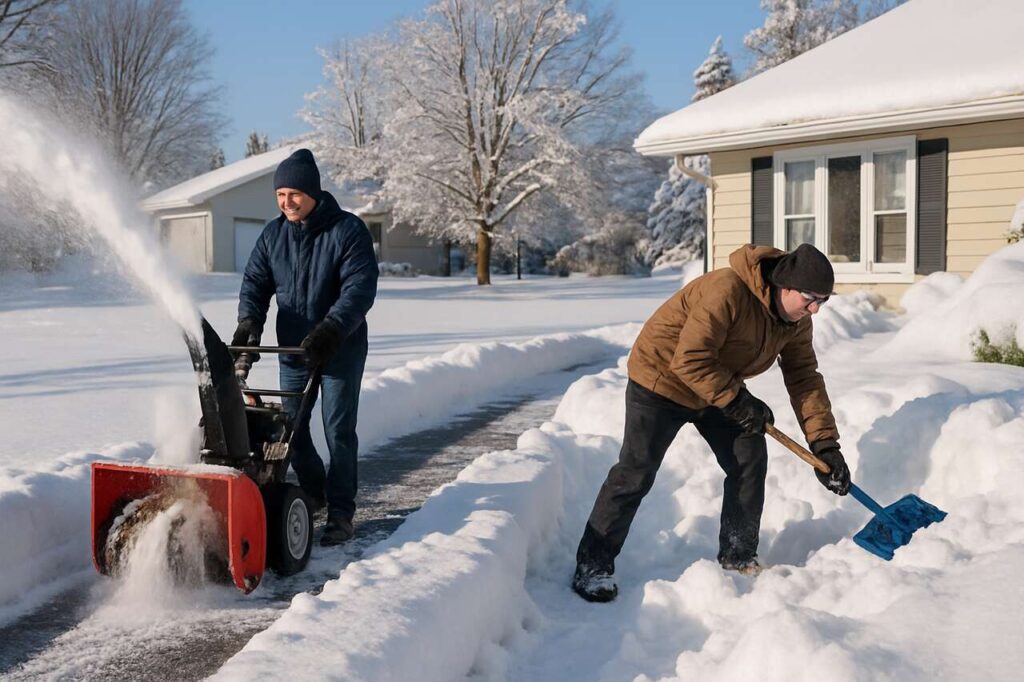
Winter weather brings with it the annual challenge of clearing snow from driveways, pavements, and garden paths. Homeowners face a fundamental decision when selecting equipment for this task: should they invest in a snow blower or rely on the traditional snow shovel ? This choice impacts not only the efficiency of snow removal but also physical wellbeing, budget considerations, and environmental responsibility. Making an informed decision requires understanding the capabilities, limitations, and practical implications of each tool in relation to your specific circumstances.
Understanding the differences between snow blowers and snow shovels
Mechanical operation versus manual labour
Snow blowers are powered machines designed to move large volumes of snow quickly through mechanical force. They utilise either electric motors or petrol engines to drive an auger system that collects snow and propels it through a discharge chute. These machines range from single-stage models suitable for light snowfall to two-stage and three-stage variants capable of handling deep, heavy accumulations. The operator guides the machine whilst the mechanical components perform the actual snow removal work.
Snow shovels represent the traditional manual approach to snow clearance. They consist of a blade attached to a handle, requiring the user to physically lift and throw snow to clear pathways. Modern shovels incorporate ergonomic designs with curved handles, lightweight materials such as aluminium or reinforced plastic, and various blade configurations optimised for different snow conditions.
Capacity and coverage area
| Tool Type | Typical Clearing Width | Snow Depth Capacity | Area Coverage per Hour |
|---|---|---|---|
| Snow Shovel | 30-45 cm | Up to 15 cm effectively | 50-100 square metres |
| Single-Stage Blower | 45-55 cm | Up to 20 cm | 200-400 square metres |
| Two-Stage Blower | 60-75 cm | Up to 45 cm | 400-800 square metres |
The fundamental distinction lies in the scale of operation each tool can handle efficiently, which directly influences their suitability for different property sizes and snowfall patterns.
Advantages and disadvantages of snow blowers
Benefits of mechanical snow removal
Snow blowers offer significant time savings when dealing with substantial snowfall or large areas. A two-stage blower can clear a standard driveway in minutes compared to the hour or more required with manual shovelling. This efficiency proves invaluable for elderly individuals, those with physical limitations, or homeowners managing multiple properties.
The reduced physical strain represents another compelling advantage. Operating a snow blower primarily involves walking behind the machine and steering, eliminating the repetitive lifting motions that contribute to back injuries and cardiovascular stress associated with shovelling.
- Capability to handle heavy, wet snow and ice-packed accumulations
- Ability to throw snow considerable distances, preventing pile-up near cleared areas
- Effective performance in extreme weather conditions
- Consistent clearing depth and width
Limitations of powered equipment
Snow blowers require regular maintenance including oil changes, spark plug replacements, and seasonal servicing. Petrol models demand fuel storage and engine upkeep, whilst electric variants depend on power sources or battery charging.
The initial investment represents a substantial consideration, with quality models ranging from several hundred to several thousand pounds. Storage requirements also pose challenges, as these machines occupy considerable garage or shed space during off-season months.
- Noise pollution affecting neighbours and wildlife
- Difficulty manoeuvring in tight spaces or around obstacles
- Potential damage to gravel driveways or decorative surfaces
- Learning curve for safe and effective operation
These practical considerations become particularly relevant when evaluating whether a snow blower aligns with your specific snow removal requirements and property characteristics.
Advantages and disadvantages of snow shovels
Benefits of traditional manual clearing
Snow shovels provide unmatched precision for clearing steps, narrow pathways, and areas around vehicles or garden features. Their manoeuvrability allows operators to work in confined spaces where mechanical equipment cannot reach effectively.
The minimal investment required makes shovels accessible to all homeowners, with quality models available for under fifty pounds. They require no fuel, electricity, or maintenance beyond occasional replacement, and storage demands remain negligible.
- Silent operation respecting neighbourhood tranquillity
- Immediate availability without warm-up or preparation time
- Physical exercise benefits when used appropriately
- Zero environmental emissions
- Complete control over snow placement
Drawbacks of manual snow removal
The physical demands of shovelling present genuine health risks, particularly for individuals with cardiovascular conditions or musculoskeletal issues. Studies indicate increased heart attack incidents during heavy snowfall periods, largely attributed to strenuous shovelling activity.
Time consumption becomes prohibitive when dealing with large areas or frequent snowfall. What a snow blower accomplishes in minutes may require an hour or more of sustained physical effort with a shovel.
- Limited effectiveness with heavy, wet snow exceeding 15 cm depth
- Repetitive strain injuries from improper technique
- Fatigue reducing clearing efficiency over extended periods
- Weather exposure during prolonged clearing sessions
Understanding these limitations helps establish realistic expectations about when manual shovelling remains practical versus when mechanical assistance becomes necessary.
Criteria for choosing the best snow removal tool
Property size and layout assessment
Properties with driveways exceeding 50 square metres or multiple areas requiring regular clearing generally benefit from snow blower investment. Conversely, compact properties with limited paved surfaces rarely justify the expense and storage requirements of powered equipment.
The complexity of your landscape influences tool selection significantly. Properties featuring numerous obstacles, tight corners, or delicate surfaces may require the precision only manual shovelling provides, whilst open, straightforward layouts maximise snow blower efficiency.
Snowfall patterns and accumulation
| Annual Snowfall | Frequency | Recommended Tool |
|---|---|---|
| Under 25 cm total | 1-3 events | Snow shovel |
| 25-75 cm total | 4-8 events | Shovel or single-stage blower |
| Over 75 cm total | 9+ events | Two-stage snow blower |
Physical capability and health considerations
Individuals with cardiovascular conditions, back problems, or age-related limitations should prioritise snow blowers regardless of property size. The health risks associated with strenuous shovelling outweigh financial considerations when physical wellbeing is compromised.
For those in good health seeking exercise opportunities, shovelling provides cardiovascular benefits when performed with proper technique and appropriate pacing during light to moderate snowfall events.
These practical criteria establish a framework for matching snow removal tools to individual circumstances rather than following generalised recommendations.
Environmental factors to consider
Carbon footprint and emissions
Petrol-powered snow blowers generate significant greenhouse gas emissions and air pollutants. A typical petrol snow blower operating for one hour produces emissions equivalent to driving a modern car approximately 160 kilometres, raising environmental concerns for eco-conscious homeowners.
Electric snow blowers offer reduced emissions, though their environmental impact depends on electricity generation sources. Battery-powered models provide the cleanest operation whilst corded versions eliminate runtime limitations.
Noise pollution and community impact
Early morning snow blower operation creates neighbourhood disturbances, with noise levels reaching 85-100 decibels. Many communities implement noise ordinances restricting powered equipment use during certain hours, making silent shovel operation the only viable option for dawn clearing.
- Wildlife disruption in semi-rural areas
- Stress on pets sensitive to mechanical noise
- Reduced quality of life for neighbours working night shifts
Balancing personal convenience against community consideration and environmental responsibility forms an essential component of the decision-making process.
Cost and maintenance of snow removal equipment
Initial investment comparison
| Equipment Type | Price Range | Expected Lifespan |
|---|---|---|
| Basic Snow Shovel | £15-50 | 3-5 years |
| Ergonomic Shovel | £40-80 | 5-8 years |
| Electric Blower | £150-400 | 5-10 years |
| Single-Stage Petrol | £300-700 | 10-15 years |
| Two-Stage Petrol | £700-2,500 | 15-25 years |
Ongoing maintenance expenses
Petrol snow blowers require annual servicing costs averaging £75-150, including oil changes, spark plug replacement, and belt inspection. Fuel expenses add approximately £20-40 per season depending on usage frequency.
Electric models demand minimal maintenance beyond occasional blade inspection and motor housing cleaning. Battery-powered variants eventually require battery replacement, typically costing £80-200 after 3-5 years.
Snow shovels require virtually no maintenance beyond replacement when blades crack or handles break, representing the most economical long-term option for budget-conscious homeowners.
Selecting appropriate snow removal equipment ultimately depends on balancing multiple factors including property characteristics, typical snowfall patterns, physical capabilities, environmental values, and budget constraints. Neither tool universally surpasses the other; rather, each serves specific circumstances optimally. Homeowners with large properties experiencing frequent heavy snowfall gain substantial benefits from snow blower investment, whilst those managing compact areas with occasional light snow find shovels perfectly adequate. Many households discover that maintaining both options provides flexibility to match tool selection to specific conditions, using shovels for light dustings and precision work whilst deploying blowers for significant accumulations. Careful consideration of the factors outlined throughout this discussion enables informed decisions that enhance winter safety, efficiency, and satisfaction with your chosen approach to snow management.