



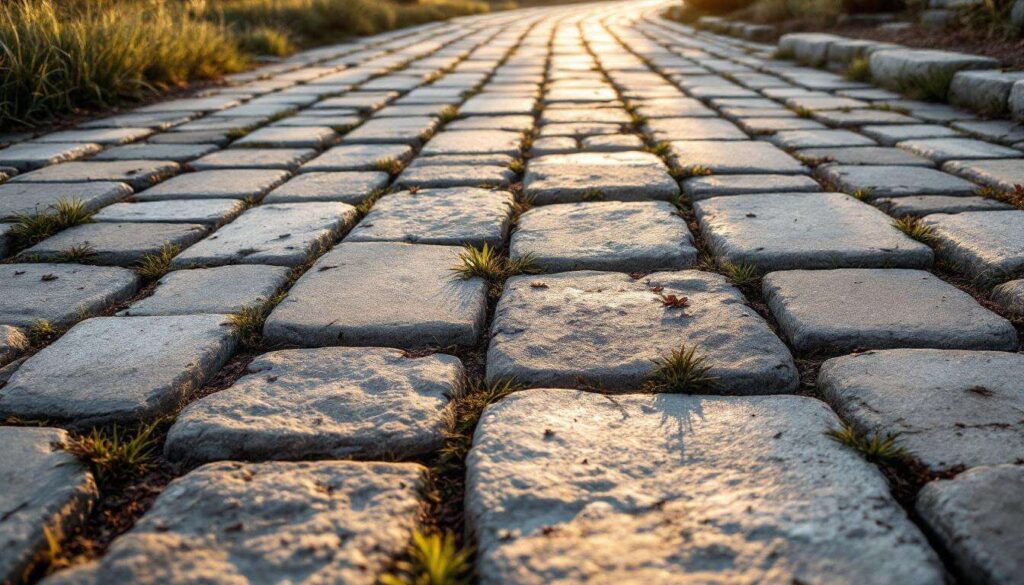
When ancient Roman harbours continue to withstand the relentless pounding of waves whilst modern concrete structures crumble within decades, engineers and scientists have begun asking themselves what secrets lie within these millennia-old constructions. The remarkable durability of Roman concrete has captivated researchers worldwide, leading to discoveries that could revolutionise contemporary construction practices. From the Pantheon’s magnificent dome to the submerged harbour structures at Caesarea, these ancient edifices demonstrate an extraordinary resilience that modern materials struggle to replicate. Recent scientific investigations have unveiled the sophisticated chemistry behind this ancient building material, revealing a formula that could transform the way we construct driveways, bridges and marine structures today.
The Mysteries of Roman Concrete
Exceptional Longevity in Harsh Environments
Roman concrete structures have survived in conditions that would destroy modern concrete within years. The harbour at Portus Cosanus, submerged in seawater for two thousand years, remains remarkably intact whilst contemporary marine concrete typically deteriorates within fifty years. This extraordinary durability has puzzled scientists for decades, prompting extensive research into the chemical processes that enable such longevity. Unlike modern Portland cement, which weakens when exposed to saltwater, Roman concrete actually strengthens over time through continuous chemical reactions with its environment.
Self-Healing Properties
One of the most remarkable characteristics of Roman concrete is its ability to repair itself. When cracks form, seawater infiltrates the structure and triggers chemical reactions with the volcanic materials, creating new crystalline structures that fill the gaps. This self-healing mechanism ensures that minor damage never escalates into structural failure, a property that modern concrete conspicuously lacks.
Understanding these ancient mysteries has led researchers to examine not just what Romans built, but how they engineered materials to work in harmony with natural processes rather than against them.
Composition of Ancient Concrete
The Volcanic Foundation
The Romans utilised readily available volcanic materials as the cornerstone of their concrete formula. Their mixture contained:
- Volcanic ash from the Bay of Naples region, particularly from Pozzuoli
- Lime derived from heated limestone
- Seawater as the mixing agent
- Volcanic rock fragments as aggregate
The volcanic ash, known as pozzolana, contained high concentrations of silica and alumina. When combined with lime and seawater, these components initiated a unique chemical reaction that produced an exceptionally durable binding matrix.
Chemical Reactions and Crystal Formation
Modern analysis has revealed that Roman concrete contains rare minerals such as aluminium tobermorite and phillipsite. These crystals form through a process called pozzolanic reaction, where the volcanic ash reacts with calcium hydroxide from the lime in the presence of water. The resulting crystalline structures interlock to create an incredibly dense and impermeable material.
| Component | Percentage | Function |
|---|---|---|
| Volcanic ash | 40-50% | Reactive binding agent |
| Lime | 15-20% | Alkaline activator |
| Seawater | Variable | Mixing medium and mineral source |
| Aggregate | 30-40% | Structural reinforcement |
This precise composition created a material fundamentally different from modern Portland cement, which relies on entirely different chemical principles that prove less durable in marine environments.
The Ingenuity of Roman Builders
Strategic Material Selection
Roman engineers demonstrated remarkable understanding of material properties long before modern chemistry existed. They recognised that volcanic ash from specific regions produced superior concrete, leading them to transport pozzolana across vast distances for critical construction projects. This selective sourcing indicates a sophisticated empirical knowledge of how different volcanic deposits affected concrete performance.
Construction Techniques
The Romans employed innovative construction methods that maximised their concrete’s potential:
- Layering techniques that allowed each section to cure properly before adding weight
- Formwork systems that shaped concrete into complex architectural forms
- Strategic placement of aggregate to enhance structural integrity
- Mixing protocols that ensured optimal chemical reactions
Their approach to underwater construction proved particularly ingenious. Rather than attempting to create dry working environments, they developed techniques to pour concrete directly into seawater, exploiting the chemical reactions between saltwater and volcanic materials to create exceptionally strong marine structures.
These ancient engineering principles offer valuable lessons for contemporary construction challenges, particularly as infrastructure demands increase globally.
Modern Applications of Roman Concrete
Residential Driveways and Pathways
Homeowners seeking maintenance-free driveways that can last half a century without cracking are increasingly interested in Roman concrete formulations. Modern adaptations of the ancient recipe use locally available volcanic materials or industrial by-products with similar chemical properties. These driveways resist freeze-thaw cycles, chemical exposure and heavy loads far better than conventional concrete, eliminating the need for frequent repairs or replacement.
Marine and Coastal Infrastructure
Ports, harbours and coastal defences constructed with Roman-inspired concrete could dramatically reduce maintenance costs whilst improving structural longevity. The self-healing properties prove particularly valuable in saltwater environments where traditional concrete rapidly deteriorates. Several pilot projects have begun testing these formulations in real-world marine applications, with early results showing exceptional promise.
Sustainable Construction Solutions
Roman concrete production requires significantly less energy than Portland cement manufacturing, which currently accounts for approximately eight per cent of global carbon dioxide emissions. By utilising volcanic ash or industrial waste products as primary binding agents, construction projects can substantially reduce their environmental footprint whilst improving structural performance.
The practical benefits extend beyond durability to encompass environmental and economic advantages that address pressing contemporary concerns.
Benefits for the Construction Industry
Economic Advantages
Structures built with Roman concrete formulations offer substantial cost savings over their lifecycle. Although initial material costs may be slightly higher, the elimination of maintenance expenses and extended service life create compelling economic benefits. A driveway lasting fifty years without repairs represents significant savings compared to conventional concrete requiring replacement every fifteen to twenty years.
Environmental Impact Reduction
The construction industry faces mounting pressure to reduce carbon emissions. Roman concrete offers a viable pathway towards more sustainable building practices through reduced energy consumption during production and decreased material usage over time due to enhanced durability.
Performance Characteristics
| Property | Roman Concrete | Portland Cement |
|---|---|---|
| Marine durability | 2000+ years | 50 years |
| Self-healing | Yes | No |
| Carbon footprint | Lower | Higher |
| Crack resistance | Excellent | Moderate |
Despite these compelling advantages, widespread adoption faces several obstacles that researchers continue to address.
Challenges and Research Perspectives
Material Availability and Standardisation
Not all regions have access to suitable volcanic materials, necessitating research into alternative reactive compounds that can replicate pozzolana’s properties. Scientists are investigating industrial by-products such as fly ash and slag as potential substitutes, though achieving consistent performance across different source materials remains challenging.
Curing Time Considerations
Roman concrete requires longer curing periods than modern formulations, which can complicate construction schedules and project timelines. Contemporary building practices prioritise rapid construction, creating tension between traditional methods and modern efficiency demands. Researchers are exploring accelerated curing techniques that maintain the material’s beneficial properties whilst reducing waiting periods.
Regulatory and Industry Acceptance
Building codes and industry standards currently centre on Portland cement specifications. Introducing alternative concrete formulations requires extensive testing, certification and regulatory approval processes. Education initiatives targeting architects, engineers and contractors are essential for broader adoption of Roman concrete principles in mainstream construction.
The rediscovery of Roman concrete represents more than archaeological curiosity; it offers practical solutions to contemporary infrastructure challenges. As research continues to refine ancient formulations for modern applications, the construction industry stands on the threshold of a materials revolution. Driveways that last fifty years without cracking may soon become standard rather than exceptional, demonstrating that sometimes the most innovative solutions come from looking backwards to move forwards.