

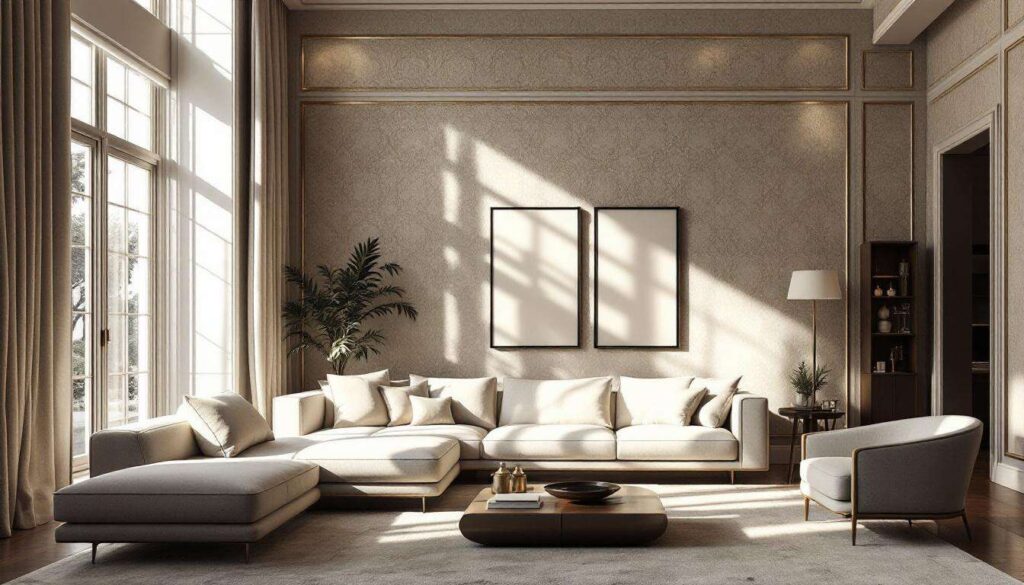
Wallpaper has reclaimed its position as a sophisticated design element, shedding decades of unfortunate associations with dated patterns and gaudy prints. When applied with restraint and artistic sensibility, this versatile material transforms ordinary spaces into curated environments that reflect both personality and refinement. The difference between a room that feels professionally designed and one that appears haphazardly decorated often lies in the strategic deployment of wallpaper alongside careful attention to scale, colour harmony, and installation precision.
Introduction to tasteful design with wallpaper
Understanding the foundations of elegant wallcovering
The resurgence of wallpaper in contemporary interiors stems from a fundamental shift in how designers approach surface treatment. Rather than viewing walls as mere structural necessities, forward-thinking decorators recognise them as opportunities for textural depth and visual interest. The key to avoiding the pitfalls that gave wallpaper its questionable reputation lies in understanding proportion, restraint, and contextual appropriateness.
Successful wallpaper application begins with recognising that less frequently means more. A single accent wall covered in a carefully selected pattern often creates greater impact than papering an entire room. This approach allows the wallpaper to function as an architectural feature rather than overwhelming the space with competing visual elements.
Establishing your design parameters
Before selecting any pattern or texture, consider the following essential factors:
- Room dimensions and ceiling height, which dictate appropriate pattern scale
- Natural light availability throughout different times of day
- Existing furniture and architectural features that require complementary treatment
- The intended atmosphere, whether calming, energising, or sophisticated
- Longevity expectations and your willingness to update the space periodically
These considerations form the foundation upon which all subsequent decisions rest. A pattern that appears stunning in a showroom may prove entirely unsuitable for your specific spatial conditions, lighting environment, or functional requirements.
With these foundational principles established, the next consideration involves identifying which patterns align with both current design movements and timeless aesthetic principles.
Trending patterns for every room
Contemporary motifs that transcend fleeting fashions
The most enduring wallpaper patterns share a common characteristic: they reference natural forms whilst maintaining sufficient abstraction to avoid literal interpretation. Botanical illustrations rendered in muted palettes, geometric compositions inspired by architectural elements, and subtle textural patterns that mimic natural materials consistently deliver sophisticated results.
Large-scale florals have evolved considerably from their traditional incarnations. Contemporary versions feature oversized blooms in unexpected colour combinations, often printed on textured substrates that add dimensional interest. These work particularly well in dining rooms and primary bedrooms where drama is appropriate without feeling overwhelming.
Room-specific pattern recommendations
| Room Type | Recommended Pattern | Design Rationale |
|---|---|---|
| Living Room | Subtle geometric or grasscloth texture | Creates sophistication without competing with furnishings |
| Bedroom | Soft botanical or tonal stripe | Promotes relaxation whilst adding visual interest |
| Dining Room | Bold damask or architectural motif | Establishes formal atmosphere appropriate for entertaining |
| Bathroom | Small-scale pattern or marble effect | Withstands moisture whilst elevating utilitarian space |
Balancing trend awareness with timeless appeal
Whilst staying informed about current design movements proves valuable, the most successful interiors incorporate trend elements judiciously rather than wholesale adoption of fashionable motifs. Consider incorporating trending colours through wallpaper whilst selecting classic pattern structures that won’t feel dated within several years.
Abstract patterns inspired by watercolour techniques currently enjoy popularity across residential projects, offering artistic credibility without the commitment of actual artwork. These patterns provide sufficient visual interest whilst maintaining the flexibility to accommodate evolving furniture arrangements and accessory selections.
Beyond pattern selection, the physical characteristics of wallpaper material itself significantly influence the overall aesthetic impact.
How to choose the perfect texture
Material considerations for sophisticated surfaces
The tactile dimension of wallpaper deserves equal consideration to its visual properties. Texture introduces depth that flat patterns cannot achieve, creating subtle variations in light reflection throughout the day. Grasscloth remains the gold standard for understated elegance, offering organic variation that feels both luxurious and unpretentious.
Natural fibre wallcoverings provide several distinct advantages:
- Inherent textural interest that eliminates the need for bold patterns
- Sound-absorbing properties that improve room acoustics
- Organic imperfections that contribute to artisanal appeal
- Compatibility with diverse design styles from traditional to contemporary
Synthetic alternatives with practical benefits
Whilst natural materials offer undeniable aesthetic appeal, modern synthetic wallpapers provide practical advantages that merit consideration. Vinyl-coated papers withstand moisture exposure, making them suitable for kitchens and bathrooms where natural fibres would deteriorate. Advances in printing technology now allow synthetic materials to convincingly replicate natural textures whilst offering superior durability and cleanability.
Embossed and textured vinyl wallpapers create dimensional interest without the maintenance requirements of natural alternatives. These prove particularly valuable in high-traffic areas or homes with young children where durability takes precedence over absolute authenticity.
Matching texture to architectural context
The architectural character of your space should inform texture selection. Period properties with ornate mouldings and traditional proportions generally accommodate richer textures such as silk-effect papers or heavily embossed patterns. Contemporary spaces with clean lines and minimal architectural detail benefit from subtler textures that add warmth without introducing visual complexity.
Once texture preferences are established, attention turns to the equally critical consideration of colour relationships.
Combining colours with elegance
Establishing a cohesive colour narrative
Colour coordination represents the dimension where many wallpaper installations falter. The most sophisticated interiors demonstrate intentional colour relationships that extend beyond simple matching. Rather than selecting wallpaper that exactly matches existing furnishings, look for complementary hues that create dialogue between surfaces.
A practical approach involves identifying the undertones present in your existing palette. If your furniture features warm wood tones, wallpaper with similar warm undertones—even in completely different colours—will feel harmonious. Conversely, spaces dominated by cool greys and blues require wallpaper selections that honour this temperature bias.
Strategic use of neutral foundations
The safest path to enduring elegance involves anchoring your scheme with neutral wallpaper whilst introducing colour through easily changeable elements. Shades of cream, greige, and soft grey provide sophisticated backdrops that accommodate evolving tastes without requiring expensive replacement.
| Neutral Base | Complementary Accent Colours | Overall Effect |
|---|---|---|
| Warm cream | Terracotta, sage, gold | Inviting and organic |
| Cool grey | Navy, blush, charcoal | Contemporary and refined |
| Greige | Burgundy, forest green, camel | Sophisticated and versatile |
When to introduce bold colour statements
Whilst restraint generally serves tasteful design well, certain spaces benefit from confident colour application. Powder rooms, studies, and dining rooms function as ideal candidates for saturated hues or dramatic patterns that would overwhelm primary living spaces. These rooms typically experience shorter occupancy periods, allowing bolder choices to feel special rather than oppressive.
When selecting vibrant wallpaper, ensure adequate contrast with adjacent spaces to create intentional transitions rather than jarring disconnections. A jewel-toned powder room feels deliberate when accessed from a neutral hallway; the same treatment applied to an open-plan living area risks overwhelming the entire home.
Even the most thoughtfully selected wallpaper fails to achieve its potential without proper installation technique.
Installation techniques for a flawless finish
Professional versus DIY considerations
The question of whether to engage professional installers or attempt self-installation depends on several factors beyond mere budget considerations. Pattern matching complexity, wall condition, and material type all influence the difficulty level. Grasscloth and other natural materials typically require professional handling due to their delicate nature and visible seams.
For those considering DIY installation, these preparations prove essential:
- Thoroughly clean and repair wall surfaces, filling any imperfections
- Apply primer specifically formulated for wallpaper adhesion
- Gather proper tools including smoothing brushes, seam rollers, and sharp blades
- Calculate material requirements with at least 15% overage for pattern matching
- Work in consistent temperature and humidity conditions to ensure proper adhesion
Critical steps for seamless results
The most visible indicator of amateur installation involves misaligned patterns at seams. Professional installers invest considerable time ensuring pattern continuity, often trimming more material than seems necessary to achieve perfect alignment. This attention to detail distinguishes polished installations from obvious DIY attempts.
Proper adhesive selection proves equally critical. Modern wallpapers often specify compatible adhesives, and deviating from these recommendations risks poor adhesion or material damage. Pre-pasted papers require consistent water temperature and soaking time to activate adhesive properly, whilst unpasted varieties demand even adhesive distribution to prevent bubbling.
Addressing common installation challenges
Even experienced installers encounter obstacles that require problem-solving. Corners rarely form perfect right angles, necessitating careful measurement and strategic cutting to maintain pattern integrity. Electrical outlets and switches require precise cutting, with professionals typically removing cover plates and wrapping edges for invisible transitions.
Bubble formation during installation demands immediate attention. Small bubbles often disappear as adhesive dries, but larger imperfections require lifting the paper and reapplying with additional smoothing. This process becomes increasingly difficult as adhesive sets, emphasising the importance of thorough initial application.
Understanding these technical considerations helps avoid the aesthetic missteps that undermine otherwise sound design decisions.
Errors to avoid for a harmonious interior
Scale miscalculations that compromise proportion
The most frequent mistake involves selecting patterns at inappropriate scales for the room dimensions. Oversized patterns in compact spaces create visual chaos, whilst tiny motifs in expansive rooms appear insignificant and fussy. A useful guideline suggests that pattern repeats should relate proportionally to ceiling height—larger rooms can accommodate repeats of 60 centimetres or more, whilst smaller spaces require more modest scales.
Ignoring lighting conditions
Wallpaper appears dramatically different under various lighting conditions. A pattern that looks sophisticated in bright showroom lighting may feel oppressive in a north-facing room with limited natural light. Always obtain large samples and observe them in your actual space throughout the day before committing to full installation. Reflective wallpapers amplify available light but can create glare in brightly lit spaces, whilst matte finishes absorb light and work better in sun-drenched rooms.
Overcommitting to trends
Whilst awareness of current design movements informs good decisions, wholesale adoption of trendy patterns guarantees rapid obsolescence. The following approaches help balance contemporary appeal with longevity:
- Select classic pattern structures in trending colours rather than fashionable motifs
- Limit bold patterns to easily changed spaces like powder rooms
- Choose quality materials that justify their cost through extended lifespan
- Consider removable wallpaper for rental properties or frequently updated spaces
Neglecting the broader design context
Wallpaper never exists in isolation—it must relate harmoniously to flooring, window treatments, and furnishings. A common error involves selecting wallpaper first and struggling to coordinate subsequent elements. Instead, develop a comprehensive vision that considers all surfaces and materials simultaneously, ensuring cohesive relationships throughout the space.
Pattern mixing requires particular caution. Whilst combining multiple patterns can create visual richness, successful execution demands shared colour palettes and varied scales. Two competing large-scale patterns create confusion, whilst mixing a bold wallpaper with subtle textural fabrics achieves sophisticated layering.
Wallpaper installation represents a significant investment in both financial and aesthetic terms. Approaching the selection and application process with careful consideration of pattern, texture, colour, and installation quality ensures results that enhance rather than detract from your interior environment. The distinction between tasteful and tacky ultimately rests on restraint, proportion, and attention to the relationship between the wallcovering and its architectural context. By prioritising these principles over fleeting trends or dramatic statements, you create spaces that feel both current and enduring, reflecting sophisticated design sensibility that transcends temporary fashions.