


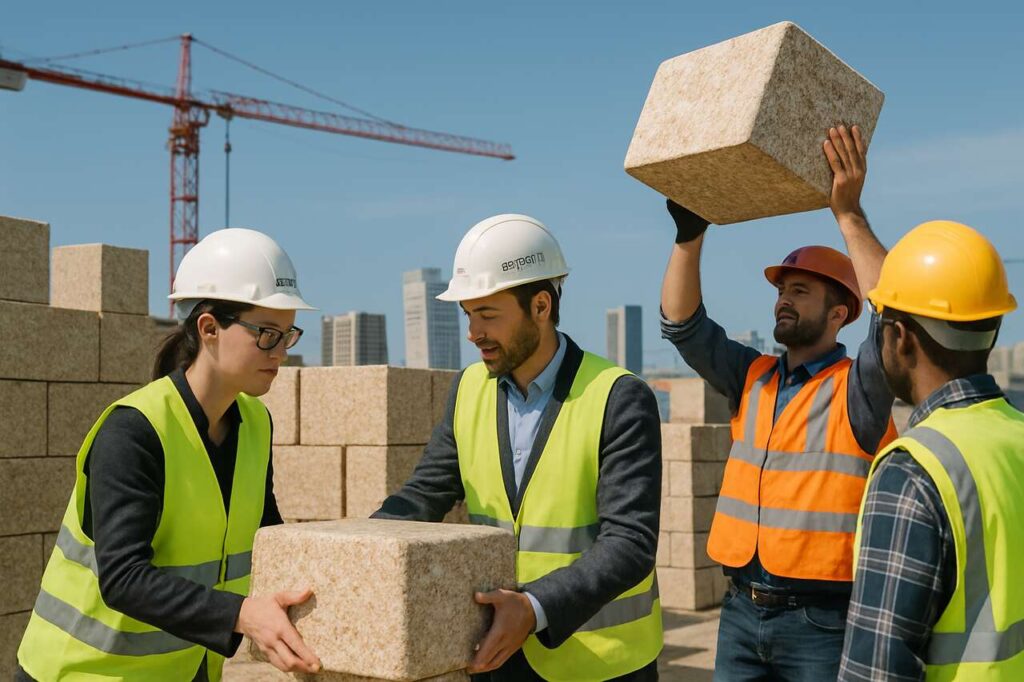
The construction industry stands at a crossroads between tradition and innovation, with environmental concerns pushing architects and engineers to explore radical alternatives to conventional building materials. Amongst the most promising developments lies an unlikely candidate: the underground network of fungal threads known as mycelium. This organic material, typically associated with mushrooms sprouting in forests, is being transformed into robust building blocks that challenge our assumptions about what constitutes a viable construction material. As the sector grapples with its substantial carbon footprint, mycelium-based products offer a glimpse into a future where buildings grow rather than being manufactured through energy-intensive processes.
Introduction to mycelium blocks: a revolution in construction
Mycelium blocks represent a paradigm shift in how we approach building materials. Unlike traditional bricks or concrete that require high temperatures and significant energy inputs, these blocks are essentially grown rather than manufactured. The process involves combining agricultural waste with mycelium, which then colonises the substrate and binds it together into a solid, cohesive structure.
The manufacturing process
Creating mycelium blocks follows a remarkably straightforward procedure that harnesses nature’s own binding mechanisms. Producers typically use the following steps:
- Agricultural waste such as hemp fibres, sawdust, or corn stalks is collected and sterilised
- Mycelium spawn is introduced to the prepared substrate
- The mixture is placed into moulds of desired shapes and sizes
- Growth occurs over several days in controlled conditions
- Heat treatment stops further growth and strengthens the final product
The entire manufacturing cycle typically requires less than a week, making it considerably faster than traditional material production methods. This efficiency extends beyond time savings to encompass energy consumption, as the process operates at room temperature without requiring kilns or furnaces.
Current market developments
Several pioneering companies have already brought mycelium-based construction materials to market. These enterprises are demonstrating that fungal materials can meet industry standards whilst offering environmental advantages. The technology has progressed from laboratory curiosity to commercially viable products, with applications ranging from insulation panels to structural components.
This innovative approach naturally leads to questions about the biological foundation underlying these remarkable materials.
Mycelium: what is it ?
Mycelium constitutes the vegetative part of fungi, forming an intricate network of thread-like structures called hyphae. Whilst mushrooms capture our attention above ground, the mycelium beneath represents the true body of the fungal organism, often spanning vast areas and possessing remarkable properties.
Biological characteristics
The structure of mycelium provides inherent advantages for construction applications. These threadlike networks possess exceptional tensile strength relative to their weight, creating natural composite materials as they grow through substrates. The hyphae secrete enzymes that break down organic matter, simultaneously feeding the organism and binding particles together with natural adhesives.
| Property | Mycelium characteristic | Construction benefit |
|---|---|---|
| Growth pattern | Three-dimensional network | Uniform material distribution |
| Binding capacity | Natural chitin-based adhesive | No synthetic glues required |
| Density control | Adjustable through growth conditions | Customisable material properties |
Why fungi work for construction
Fungi have evolved over millions of years to decompose organic matter efficiently, creating robust structures in the process. This evolutionary adaptation translates directly into construction benefits. The mycelium’s ability to self-assemble into complex three-dimensional structures eliminates many manufacturing steps required for conventional materials. Furthermore, different fungal species offer varying properties, allowing producers to select organisms that yield specific characteristics such as fire resistance or water repellency.
Understanding these biological foundations helps explain the substantial environmental credentials these materials possess.
The environmental benefits of mycelium-based materials
The ecological advantages of mycelium construction materials extend across multiple dimensions, addressing several critical environmental challenges simultaneously.
Carbon sequestration and emissions reduction
Traditional construction materials, particularly concrete and steel, contribute approximately 11% of global carbon emissions. Mycelium blocks present a stark contrast by actually sequestering carbon during growth. The agricultural waste substrates contain carbon absorbed during plant growth, which remains locked within the finished material. This creates a carbon-negative product rather than a carbon-positive one.
Waste utilisation and circular economy
Mycelium production transforms agricultural waste streams into valuable building materials, exemplifying circular economy principles. Materials that would otherwise decompose or require disposal find new purpose:
- Hemp processing residues from textile manufacturing
- Sawdust from timber operations
- Corn stalks and husks from food production
- Rice hulls from grain processing
This approach simultaneously addresses waste management challenges whilst creating construction materials, delivering dual environmental benefits from a single process.
End-of-life considerations
Unlike conventional materials that persist in landfills for centuries, mycelium blocks are completely biodegradable. When a structure reaches the end of its useful life, these materials can be composted, returning nutrients to soil rather than creating long-term waste. This characteristic fundamentally alters the environmental calculus of construction, eliminating disposal concerns that plague traditional building materials.
These environmental credentials naturally prompt questions about whether such sustainable materials can match the performance of conventional alternatives.
The durability and strength of these innovative blocks
Scepticism about fungal construction materials often centres on performance concerns, yet testing reveals capabilities that challenge these assumptions.
Structural performance
Mycelium blocks demonstrate compressive strength suitable for various construction applications, though they currently serve better as insulation and non-load-bearing elements rather than primary structural components. Research continues to enhance strength properties through substrate selection, species choice, and post-processing treatments.
| Material property | Mycelium blocks | Comparison |
|---|---|---|
| Compressive strength | 0.5-3 MPa | Similar to rigid insulation foams |
| Thermal conductivity | 0.04-0.07 W/mK | Excellent insulation properties |
| Fire resistance | Class B-C rating | Self-extinguishing when treated |
Moisture and longevity concerns
Water resistance represents a critical consideration for any building material. Mycelium blocks undergo heat treatment that halts biological activity, preventing decomposition under normal conditions. Additional treatments can enhance water resistance, though these materials perform best in protected applications or with appropriate cladding systems. Properly installed mycelium components demonstrate longevity comparable to conventional insulation materials, with ongoing research extending performance capabilities.
These performance characteristics have enabled real-world applications that demonstrate practical viability.
Concrete applications and construction examples
Theoretical potential transforms into tangible reality through projects that showcase mycelium materials in actual built environments.
Pavilions and temporary structures
Several architectural installations have demonstrated mycelium’s aesthetic and functional possibilities. Notable examples include pavilions that served as public spaces, proving the material’s capacity to create habitable environments. These structures validated manufacturing processes whilst generating public interest and professional acceptance.
Interior applications
Current commercial applications focus primarily on interior uses where mycelium excels:
- Acoustic panels for sound management in commercial spaces
- Insulation products for walls and ceilings
- Decorative elements and partition walls
- Packaging materials for protecting goods during transport
These applications leverage mycelium’s strengths whilst avoiding exposure to harsh exterior conditions, establishing market presence and manufacturing expertise that supports future expansion.
Future building integration
Architects and engineers are exploring hybrid approaches that combine mycelium components with conventional materials, creating buildings that benefit from fungal materials’ advantages whilst maintaining structural integrity through traditional elements. This pragmatic strategy accelerates adoption by reducing risk whilst demonstrating value.
These existing applications point toward broader possibilities as the technology matures and acceptance grows.
The future of construction: mycelium and innovation
The trajectory of mycelium construction materials suggests expanding roles as research addresses current limitations and market dynamics shift toward sustainability.
Technological developments on the horizon
Ongoing research focuses on enhancing material properties through genetic selection, substrate optimisation, and post-processing innovations. Scientists are developing mycelium composites that incorporate other materials to achieve specific performance targets, potentially creating products suitable for load-bearing applications. Automation of production processes promises to reduce costs whilst improving consistency.
Regulatory and market barriers
Widespread adoption requires navigating building codes and certification processes designed around conventional materials. Industry conservatism and unfamiliarity with biological materials create additional hurdles. However, growing environmental pressures and demonstrated performance are gradually shifting perspectives, with some jurisdictions beginning to accommodate innovative materials in their regulatory frameworks.
Integration with other sustainable technologies
Mycelium materials complement other green building approaches, creating synergies with renewable energy systems, water conservation measures, and biophilic design principles. The vision emerging from current developments suggests buildings that function more like living organisms, growing components as needed and biodegrading gracefully at end-of-life rather than persisting as environmental burdens.
The construction sector’s evolution toward sustainability encompasses multiple innovations, with mycelium-based materials representing one promising strand in a broader transformation. These fungal products challenge fundamental assumptions about building materials whilst offering practical solutions to pressing environmental concerns. As manufacturing scales, costs decrease, and performance improves, mycelium blocks may transition from curiosity to commonplace, reshaping how we construct the built environment. The underground networks that have quietly decomposed organic matter for millennia may yet help build the structures that house future generations, demonstrating that nature’s solutions often surpass human engineering when we learn to harness them appropriately.